
Last updated November 25, 2026
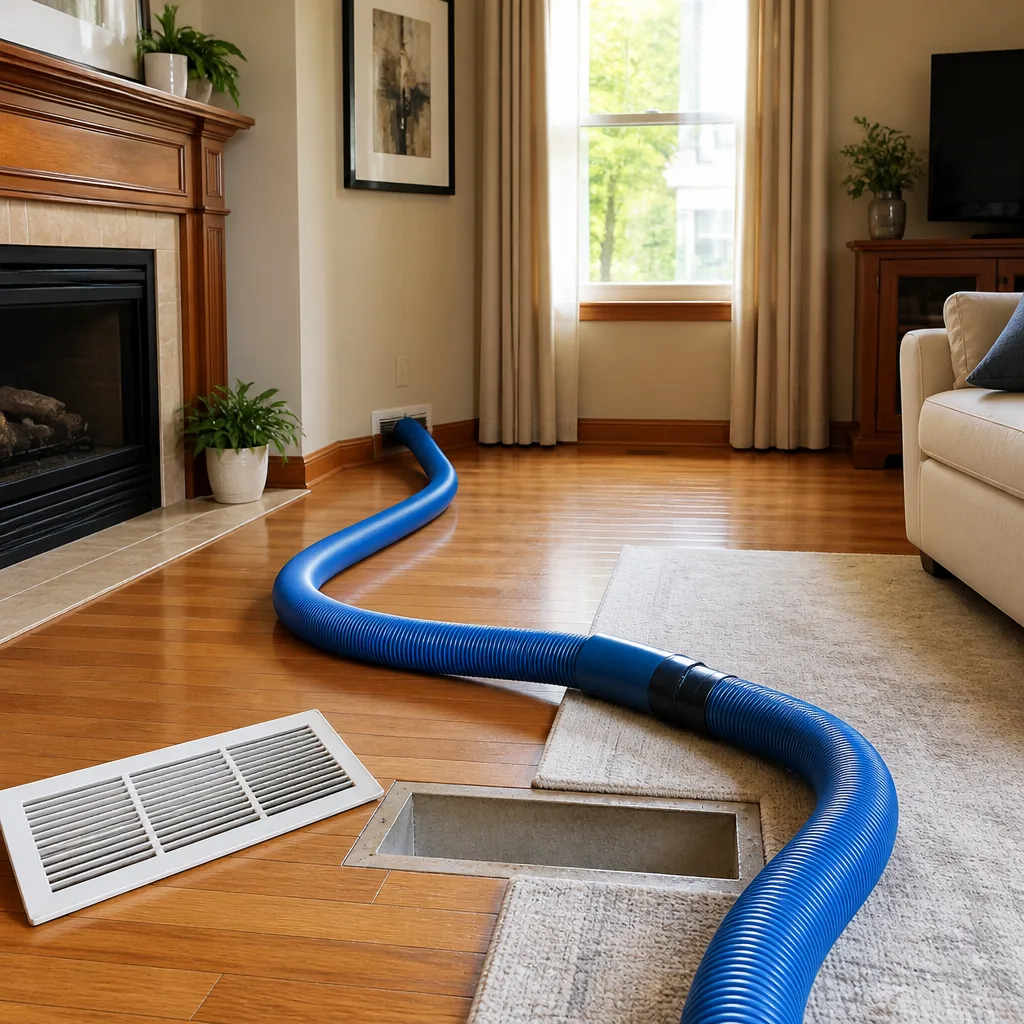 Whole-home duct cleaning
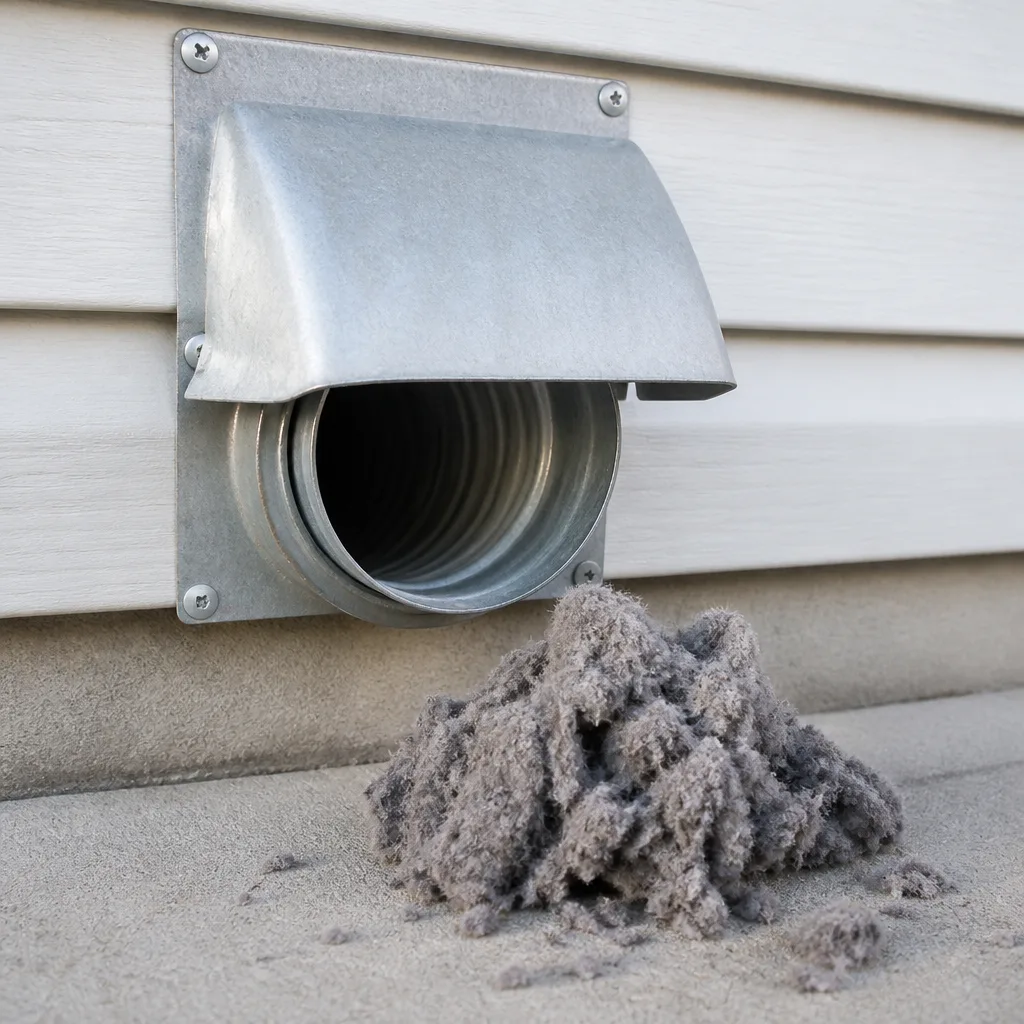 Dryer vent cleaning
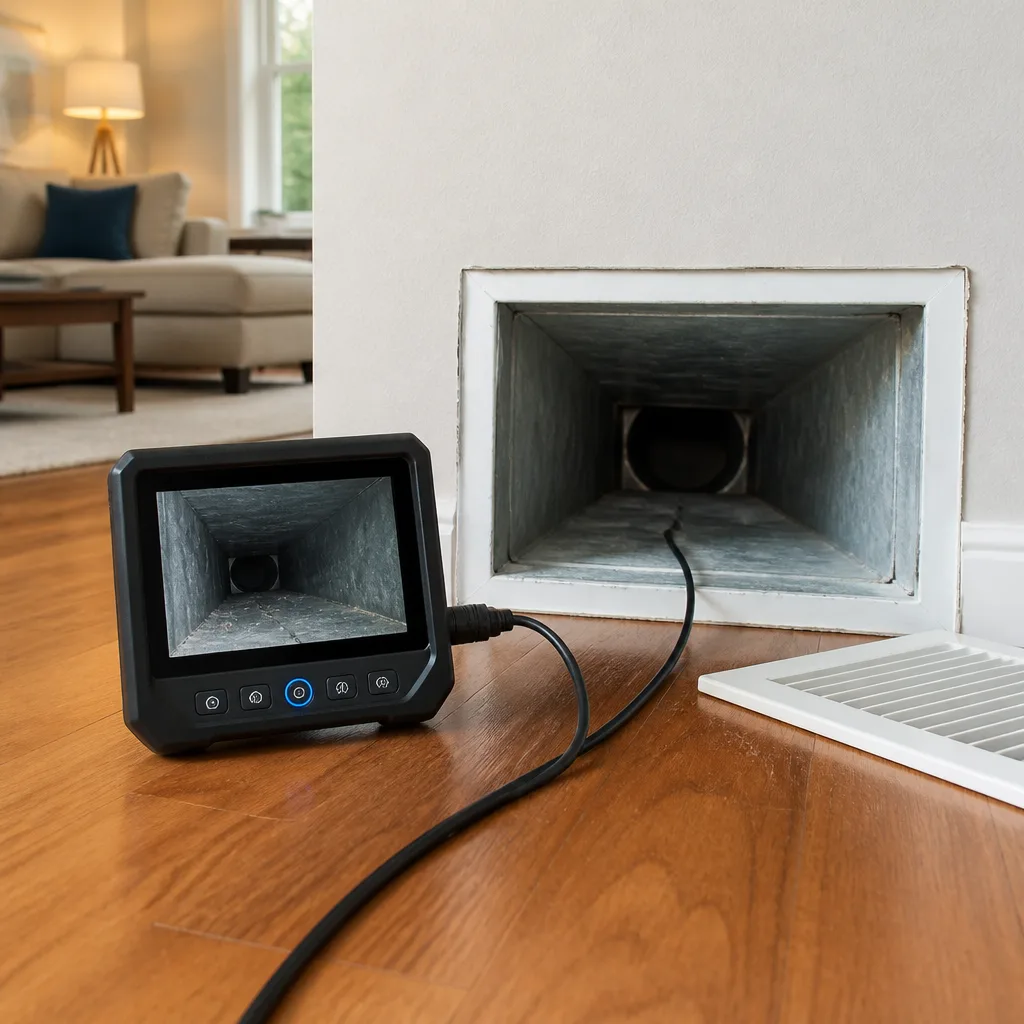 Camera inspection
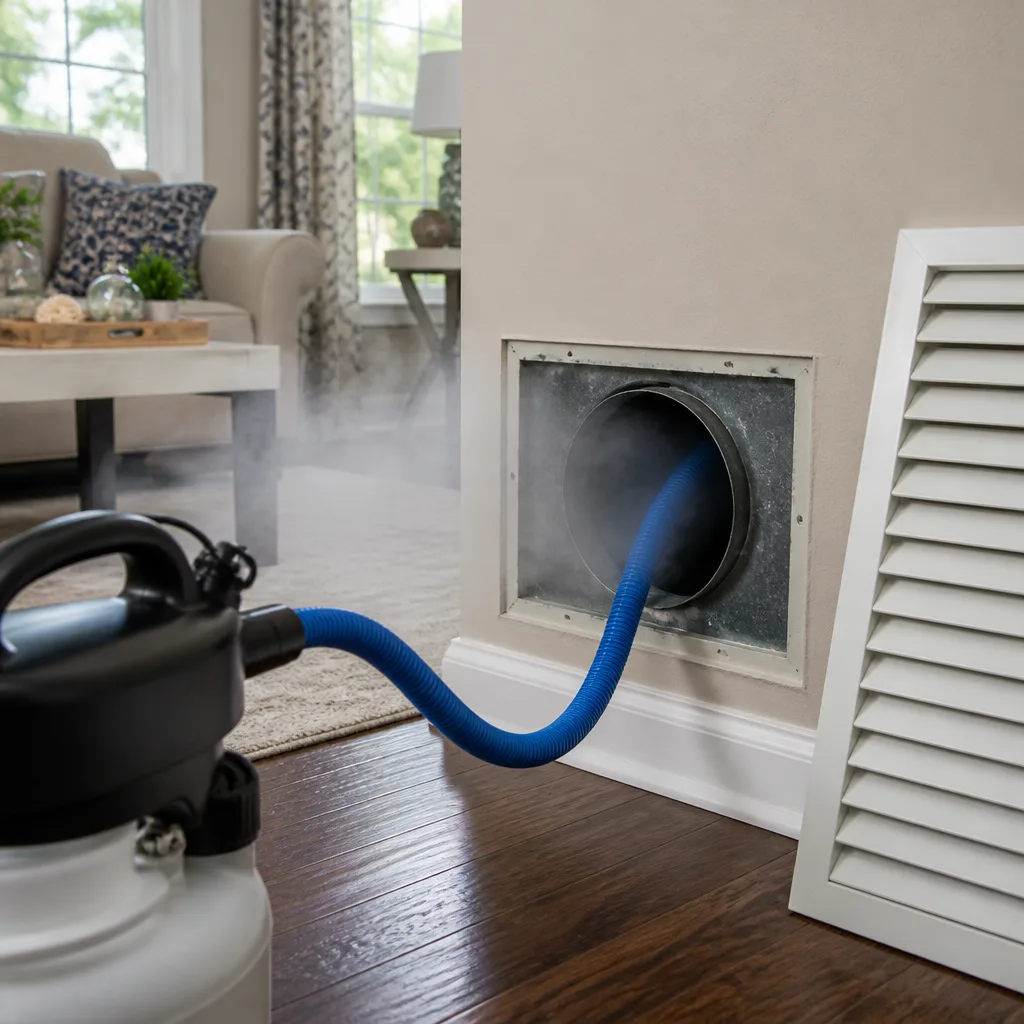 Sanitizing & deodorizing
Whole-system duct and dryer vent check with before-and-after photos - you see exactly what came out of your vents
That "$99 whole-house special" is a bait ad - the real number appears once they are in your hallway, or the "clean" is a shop-vac at the register. We photograph the inside of your ducts before and after instead.
Seasonal Air Duct Cleaning Care for Laguna Niguel: Year-Round Homeowner’s Guide
Spring cleaning your ducts in March makes sense in Minnesota. In Laguna Niguel, the biggest contamination event of the year is often an October Santa Ana wind event, which means the homeowner who cleaned in March starts winter with ducts that have already been loaded for months. Most national duct-cleaning calendars are built for places with a hard freeze and a bug hatch and a pollen bomb, and none of that maps onto what actually happens here. What happens here is a marine layer that keeps things damp through early summer, a dry stretch that fills the air with fine dust, and a fall wind pattern that can push wildfire smoke straight through the gaps in a standard filter. This guide replaces the generic four-season advice with a calendar built around Laguna Niguel’s real weather and explains what to check, what to book, and when.
Quick Answer
Duct cleaning in Laguna Niguel is best timed in late September or early October, just before the Santa Ana wind and wildfire-smoke window opens, with a lighter check in late spring before the marine layer settles in. The single most useful habit is to treat duct cleaning as an air-quality response to local weather rather than a fixed annual chore. If you clean once, book it for the pre-Santa Ana window and pair it with a filter and sealing check so the next smoke event doesn’t undo the work.
Styles & brands we work with
- Whole-home duct cleaning
- Dryer vent cleaning
- Camera inspection
- Sanitizing & deodorizing
Table of Contents
- Why Laguna Niguel Has Four Functional Duct Seasons
- The Marine Layer Window: May Through July
- The Dry Summer Window: August and September
- The Santa Ana and Smoke Window: October and November
- The Mild Winter Reset: December Through February
- Why Wildfire Smoke Needs Different Extraction Than Dust
- The Return-Air Side Is Where Post-Santa Ana Cleaning Pays Off
- Pre-Season HVAC Prep Steps Before Cooling Season Peaks
- How to Time a Professional Service Call
Why Laguna Niguel Has Four Functional Duct Seasons
The standard duct-cleaning calendar assumes four roughly equal seasons built around heating and cooling demand. Laguna Niguel doesn’t run that way. What actually drives contamination here is moisture, dry airborne dust, and smoke, and each of those arrives on its own schedule. Thinking in terms of heating and cooling seasons misses the point. Thinking in terms of what’s floating in the air and what’s settling in the duct lining gets you much closer to the right maintenance rhythm.
Here’s how the year breaks down for duct health in Laguna Niguel:
- Marine layer (May through July): cool, damp mornings that keep relative humidity elevated and stress the cooling system’s ability to shed condensate.
- Dry summer (August and September): hot, dry air that lifts fine dust and pushes the AC hard for weeks at a stretch.
- Santa Ana and fire smoke (October and November): dry offshore winds that can carry smoke and particulates from inland and regional fires into the basin.
- Mild winter reset (December through February): cooler, calmer conditions that give you a window to inspect, repair, and reset the system before the cycle starts again.
Each of these windows stresses the duct system differently, and each calls for a different response. The marine layer is a moisture problem. The dry summer is a loading problem. The Santa Ana window is a smoke and fine-particle problem. The winter reset is a repair and sealing problem. A homeowner who understands which problem belongs to which window can time service far more effectively than someone following a generic “clean your ducts every year” rule.
In our experience, the homeowners who get the most out of duct maintenance in Laguna Niguel are the ones who stop thinking about it as a seasonal chore and start thinking about it as a weather response. That shift is the whole point of this guide.
The Marine Layer Window: May Through July
The marine layer is Laguna Niguel’s signature weather pattern, and it has a direct effect on the duct system. Cool, damp overnight air rolls in and lingers, and the cooling system starts running while ambient humidity is still high. That combination is the setup for condensation issues inside the air handler and, in poorly sealed systems, inside the ductwork itself.
What to check before the cooling season peaks:
- Drain pan and condensate line. Look for standing water, staining, or a musty smell near the air handler. A slow drain in a damp window is the most common source of that smell.
- Evaporator coil condition. A coil that’s coated with dust and biological growth can’t shed condensate evenly, and it runs less efficiently all summer.
- Flex duct moisture levels. Where flex duct runs through unconditioned space, look for sagging, condensation staining, or a damp insulation jacket.
- Return-air grille condition. Check for dust buildup on the grille face, which is an early sign the return side is loading faster than the supply side.
- Filter fit and seating. A filter that doesn’t seat fully in its slot lets unfiltered air bypass it, which matters even more in a damp window.
A musty odor that appears in June and fades by August is a strong signal that the marine layer is the driver, not the dry season. That’s a moisture problem first and a cleaning problem second, which is why we check the drain pan and coil before we ever bring in cleaning equipment. If you notice that pattern, an air duct cleaning visit paired with a moisture check is a reasonable next step, but the inspection comes first.
This window is also a good time to look at the air treatment side of the system. Our technicians have up to 12 years of experience with filtration setups, and the honest advice in a damp window is usually that better filtration and a properly sealed return do more good than another round of cleaning.
The Dry Summer Window: August and September
By August, the marine layer has mostly burned off and the air in Laguna Niguel turns hot and dry. The AC runs more hours per day than at any other point in the year, and it’s carrying fine, dry particulate through the system the whole time. That particulate loads filters faster and settles in the duct lining, especially on the return side where air velocity drops and particles drop out of the airstream.
The dry season is a loading season, not a moisture season. What that means in practice:
- Filters load faster. A filter that lasted three months in a wet season can hit its pressure drop in six weeks in a dry run of 100-degree days.
- Fine dust bypasses marginal filters. Cheap fiberglass filters catch the big stuff and let the fine fraction through, which is exactly the fraction that settles in the ducts.
- Static pressure climbs quietly. A loaded filter and a loaded return raise the pressure the blower has to work against, and the symptom is airflow that feels weak in the far rooms.
- The system runs longer. Long runtime means more air through the same ducts, which means faster loading.
August is also a useful time to look at the return-air path specifically. We’ve seen this pattern repeat in homes around Aliso Niguel and the hillside tracts near the Niguel Botanical Preserve: the supply registers look fine, but the return grilles and the return plenum are carrying months of fine dust. Supply-side cleaning gets the visible dirt. Return-side cleaning gets the dust that actually feeds the rest of the system.
The practical guidance for this window is unglamorous. Change the filter more often than you would in a damp season, check it at the six-week mark during a hot stretch, and watch for the airflow tell in the bedrooms farthest from the air handler. If the far rooms are noticeably weaker than the close ones, that’s a return-side or sealing signal, not a supply-side cleaning signal.
The Santa Ana and Smoke Window: October and November
This is the window most generic guides skip entirely, and in Laguna Niguel it’s the one that matters most. Santa Ana winds are dry offshore gusts that blow out toward the coast. When there’s smoke in the air from a regional fire, those winds push it into the basin and into home duct systems. A house that ran its AC on a high-load October day with the windows closed is pulling that smoke straight through the filter and into the duct lining.
The contamination profile of a smoke event is different from a dust event:
- Smoke particles are fine. The fine-particle fraction in wildfire smoke is small enough that a standard filter is a partial barrier at best, not a seal. A MERV 8 filter catches a lot of it and lets a meaningful fraction through.
- Smoke is a chemical load, not just a particle load. Fine particles carry combustion byproducts, which is why the smell lingers in duct lining after the smoke outside clears.
- The lining holds onto it. Draft, texture, and the porous surface of internal duct lining make it a place for fine smoke residue to settle rather than blow back out.
- Return-side contamination dominates. With windows closed and the system running, the return side pulls the largest volume of smoky indoor air back through the system.
There’s a second, quieter issue. A home that has an unsealed return plenum or a gap in a flex duct connection pulls air from the attic or the framing cavity as well as from the living space. In a smoke event that gap pulls smoke-laden air directly from a space you can’t filter, and the duct system distributes it. Sealing the return side is often the higher-value fix after a smoke event, and it’s why we treat post-Santa Ana cleaning as a return-side job first.
If you wake up to an orange sky and ash on the patio, the practical response is to close the house up, run the fan on low or off, and put a decent filter in. If the smoke smell lingers in the house for days after the sky clears, the ducts are holding something, and cleaning is worth a conversation. That’s the moment to call, not the moment to wait for spring.
The Mild Winter Reset: December Through February
Winter in Laguna Niguel is mild, which is exactly why it’s the best inspection window of the year. The system runs less, the air is calmer, and you can actually see what the previous three windows deposited. The winter reset is a repair and sealing window more than a cleaning window, and a lot of value comes out of it.
What the winter reset should cover:
- A visual pass on every accessible duct run. Look for disconnected flex duct, crushed sections, unsealed joints, and torn insulation jackets.
- Sealing check on the return plenum and the air handler cabinet. Gaps here are the most common way unfiltered air gets into the system.
- Register and grille audit. Confirm each register is seated, delivering, and not blocked by furniture or a closed damper left over from summer.
- Filter baseline. With low runtime, winter is a clean moment to note the filter’s condition and set a realistic replacement rhythm for the coming year.
- Appliance vents. The dryer vent in particular gets a look at this time of year, since winter is a low-load window for a job that has real safety stakes.
Duct repair and sealing done in the winter reset window tends to hold through the whole year because you’re fixing the gaps before they load up again. A disconnected flex run or a gap at the air handler cabinet is a permanent bypass for unfiltered air, and no amount of cleaning compensates for it. When we find leaks or damaged sections during a cleaning visit, we can seal and repair them on the same call rather than sending you to a second contractor.
This is also the window where a homeowner can do the most useful thing for their own system: a written record of what each register delivered and how it felt. Come summer, that record is the baseline for spotting an airflow problem early.
Why Wildfire Smoke Needs Different Extraction Than Dust
Dust is a physical problem and smoke is a physical and chemical problem. The distinction matters because the cleaning method should change with it. Standard dust removal is about mechanical agitation plus high-volume extraction. Smoke residue in duct lining needs the same mechanical action but with more attention to containment and to the fine-particle load that comes out of the lining as you agitate it.
The fine-particle fraction of wildfire smoke is the part that matters here. Particles in that size range behave more like a gas than like visible dust. They settle into porous surfaces, they don’t blow back out easily, and once agitated they re-suspend into the air. A cleaning process that agitates the lining without controlling the re-suspended particulate just moves the problem into the living space.
That’s why the cleaning equipment matters here more than in a routine dust job:
- Containment and negative air pressure. Abatement Technologies equipment is what remediation crews use to keep particulate inside the work zone. We run it during cleaning so fine particles come out of the lining and into the containment, not into the room.
- Mechanical agitation plus HEPA extraction. Rotobrush and Nikro systems are purpose-built duct cleaning tools, not shop vacs with a long hose. They agitate the lining and pull the loosened load at the same time.
- A finishing and sanitizing step. When the smell lingers after cleaning, an air quality and sanitizing step with Guardsman-grade products addresses the residual rather than just re-brushing the same surface.
- A filter upgrade conversation. Honeywell and Aprilaire filtration products make a real difference in a smoke window, but only if the return side is sealed first. A high-MERV filter behind a leaky return plenum is doing partial work.
If you’ve been through a heavy smoke event, the return side is where the fine fraction concentrates. That’s the next section.
The Return-Air Side Is Where Post-Santa Ana Cleaning Pays Off
Most homeowners think of duct cleaning as cleaning the supply registers, because those are the visible ones. The return side is where the contamination load actually lives after a smoke event. The return system pulls air from every room, carries the biggest volume, and drops particulates out as velocity falls. In a smoke window, the return plenum becomes the deposit site for the fine fraction.
Why return-side cleaning matters after a Santa Ana event:
- It’s the largest-volume pathway. Return air moves through the system at higher total volume than the supply side in most residential layouts.
- Velocity drop = deposition. Fine particles settle where the air slows, which is exactly what happens at the return plenum and the air handler inlet.
- Gaps on the return side pull unfiltered air. A gap at the return plenum pulls from the cavity, not the room, and that air never sees a filter.
- The smell lives there. That lingering smoke smell after a wind event is usually the return side holding residue, not the supply registers.
A useful diagnostic: run the system fan for a few minutes on a calm day after a smoke event, then go smell the return grille in a central hallway. If the return grille smells like smoke and the supply registers don’t, the load is concentrated on the return side. That’s the signal to book a cleaning focused there rather than a full supply-side scrub.
Return-side sealing goes with return-side cleaning. If we find leaks or damaged flex sections while we’re in the return path, we can repair and seal them on the same visit. Clean ducts behind a leaky return plenum are clean for about a week.
Pre-Season HVAC Prep Steps Before Cooling Season Peaks
The pre-season prep window is late April through mid-May, before the marine layer settles in and before the AC starts running hard. A focused hour of prep here saves a lot of discomfort and a lot of system wear through the summer.
- Inspect the drain pan and condensate line. Clear any standing water, check the line for a clog, and confirm the pan drains fully. This is the single most important pre-marine-layer check.
- Look at the evaporator coil. A dusty coil in a damp window is a setup for biological growth. If the coil face is visibly loaded, that’s a professional cleaning job, not a homeowner brush-off.
- Check flex duct moisture levels. Run a hand along accessible flex runs and look for sagging, condensation staining, or a damp insulation jacket. Any of those means the run needs attention before the damp season.
- Seal the return plenum and air handler cabinet. Check the joints at the return plenum and around the air handler cabinet. Gaps here bypass the filter year-round.
- Set a filter rhythm for the summer. Note the current filter’s rating and plan a six-week check through August and September rather than a three-month one.
- Book the cleaning for October. A pre-season inspection in May that identifies the return-side load lets you time the actual cleaning for the pre-Santa Ana window, when it does the most good.
The May inspection and the October cleaning are two different jobs, and combining them into one spring visit is the mistake that leads to a re-clean in winter. If you’re going to do one thing, do the coil and drain check in May and the cleaning in October.
How to Time a Professional Service Call
If you’re going to book one professional visit for the year, the single best month in Laguna Niguel is late September or early October, before the Santa Ana window opens. That timing means the ducts are clean going into the smoke season, the filter is fresh, and any return-side sealing is done before the wind arrives. It’s the one window where cleaning plus sealing covers the most ground.
A well-structured visit around that timing covers the full air pathway in one call:
- Mechanical cleaning of supply and return runs with Rotobrush or Nikro equipment as the situation calls for, with Abatement Technologies containment running during the work.
- Air handler and coil cleaning under the HVAC cleaning scope, since the coil is what the air hits first.
- Duct repair and sealing for any disconnected, crushed, or unsealed section found during the job.
- An air quality and sanitizing finish with Guardsman-grade products where residual odor calls for it, and a Honeywell or Aprilaire filtration recommendation for the coming year.
- A dryer vent check as a separate service line, since the appliance vent is part of the full air pathway and a documented fire risk the NFPA flags.
The timing argument is about value, not urgency. October cleaning lasts through the smoke window and into winter. March cleaning has to survive the dust of August before it’s really tested. A homeowner looking at the whole year can see the difference in a single calendar.
If you’re not sure where your system sits on this calendar, start with a visual inspection of the return grilles and the filter. That tells you most of what you need to know to pick the month. The rest is scheduling.
Common Mistakes to Avoid
- Following a generic four-season calendar. National guides assume a freeze-thaw winter and a spring pollen bomb, and neither applies in Laguna Niguel. Build your maintenance rhythm around moisture, dust, and smoke windows instead.
- Cleaning in spring and skipping the fall window. A March cleaning is meaningfully aged by the time the Santa Ana winds arrive in October. If you clean once, clean before the smoke window.
- Treating smoke like ordinary dust. Fine smoke particles need containment and proper extraction, not a shop vac and a long hose. The wrong method re-suspends the fine fraction into the room.
- Cleaning the supply side only. The return side carries the biggest load after a smoke event. A supply-only clean looks complete and leaves the actual problem in place.
- Skipping the sealing step. A gap at the return plenum or the air handler cabinet bypasses the filter completely, so a clean system behind a leaky return stays dirty.
- Running a high-MERV filter behind a leaky return. The filter only works if the return path is sealed. Otherwise the high-MERV filter handles the small portion of the air that actually goes through it.
- Ignoring the marine layer moisture signal. A musty smell that shows up in June and fades by August is a moisture issue, not a dust issue, and cleaning without fixing the drain or coil won’t resolve it.
See the difference
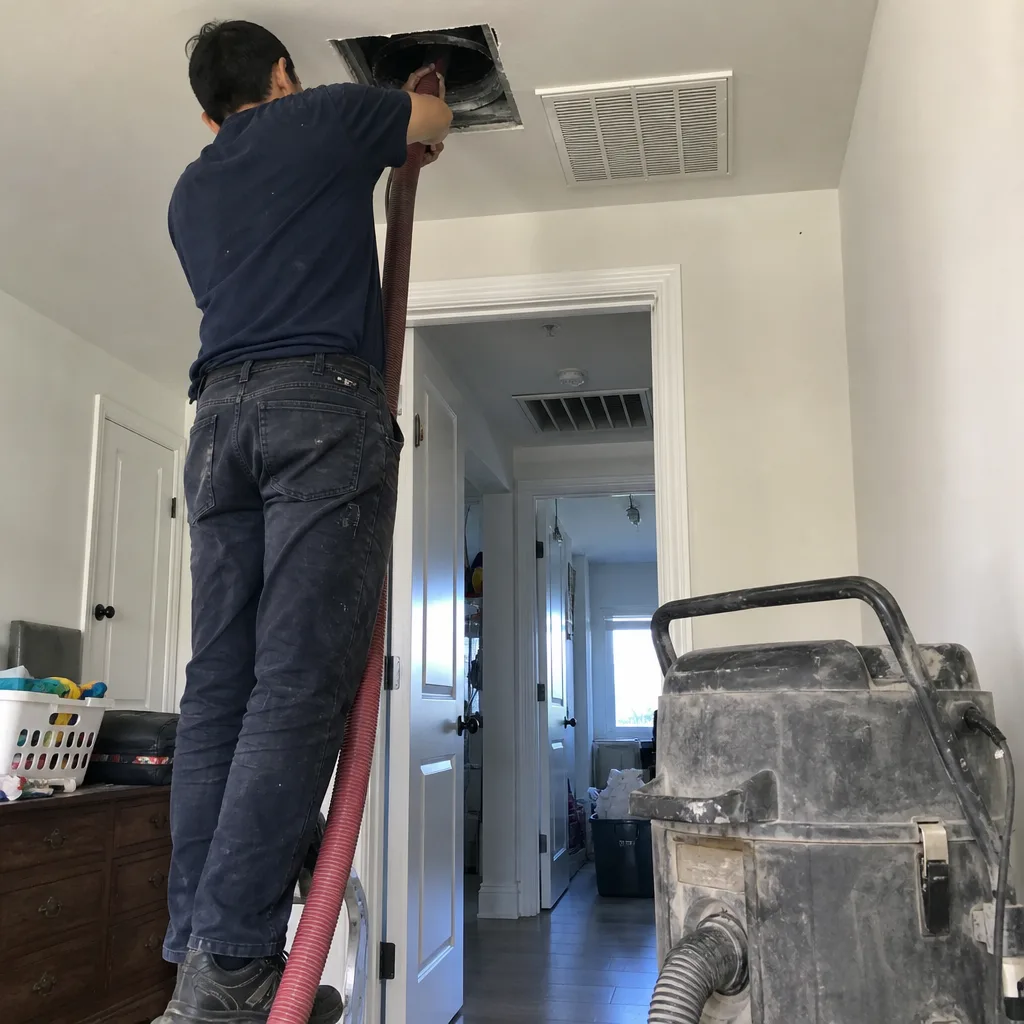 Before
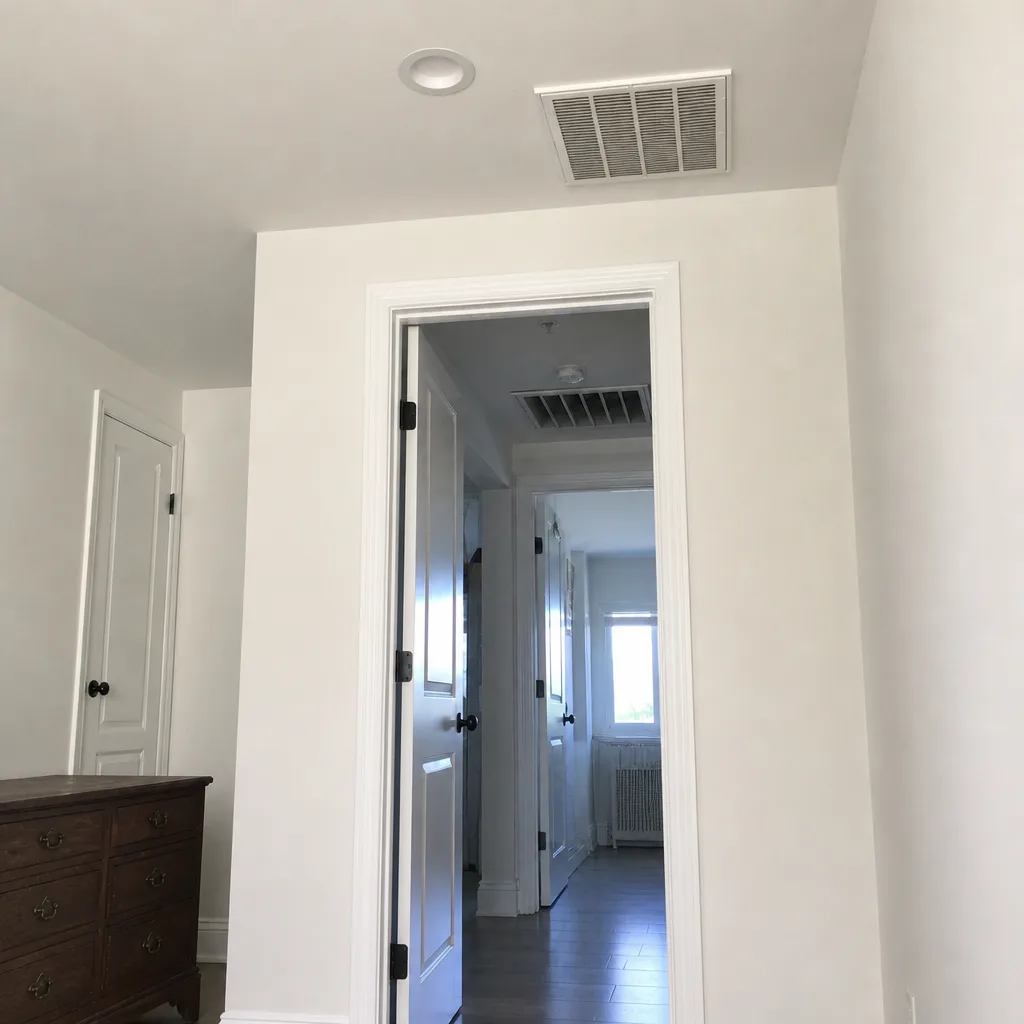 After
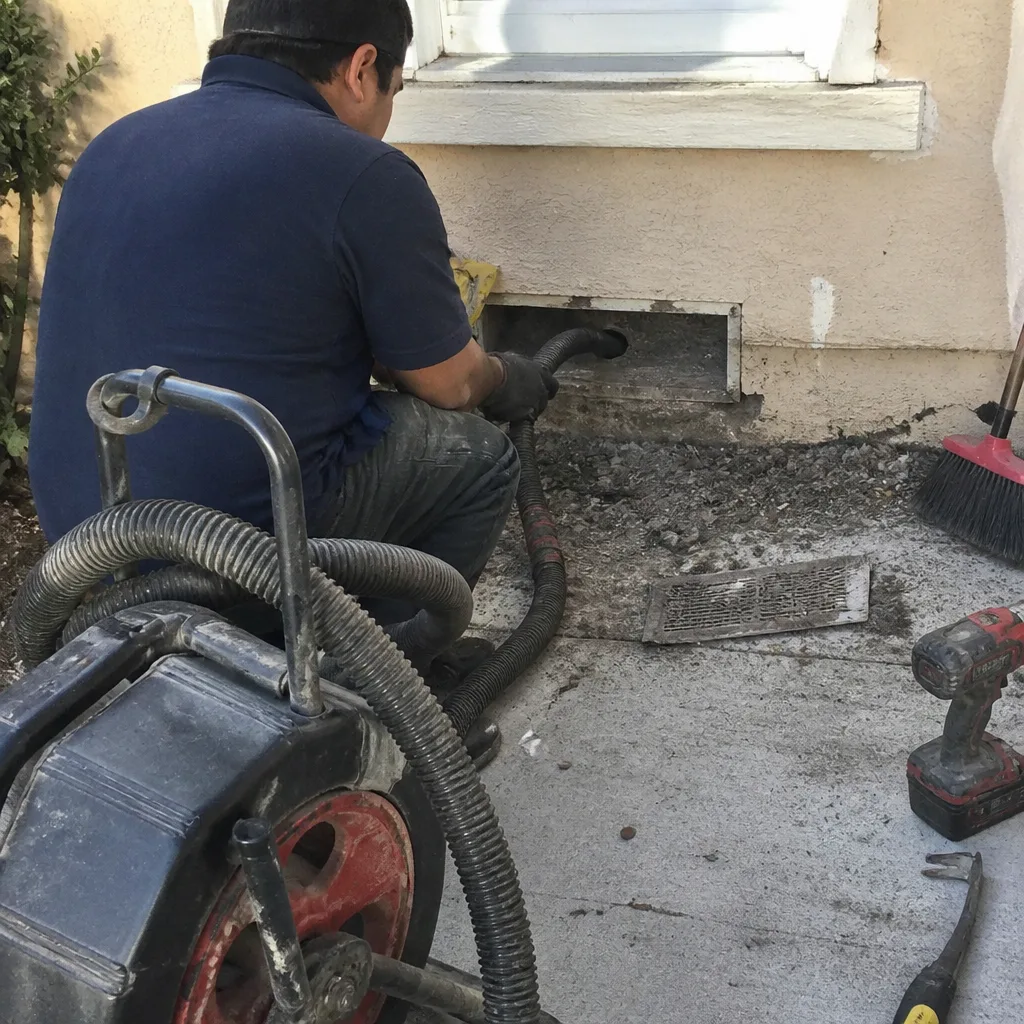 Before
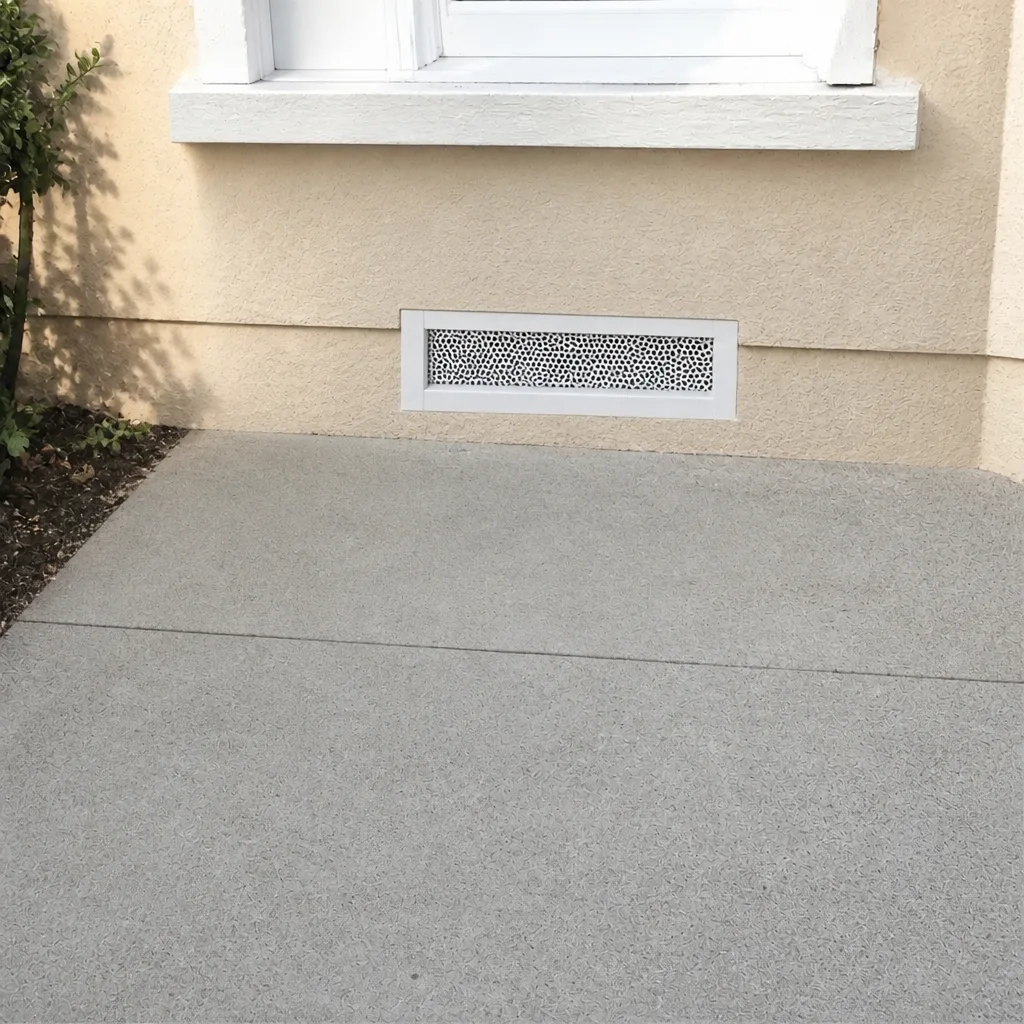 After
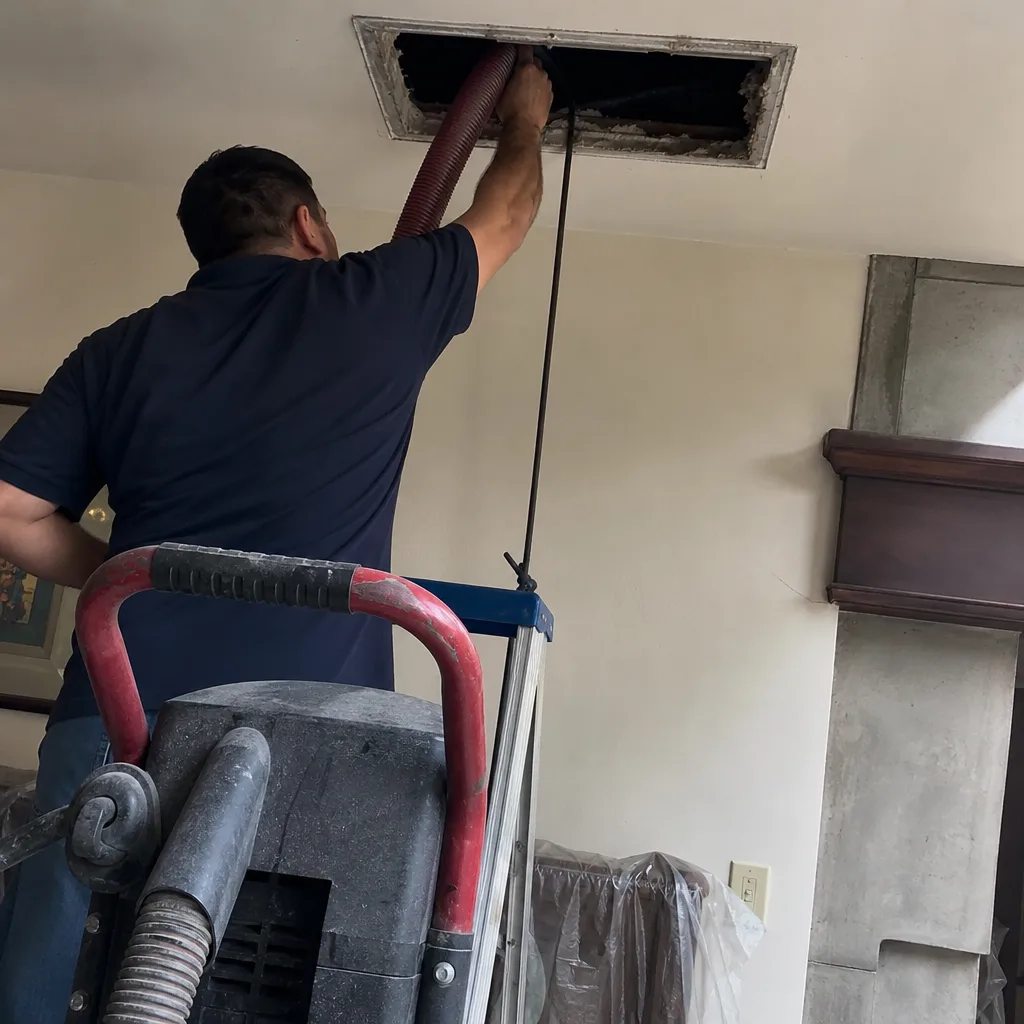 Before
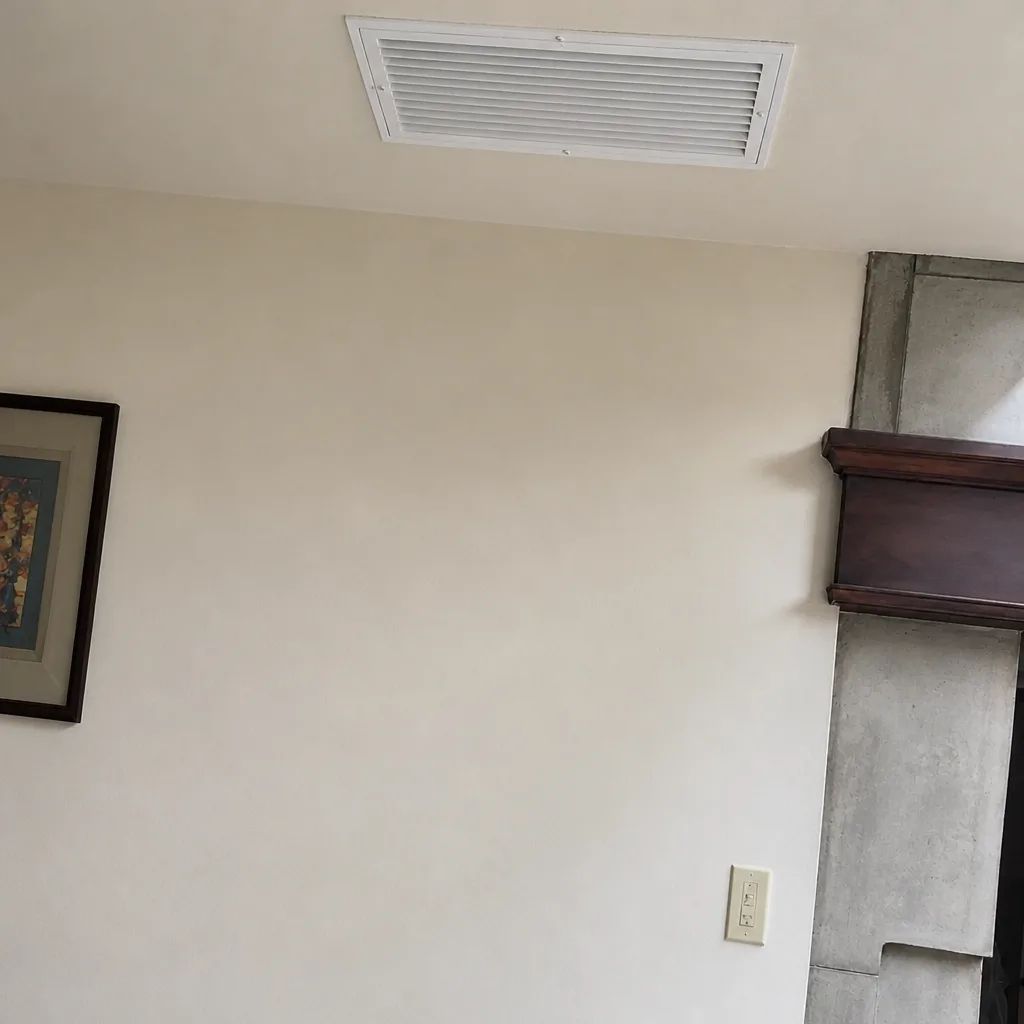 After
When to Call a Professional
There are a handful of situations where a phone call makes more sense than more homeowner checks. A smoke smell that lingers in the house for days after the sky clears is the clearest one, and it points at a return-side load. Visible moisture staining on a flex duct run, or a musty odor that tracks the marine layer, is another. Noticeably uneven airflow between rooms, especially in the far bedrooms, points at a return-side or sealing problem. A dryer that takes longer than it used to, or lint visible around the vent termination, is a fire-risk signal that warrants a look. And if the ducts haven’t been professionally cleaned in several years and the house has been through at least one heavy smoke season, a professional inspection is worth the call. Laguna Niguel Air Duct Cleaning Pros offers free estimates in Laguna Niguel and covers dryer vent cleaning and HVAC cleaning on the same call as a duct clean. Call (877) 770-0716.
Frequently Asked Questions
Late September or early October is the best time to clean air ducts in Laguna Niguel, just before the Santa Ana wind and wildfire-smoke window opens. Cleaning at that point means the ducts are clean going into the smoke season, and any return-side sealing is done before the wind arrives. The second-best window is late spring, before the marine layer settles in, if the system is showing moisture rather than smoke issues.
Yes, wildfire smoke does get into air ducts, mostly on the return side, because the fine-particle fraction is small enough that a standard filter only partially blocks it and the return path moves the largest volume of indoor air. During a Santa Ana event with windows closed and the system running, smoke-laden air is pulled through the return, and fine particles settle in the duct lining where air velocity drops. The smell that lingers after the sky clears is usually that residue.
Most Laguna Niguel homes benefit from a professional cleaning every two to three years, with tighter intervals if the house has been through heavy smoke seasons or has pets. The better question is whether the ducts are actually loaded, which a visual check of the return grilles and the filter will tell you. A home with an unsealed return plenum may need sealing before it needs another cleaning.
A musty smell in early summer in Laguna Niguel almost always points at the marine layer, not the ducts. Elevated humidity through May, June, and July stresses the cooling system’s ability to shed condensate, and a slow drain pan or a dusty evaporator coil is the usual source. Cleaning the ducts without checking the drain pan and coil won’t resolve it. We check the moisture side first.
The return ducts should usually be the priority, especially after a smoke event, because the return path carries the largest air volume and is where fine particles settle. Supply registers are more visible but often carry less contamination. A complete job covers both, which is what a full cleaning visit does. Cleaning only the supply side leaves the actual load in place.
Professional duct cleaning in Laguna Niguel should use mechanical agitation plus high-volume HEPA extraction, with containment running during the job. We use Rotobrush and Nikro systems, which are purpose-built duct cleaning tools rather than shop vacs, and Abatement Technologies containment equipment to keep fine particles inside the work zone. Guardsman-grade products are used in the sanitizing step, and Honeywell or Aprilaire filtration products are recommended for the return side after sealing.
The Bottom Line
Laguna Niguel doesn’t follow the four-season duct calendar most guides assume. The year here runs on a marine layer window in early summer, a dry loading window in August and September, a Santa Ana and smoke window in October and November, and a mild winter reset from December through February. Each window stresses the system differently, and the single best month to book a professional cleaning is late September or early October, before the smoke season opens. Clean the return side, seal what’s leaking, and pick a filter that matches the window. That rhythm covers more ground than a spring cleaning ever will.
If you want a straight answer on where your system sits on this calendar, call (877) 770-0716 for a free estimate. We answer 24/7. Fast dispatch from 7am to 7pm, Sunday through Friday. Laguna Niguel Air Duct Cleaning Pros covers all five service lines, from Laguna Niguel Air Duct Cleaning Pros through duct repair and air quality, on a single visit, with before-and-after photos of your own ducts and one flat price per system agreed before work starts.
Written by the team at Laguna Niguel Air Duct Cleaning Pros.