
Last updated November 25, 2026
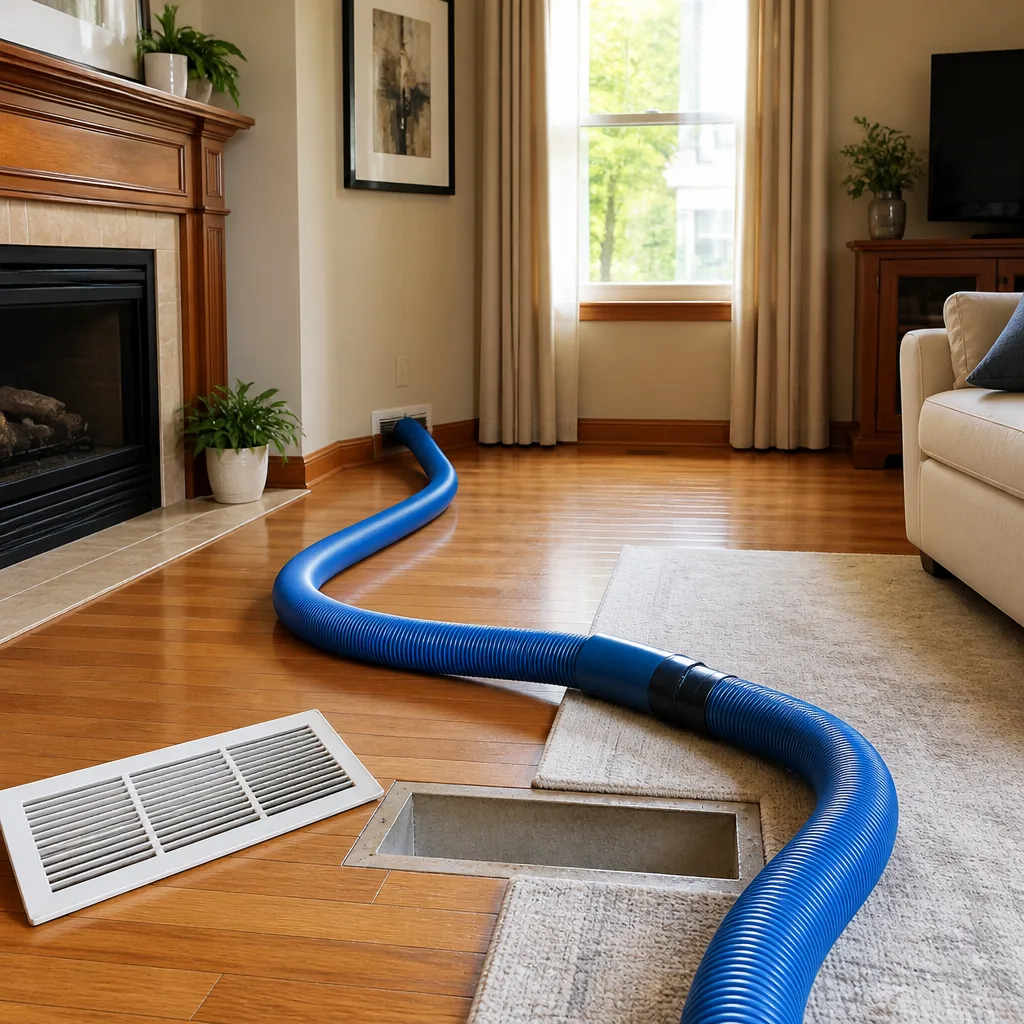 Whole-home duct cleaning
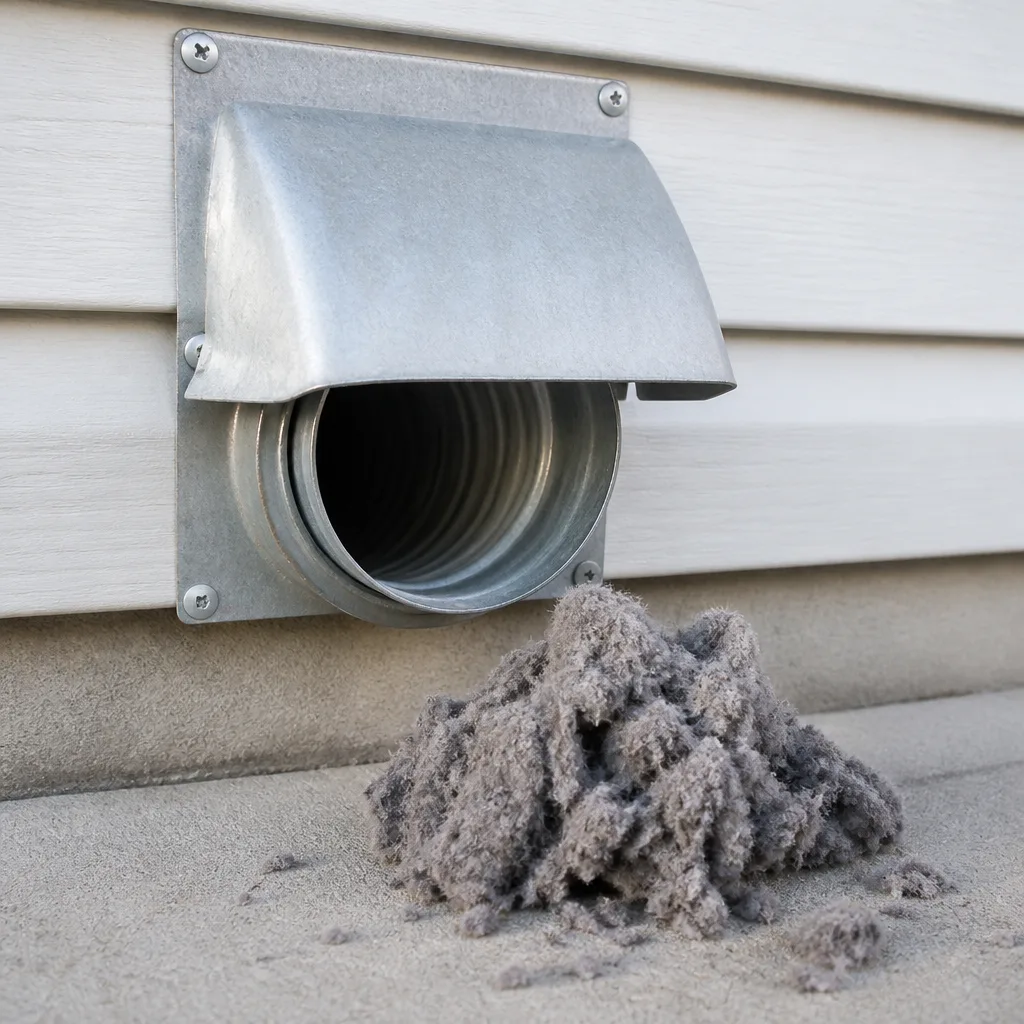 Dryer vent cleaning
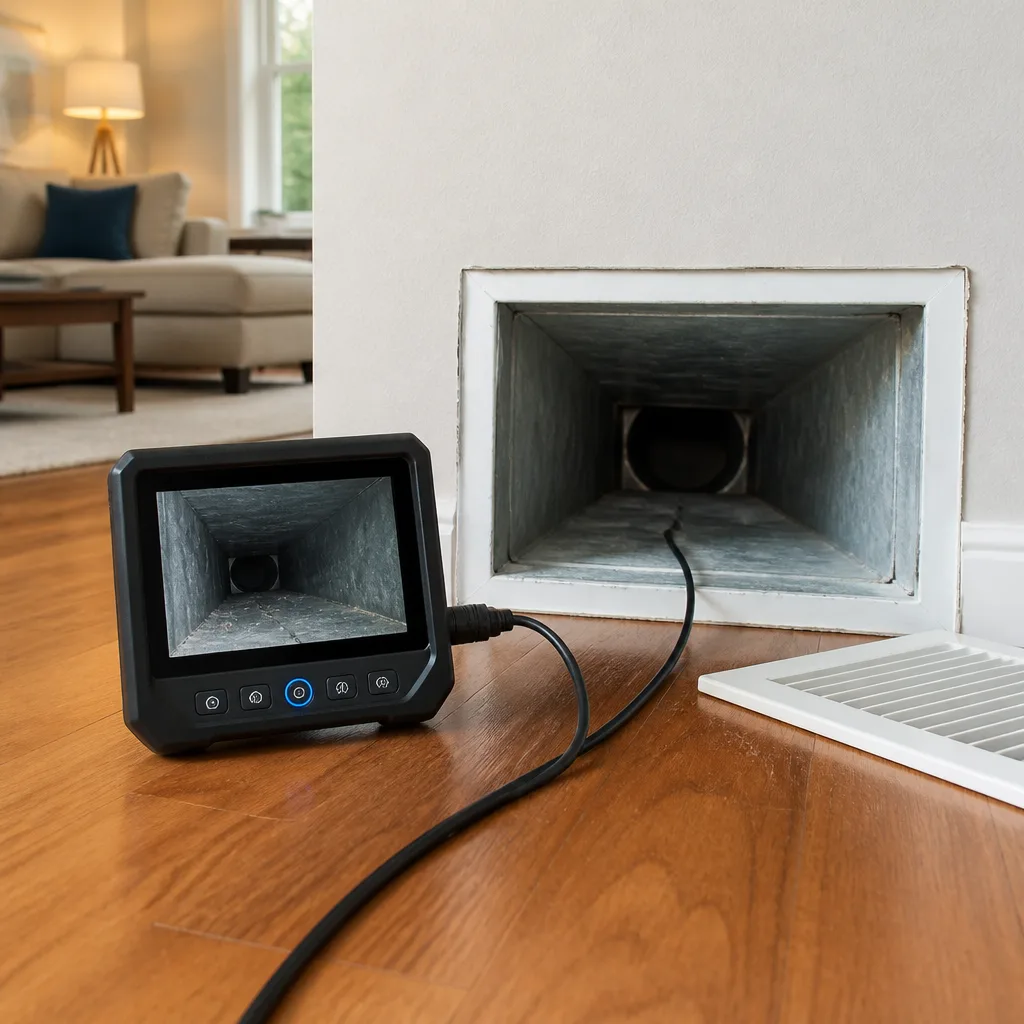 Camera inspection
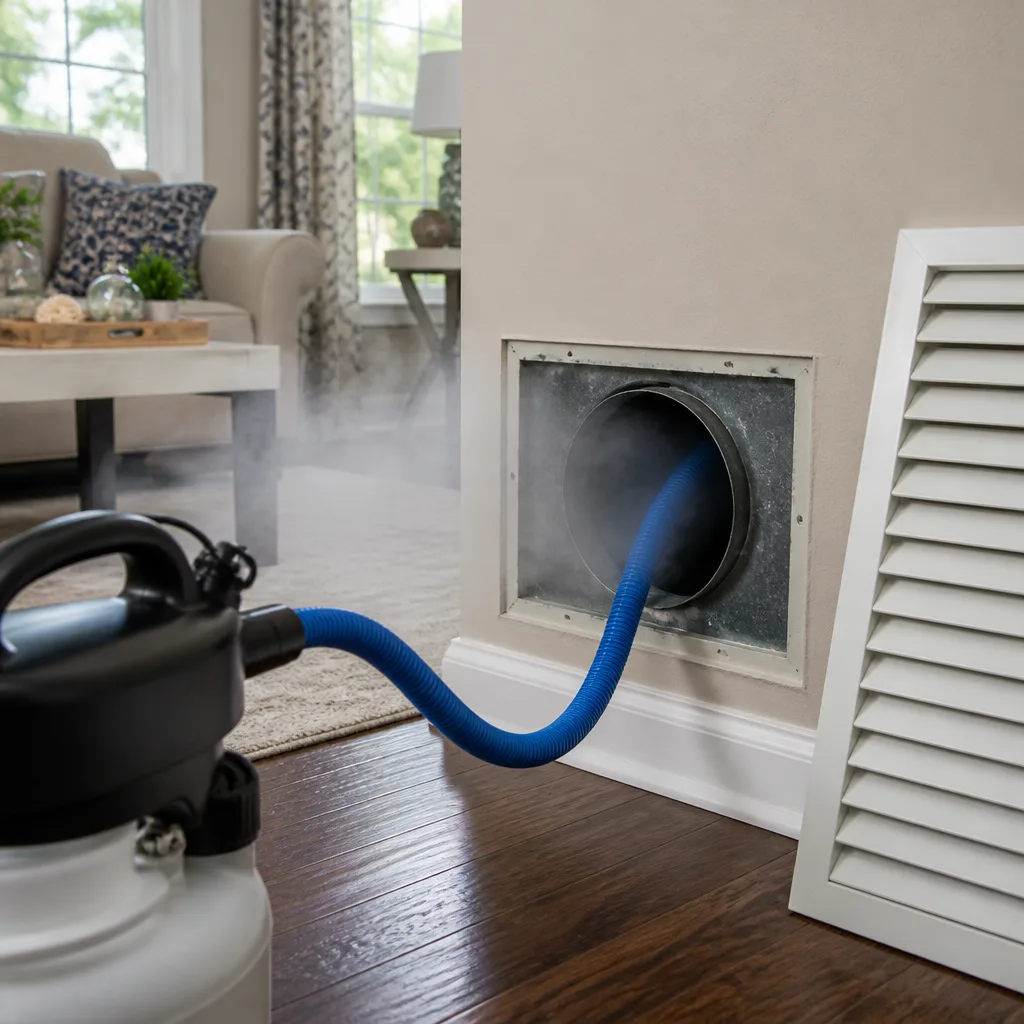 Sanitizing & deodorizing
Whole-system duct and dryer vent check with before-and-after photos - you see exactly what came out of your vents
That "$99 whole-house special" is a bait ad - the real number appears once they are in your hallway, or the "clean" is a shop-vac at the register. We photograph the inside of your ducts before and after instead.
How to Hire an Air Duct Cleaning Contractor in Laguna Niguel: A Step-by-Step Guide
A $49 whole-house duct cleaning offer is not a deal. It is a door-opener, and the upsell that follows it often adds up to several hundred dollars for work of questionable quality. This is the single most misunderstood purchase in home services, and Laguna Niguel homeowners get pitched it constantly. The problem is not that cheap quotes exist. The problem is that almost no one tells you how to tell a real contractor from a lead-generation front. This guide gives you the exact vetting sequence: what to check with the state, the five equipment questions to ask before you book, and how to compare two quotes fairly. By the end, you will know more about duct cleaning than most people selling it.
Quick Answer
To hire an air duct cleaning contractor in Laguna Niguel, verify the contractor’s license through the California State License Board, insist on a written scope of work with whole-system pricing rather than per-vent pricing, and ask five specific equipment questions about vacuum strength, brush type, HEPA filtration, negative-pressure containment, and camera capability. A legitimate contractor answers all five without hesitation. One who cannot is selling an upsell, not a cleaning.
Styles & brands we work with
- Whole-home duct cleaning
- Dryer vent cleaning
- Camera inspection
- Sanitizing & deodorizing
Table of Contents
- Why Duct Cleaning Has More Bad Operators Than Most Trades
- Step 1: Verify the Contractor’s License in Under Two Minutes
- Step 2: Ask These Five Equipment Questions Before You Book
- Step 3: Read the Quote for the Right Line Items
- What NADCA Membership Actually Means (and What It Doesn’t)
- How to Compare Two Quotes That Say Different Things
- What a Proper Cleaning Actually Involves
- The Parts of Your Air System the Quote Often Ignores
Why Duct Cleaning Has More Bad Operators Than Most Trades
Most home services have a clear paper trail: a plumber pulls a permit, an electrician is inspected, a roofer has a license number on the truck. Duct cleaning is different. It sits in a gray zone where a van, a hose, and a coupon can convince a homeowner that a professional service has arrived. There is no inspection at the end. Nobody signs off on the work. If the ducts are poorly cleaned, nothing fails, no alarm sounds, and you may not notice for years.
That combination of no inspection, no visible result, and a low barrier to entry is exactly what attracts bad operators. In Laguna Niguel, where a large share of homes were built in the 1980s through the 2000s with flexible duct runs in attics and crawl spaces, a contractor who crawls into an attic and half-vacuums the trunk line can present the same invoice as one who cleans the entire air pathway properly.
The trade has standards. NADCA, the National Air Duct Cleaners Association, publishes the accepted method for cleaning and inspecting HVAC air systems, and the Environmental Protection Agency has published guidance on when duct cleaning is warranted. The standards exist. The enforcement is the weak link.
This is why we recommend hiring on proof rather than promises. A licensed contractor, the right equipment, a written scope, and a willingness to put a camera on your ducts before and after are what separate a real job from an expensive visit. Laguna Niguel Air Duct Cleaning Pros is a full-service indoor air quality company for Laguna Niguel homes, and in this guide we are going to walk you through the same sequence we would tell a neighbor to follow with any contractor, including us.
Step 1: Verify the Contractor’s License in Under Two Minutes
California makes this easy, which is why it is puzzling how few homeowners do it. The California State License Board (CSLB) maintains a public database at cslb.ca.gov where you can search any contractor by name, license number, or business name. It takes about ninety seconds. The record shows whether the license is active, how long it has been valid, whether there are disciplinary actions, and what classification the contractor holds.
Duct cleaning in California typically falls under one of two license classifications:
- C-20 (HVAC): Warm-air heating, ventilating, and air-conditioning contractors. This is the classification that most directly covers ductwork, filtration, and air handling systems.
- C-38 (Refrigeration): Refrigeration contractors, which in practice frequently extend into air handling and ductwork work in residential settings.
A contractor without either classification is not licensed to work on your HVAC system. A general handyman license (B) does not cover ductwork. An unlicensed operator may be perfectly nice and still not insured, not bonded, and not covered if they damage a duct run or drop a tool into a plenum.
Here is the exact verification sequence:
- Ask the contractor for their CSLB license number before they come out. A legitimate contractor has it ready.
- Go to cslb.ca.gov and open the license lookup.
- Search by license number or business name.
- Confirm the status reads “Active” and the classification is C-20, C-38, or a combination that includes one of those.
- Check the bond and insurance fields. The state requires a contractor’s bond and, for active licenses, workers’ compensation coverage or a valid exemption.
- Screenshot the record and keep it. If a problem arises later, you have a timestamped copy.
If a contractor cannot produce a license number, the conversation is over. There is no workaround, no “we’re licensed through our partner company,” and no exception. The local pro you hire should be state-licensed and insured as their state requires, and the CSLB record is where you confirm it.
Step 2: Ask These Five Equipment Questions Before You Book
Equipment is what separates a real duct cleaning from a hose taped to a shop vacuum. The questions below are the ones we would ask any contractor, and the ones we expect to be asked. A contractor with proper equipment answers each one with a specific brand or number. One who cannot answer is running a value service, not a duct cleaning.
1. What is the vacuum’s CFM rating, and is it a negative-pressure system?
CFM stands for cubic feet per minute, and it measures how much air the vacuum moves. Residential duct cleaning requires a truck-mounted or high-capacity portable vacuum with a HEPA filtration stage, connected to the duct system through a negative-pressure setup. The vacuum pulls the duct run under negative pressure while the technician agitates the dust from inside, so the debris travels to the vacuum rather than into your living room. If the answer is “we use a strong shop vac,” that is not the same tool. Purpose-built duct cleaning vacuums from manufacturers like Rotobrush and Nikro are designed for this exact job and work with HEPA containment. We use both.
2. What type of brush or agitation tool do you use?
Vacuuming alone stirs up dust but does not remove the layer stuck to the duct walls. The industry standard is a mechanical brush or air whip that agitates the surface while the vacuum pulls the loosened material away. Flexible rod brushes are the classic method. Rotary brush systems like those in the Rotobrush line are the smaller-duct standard. A contractor who only offers vacuuming without agitation is leaving behind the material you most want gone.
3. Is the vacuum HEPA-filtered?
HEPA filtration captures particles at 0.3 microns and above. Without it, a vacuum can push fine dust out its exhaust and back into your home. This matters in a Laguna Niguel home where a technician is working in an attic or garage plenum with the system open. HEPA should be a yes-or-no answer, not a maybe.
4. How do you maintain negative pressure and containment during the job?
Some equipment setups use negative-air machines and containment barriers to keep dust inside the work zone during cleaning. This is the same process used in remediation work, and it is a sign of a contractor who takes contamination seriously. When a job involves opening up a plenum or working near a living space, we bring in Abatement Technologies containment equipment to hold pressure inside the work area. If your contractor’s answer to “how do you keep dust out of my house” is “we’re careful,” keep asking.
5. Can you show me camera footage before and after?
A camera inspection is the only way either of you can see what actually happened inside the ducts. A contractor with a duct camera can show you the run before the cleaning, the material present, and the same run after. If a contractor cannot offer before-and-after images of your own ducts, you have no way to know the work was done. This is also the point where a coupon operation tends to change the subject.
Step 3: Read the Quote for the Right Line Items
A duct cleaning quote should describe a whole-system job. That sounds obvious, and yet per-vent pricing is the default bait in this industry, because it is easy to advertise as $49 and then multiply by the number of vents in your home. A 3,000-square-foot Laguna Niguel house with 18 supply registers and 4 returns is a very different job from a 1,200-square-foot condo, and per-vent pricing turns your home’s size into an escalator.
A proper quote includes these elements:
- Whole-system scope, not per-vent: A single price for the full air pathway, agreed before work starts. This is the model we use, and it removes the incentive to drag the visit out.
- Written scope of work: The number of supply and return runs to be cleaned, whether the air handler and blower compartment are included, and whether the coil is being cleaned.
- Register and vent sealing during cleaning: The openings need to be sealed or covered so the negative pressure actually draws from the duct, not from the room. A quote that never mentions sealing is a warning sign.
- Camera inspection before and after: Ideally included, not “available for an extra fee.”
- Containment method: How the contractor plans to keep dust inside the work zone.
- What is not included: A credible quote names the work it is not doing. Duct repair, sanitizing, and filtration upgrades are separate line items.
Ask for the scope in writing before you book. A contractor who will not put it in writing is one who intends to redefine the job once they are inside your home. That is the definition of bait-and-switch, and the written estimate is what protects you.
What NADCA Membership Actually Means (and What It Doesn’t)
You will see NADCA membership claims on many duct cleaning websites, and they do carry real weight. NADCA, the National Air Duct Cleaners Association, sets the industry standard for cleaning and inspecting HVAC air systems and publishes the ACR (Assessment, Cleaning, and Restoration) standard that a competent contractor follows. Contractor members have to meet certain training and equipment requirements to join and stay in good standing.
Here is what NADCA membership does not do:
- It does not replace a state license. A contractor can be a NADCA member and still be operating without a CSLB license. Check both.
- It is not an inspection or certification of a specific job. Membership indicates the company has met the association’s criteria, but nobody from NADCA inspects your ducts after the work.
- It does not guarantee equipment quality on your job. The standards are clear; the application of those standards on the day is what matters. Ask the five equipment questions anyway.
- It does not cover every legitimate contractor. Plenty of excellent contractors use NADCA’s published standards without paying for the membership. A contractor can cite the ACR standard without being a member.
The realistic way to use membership claims is as one signal among several. A contractor who holds a valid CSLB license, follows the ACR standard, uses purpose-built equipment, and gives you a written scope is hiring on proof. A contractor who leads with a membership badge and nothing else is not.
How to Compare Two Quotes That Say Different Things
You will often get two quotes that use different terminology for the same work. One says “air handler cleaning,” the other says “blower and coil cleaning.” One says “supply and return,” the other says “trunk and branch lines.” Both may be describing the same job, or they may not. The way to compare is to build a simple matrix and fill it in for each quote.
- Systems included: Ducts only, or ducts plus air handler, plus coil, plus dryer vent? List what each quote covers.
- Number of runs: How many supply registers and how many returns? Match the numbers to your actual home before you sign.
- Pricing model: Whole-system or per-vent? If per-vent, what happens when the count is higher than the quote? Price out the total for your real vent count before comparing.
- Equipment: Which brand or type of vacuum and brush system? Are they listing HEPA filtration and negative pressure?
- Inspection: Is before-and-after camera included, or is it extra?
- Register sealing: Yes or no?
- Additional services: Is dryer vent cleaning included or add-on? Is sanitizing included or add-on? What about HVAC cleaning for the air handler?
- Written scope: Yes or no?
When the two quotes are in the matrix, the cheaper one often turns out to be the one that leaves out the air handler, skips the camera, or prices per-vent. If both quotes cover the same scope with the same equipment, you have a real comparison. If they do not, the price difference is not about skill. It is about scope.
What a Proper Cleaning Actually Involves
Knowing the general sequence of a professional job helps you recognize a thorough visit. This is not a DIY guide. The work involves high-powered vacuum equipment, access to attic and crawl spaces, and a working knowledge of HVAC systems. We are describing what happens so you know what to expect when a real contractor arrives at your Laguna Niguel home.
A proper job typically follows this sequence:
- Walkthrough and camera inspection. The technician opens a few registers, runs a camera into a supply run and the trunk line, and shows you the interior condition before starting.
- System setup and containment. Registers are pulled or sealed, a negative-pressure vacuum is connected at a main trunk access point, and containment barriers go up if the air handler or plenum is being opened.
- Mechanical agitation. Brush or air-whip tools run through each supply and return run while the vacuum pulls from the trunk. The order matters: agitation first, then the material goes up the vacuum, not into the room.
- Air handler and blower compartment. The blower wheel, the cabinet, and the evaporator coil area are cleaned with a soft brush and vacuum. A heavily soiled blower is often where the musty smell in a Laguna Niguel home is actually coming from.
- Register covers. The registers themselves are cleaned or replaced, not just put back on with dust on them.
- Post-clean camera inspection. The technician runs the camera back through the same runs so you can see the difference.
- Filter change and walkthrough. A new filter goes in, and the technician walks the home to confirm no dust escaped into the living space.
This sequence is why whole-system pricing makes sense. The job is not the number of vents. It is the number of hours the full air pathway requires to actually end clean. Our air duct cleaning service for Laguna Niguel homes follows exactly this sequence, and if a contractor’s version of the job has three steps instead of seven, ask them what they skipped. A proper dryer vent cleaning follows the same principle: full run from appliance to exterior termination, not just the lint trap.
The Parts of Your Air System the Quote Often Ignores
Ducts are the most visible part of the air pathway, and they are not the only part that needs cleaning. A quote that only covers supply and return ducts leaves the air handler, the coil, the blower, the dryer vent, and any filtration equipment untouched. In a Laguna Niguel home where the HVAC system runs most of the year, those components matter just as much as the ducts.
The areas most often skipped:
- The evaporator coil. A damp coil in an enclosed plenum is a good place for biological growth. Cleaning the ducts without touching the coil is like cleaning a floor and leaving the drain.
- The blower wheel. Dust cakes onto the blades and reduces airflow. It is one of the most common causes of uneven air pressure between rooms.
- The dryer vent. This is a fire-risk reduction service. The National Fire Protection Association recommends annual dryer vent cleaning, and the lint that accumulates in a long run is a real hazard, not a cosmetic one. If your contractor treats it as an optional add-on, ask why.
- Filtration and purification equipment. After cleaning, many homeowners want to keep the ducts cleaner for longer. We stock and integrate Honeywell and Aprilaire filtration products, because a filter that fits your system properly does more than a specialty air filter bought off a shelf.
- Leaks and damage found during cleaning. Attic duct runs in Laguna Niguel homes often have disconnected flex at collar joints, torn liners, or gaps at the plenum. A contractor who cannot repair them will schedule a second visit with a second contractor. We handle duct repair and sealing in the same visit, so the system the cleaning started on is the system the cleaning finishes on.
That is the reason we cover all five lines under one call: the full air pathway from a Laguna Niguel contractor who specializes in indoor air quality. Ducts, HVAC, dryer vent, repair, sanitizing. The quote you sign should say what happens if the technician finds a leak, a disconnected run, or a soiled coil. If it does not, the price you were quoted is not the price you will pay.
Common Mistakes to Avoid
- Booking on a coupon price without reading the scope. The coupon is the entry, not the invoice. Ask for the written scope before you book, and confirm what the coupon does and does not include.
- Hiring without a CSLB check. It takes ninety seconds. Skipping it means the contractor’s insurance, bond, and license status are unknown to you, and California’s licensing rules exist precisely because of what goes wrong when they are ignored.
- Accepting per-vent pricing without doing the math. Multiply the per-vent rate by your actual vent count before you compare. A price that is cheap on the headline is often not cheap as a total.
- Skipping the camera inspection. Without before-and-after footage, you have no way to confirm what happened inside the ducts. A contractor who discourages the camera is one you should question.
- Letting the quote ignore the air handler. Ducts, coil, and blower belong together. A quote that only addresses ducts is a partial job at a full-job price.
- Treating dryer vent cleaning as optional. The NFPA recommends annual cleaning for a reason. If your dryer vent has never been cleaned, the quote should include it, and if it does not, ask for it as a separate line.
- Missing leaks that show up during cleaning. If the technician finds disconnected or damaged ductwork, the repair should be part of the same visit. Confirm that before the work starts.
See the difference
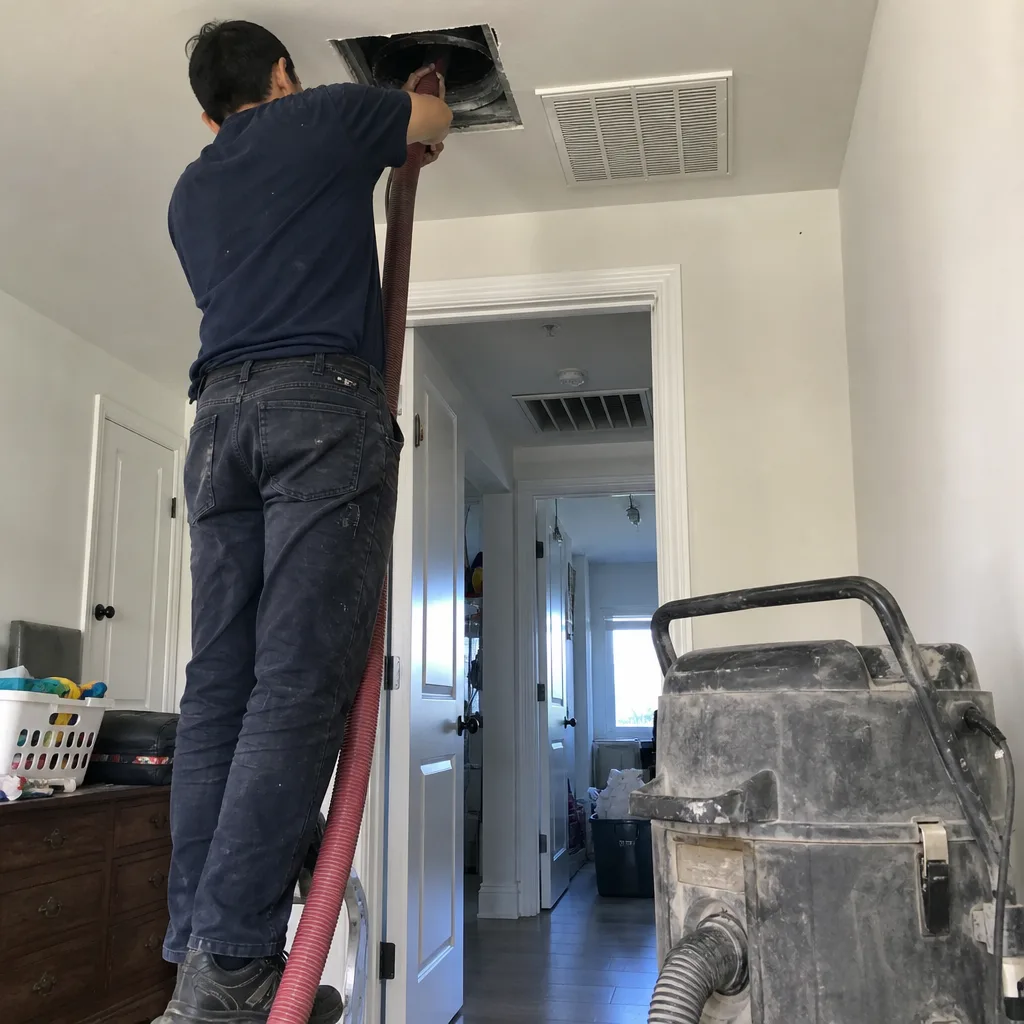 Before
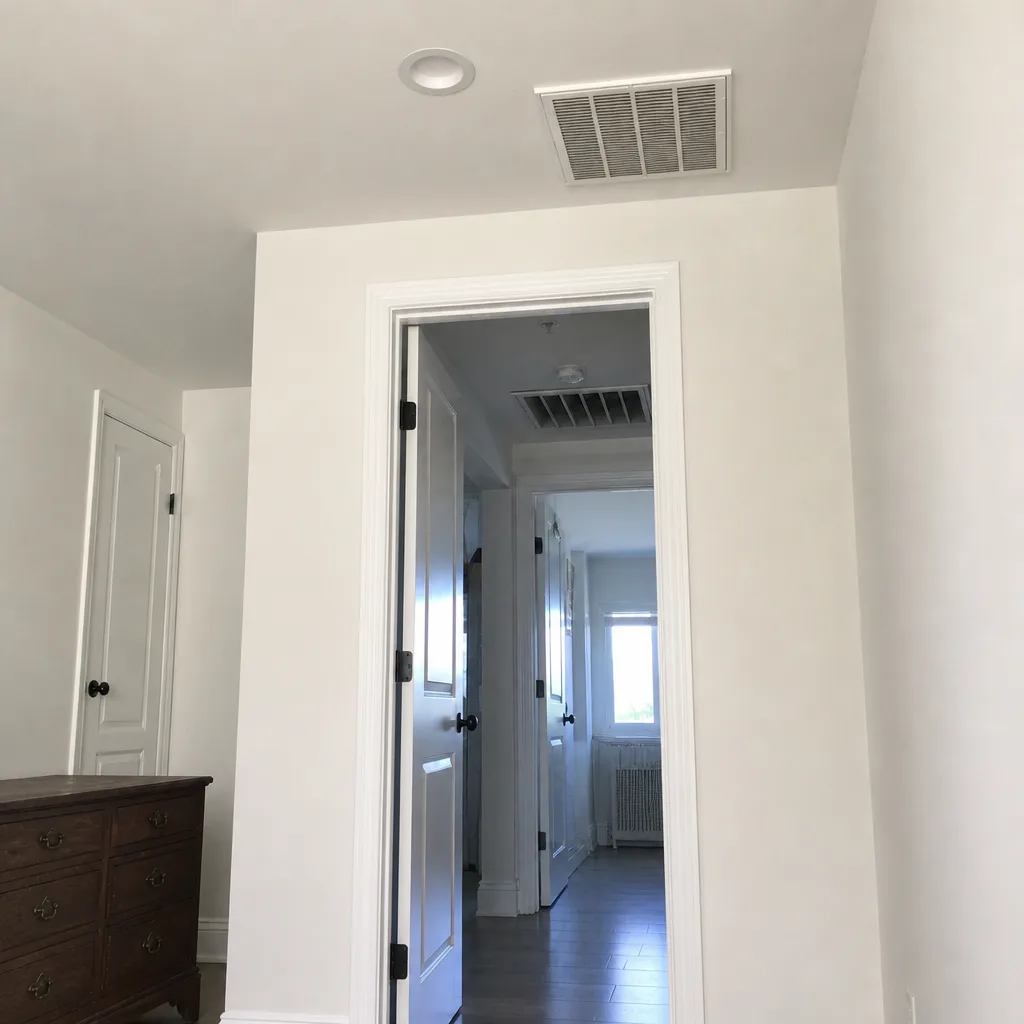 After
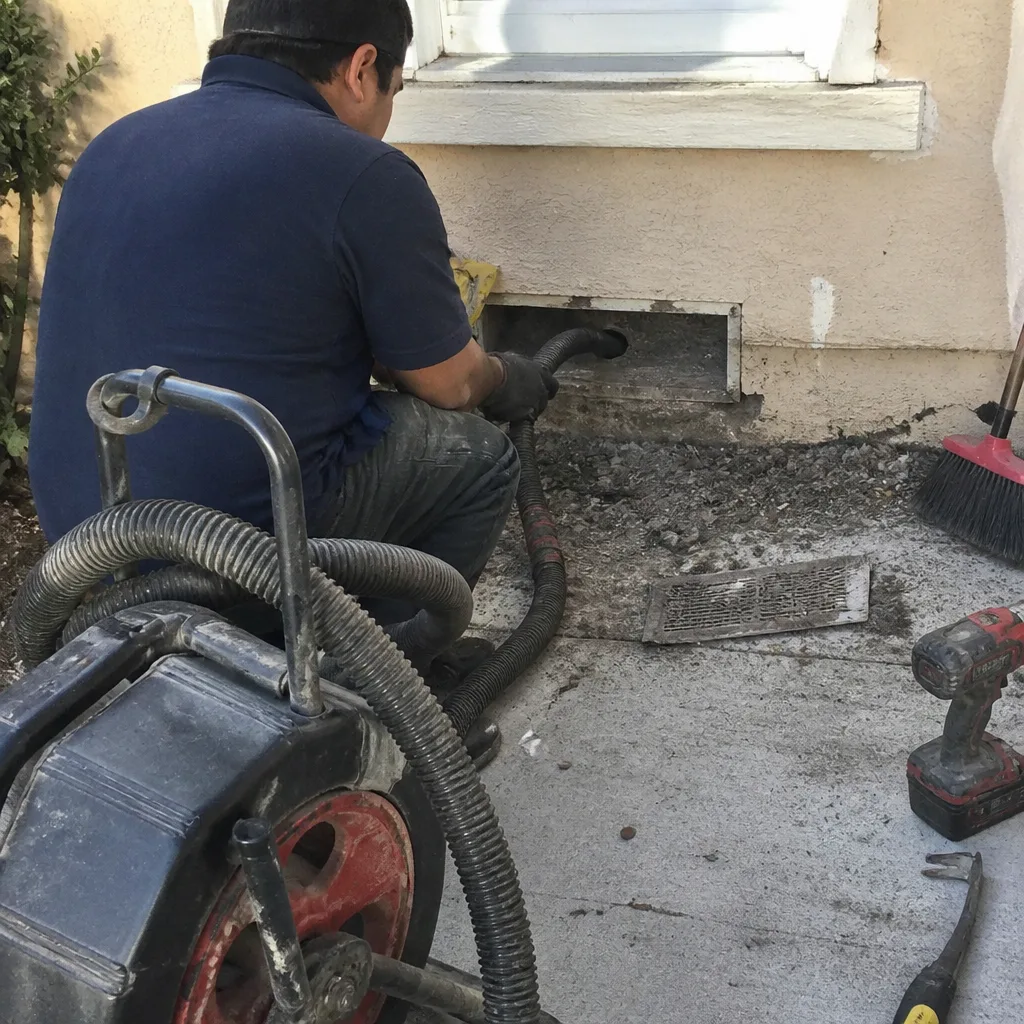 Before
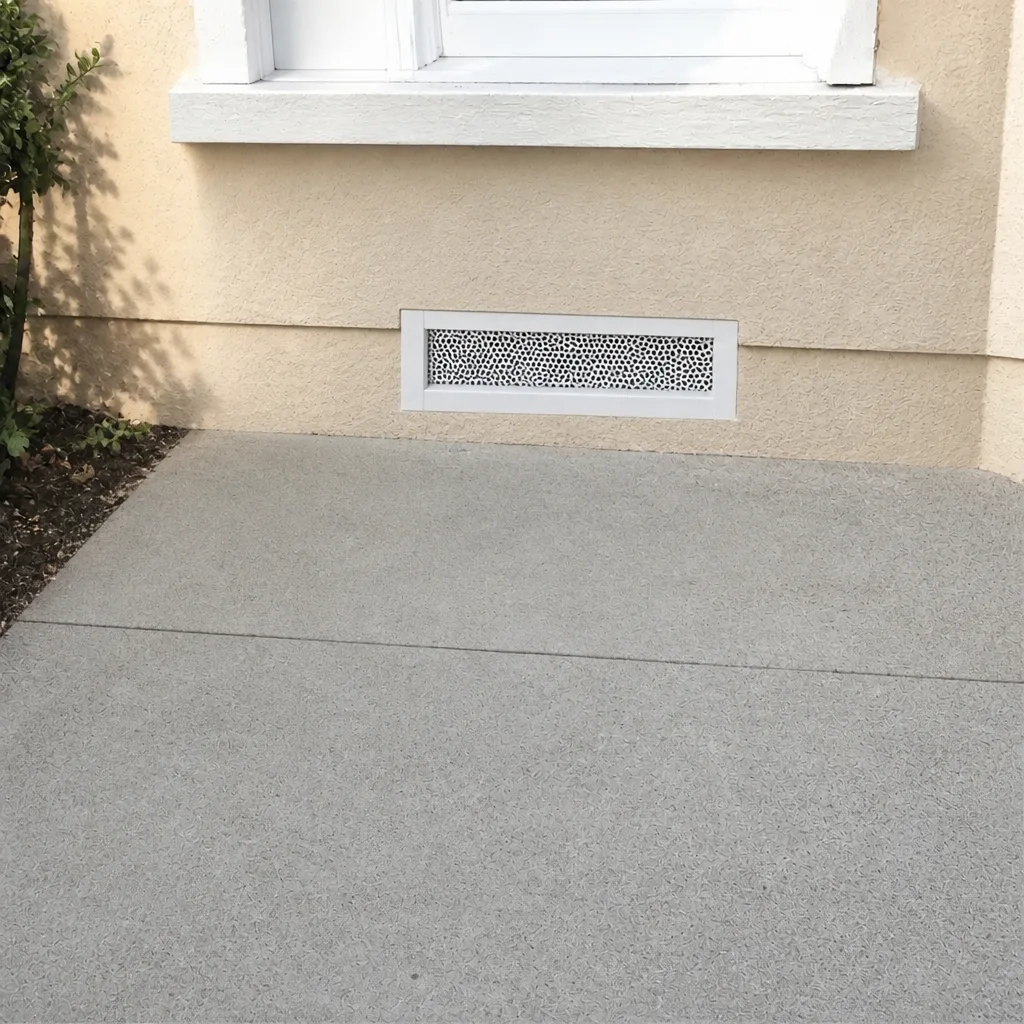 After
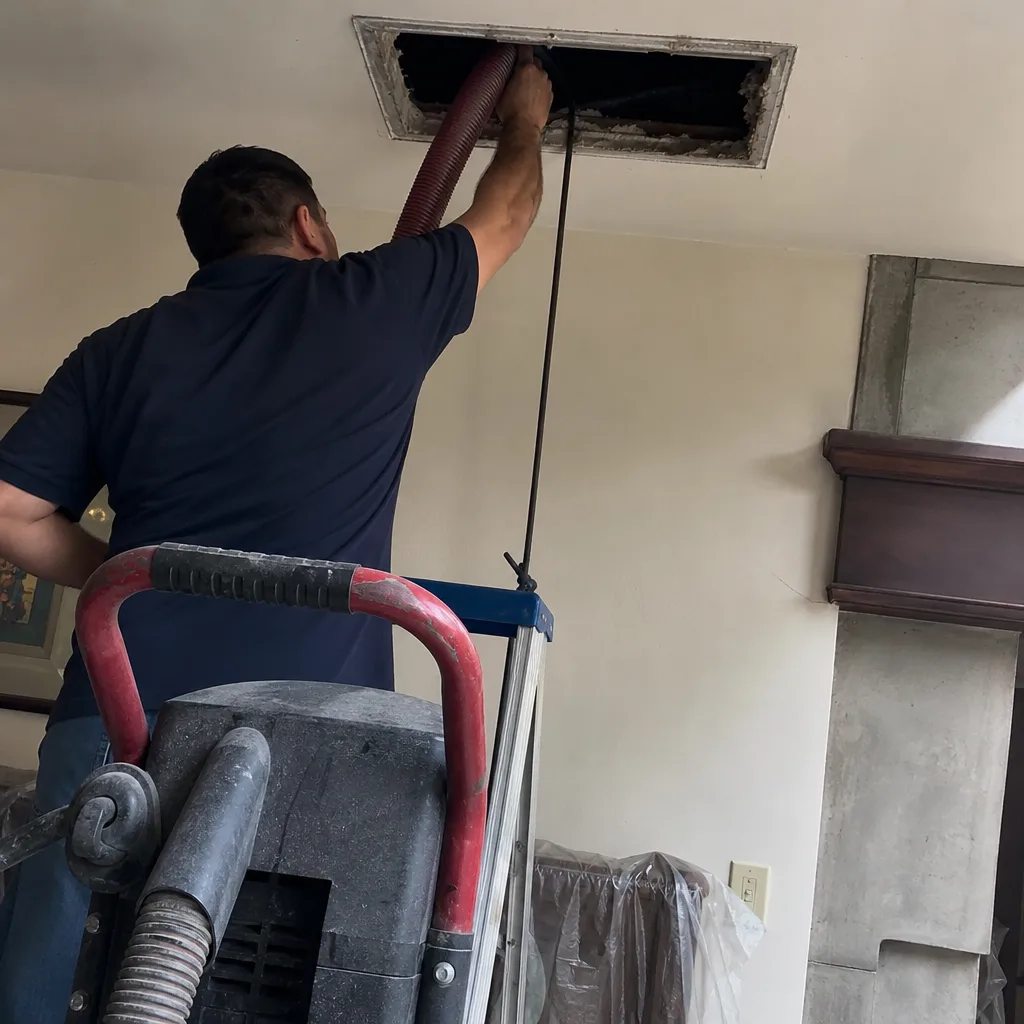 Before
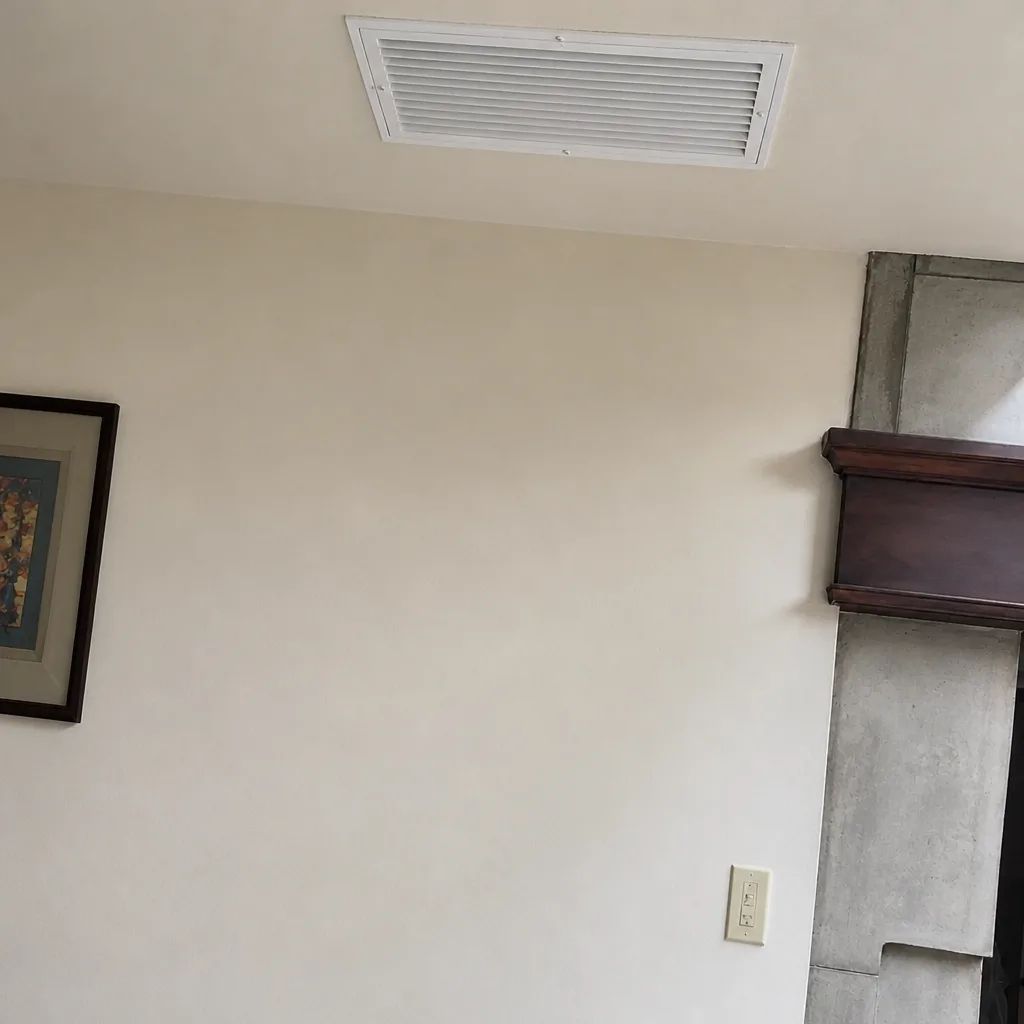 After
When to Call a Professional
Not every home needs duct cleaning immediately. The EPA’s general guidance is that cleaning is warranted when there is visible mold inside the ducts, vermin infestation, or a substantial buildup of debris, and after certain renovation or water-damage events. Beyond those triggers, there are everyday signals that are worth a professional look: musty odors when the HVAC runs, visible dust blowing from registers, uneven airflow between rooms, allergy symptoms that get worse indoors, or a dryer that takes longer than it should to dry a load. In Laguna Niguel, where a home’s HVAC runs through most of the year and attic duct runs see real temperature swings, disconnected flex at collar joints is one of the more common findings we hear about when homeowners describe airflow problems to us.
Avoiding the coupon trap and hiring on proof is the whole game. Laguna Niguel Air Duct Cleaning Pros offers free estimates in Laguna Niguel. Call (877) 770-0716. We answer 24/7. Fast dispatch from 7am to 7pm, Sunday through Friday.
Frequently Asked Questions
The three fastest checks are a valid CSLB license with a C-20 or C-38 classification, a written scope of work priced as a whole system, and a willingness to provide before-and-after camera footage of your own ducts. A contractor who passes all three and answers the five equipment questions is worth considering. Call (877) 770-0716 for an exact quote. Estimates are free.
Pricing depends on the number of supply and return runs, whether the air handler and coil are included, and whether dryer vent cleaning or duct repair is added. Any price you are quoted should be for the whole system, in writing, agreed before work starts. That is the standard we hold ourselves to. Call (877) 770-0716 for an exact estimate, and we will give you the number for your home, not a per-vent rate.
Because they are not the same job. A low quote typically leaves out the air handler, the coil, the camera inspection, and register sealing, and prices per vent so the total grows once the technician is on site. What looks like a deal is often a smaller job at a headline price, with additions stacked on top. The written scope is what makes the comparison real. Call (877) 770-0716 for a whole-system quote you can compare.
Camera footage of the duct runs before and after the cleaning is the only reliable way. Ask for it. A contractor with proper equipment carries a duct camera and can show the interior of the same runs both before and after the visit. If the footage is not offered, ask why. Call (877) 770-0716 and we will show you what your ducts looked like before we started.
There is no single answer that fits every home. The EPA guidance is that cleaning should happen when conditions warrant it, such as visible mold, vermin, or substantial debris, and after renovation or water-damage events. Homeowners without those triggers often choose an inspection every few years to see whether cleaning is needed. In a Laguna Niguel home where the HVAC runs most of the year, treat annual dryer vent cleaning as a separate baseline. The NFPA recommends it. Call (877) 770-0716 to book an inspection and get the answer for your system.
Not automatically. Dryer vent cleaning is a separate service, because it addresses a different air pathway and a different hazard: lint buildup in the venting run, which the NFPA flags as an annual fire-risk concern. Ask explicitly whether it is included or a separate line item, and confirm the scope covers the full run to the exterior termination. Call (877) 770-0716 and ask us to quote both together.
The Bottom Line
Hiring a duct cleaning contractor in Laguna Niguel is not a matter of finding the lowest price. It is a matter of verifying three things: a valid CSLB license, the right equipment, and a written whole-system scope with before-and-after camera footage. The five equipment questions are the fastest filter. The written scope protects you from bait-and-switch. The camera footage is the only proof. If a contractor hesitates on any of the three, walk away, because someone in Laguna Niguel will answer all three clearly and put the number in writing before the first tool comes out of the van.
If you want to skip the guesswork, call Laguna Niguel Air Duct Cleaning Pros at (877) 770-0716 for a free estimate. We answer 24/7. Fast dispatch from 7am to 7pm, Sunday through Friday. Single-provider coverage means the cleaning, the repair, and the air treatment come from one place, with one written scope and one number for the job.
Written by the team at Laguna Niguel Air Duct Cleaning Pros.