
Last updated November 25, 2026
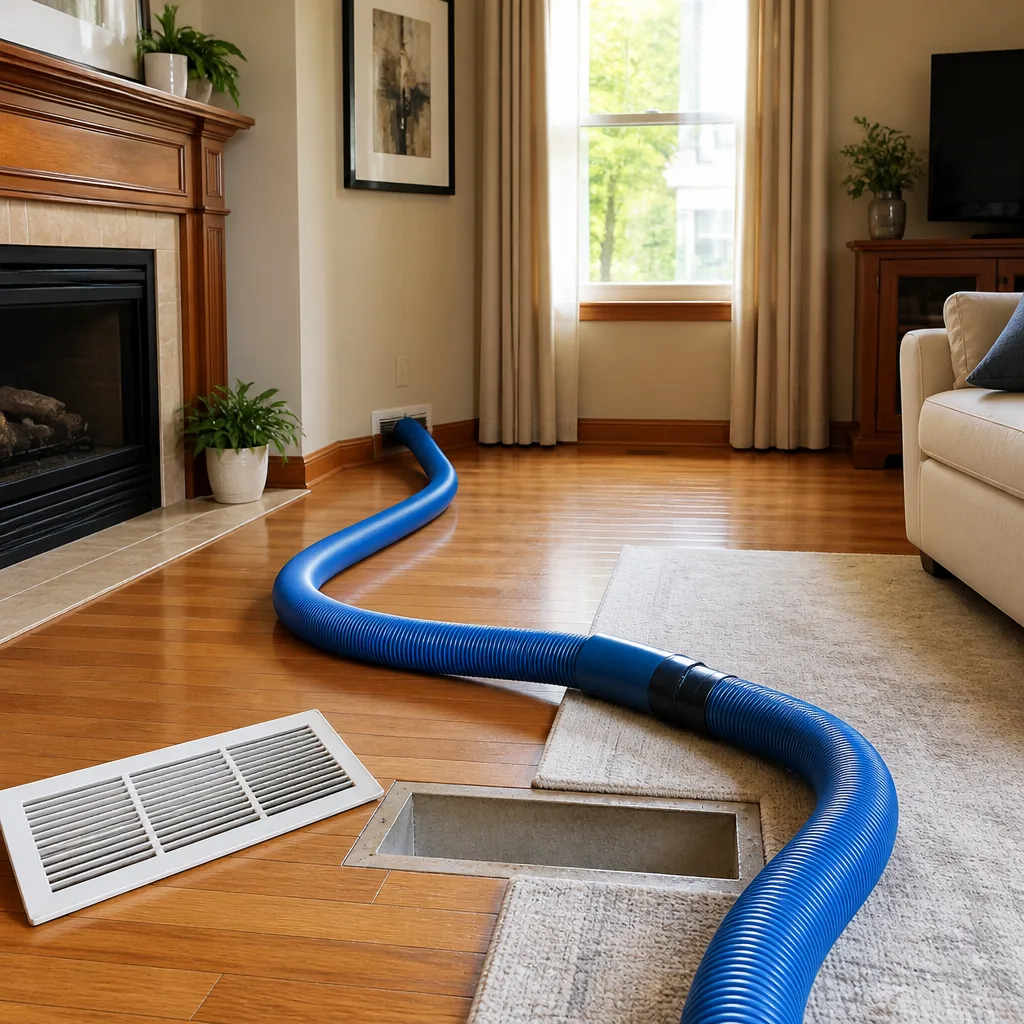 Whole-home duct cleaning
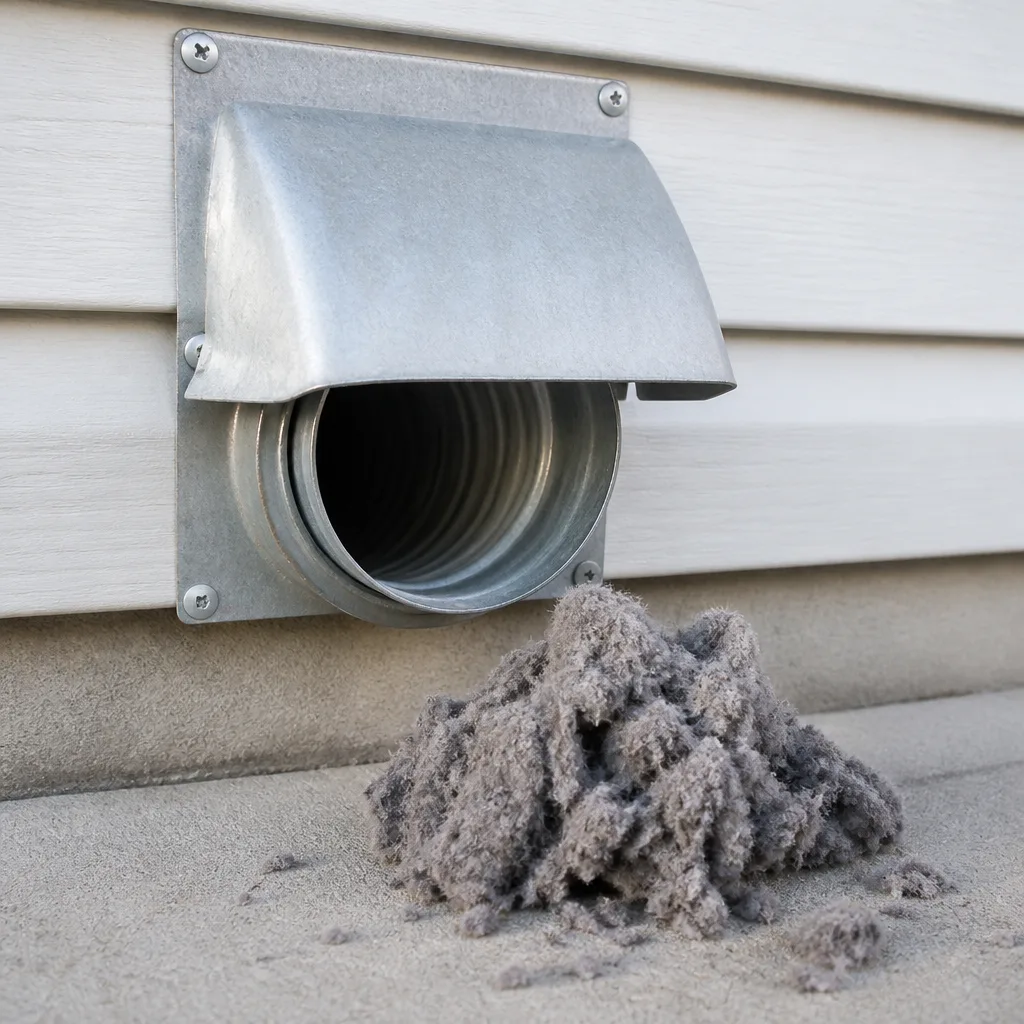 Dryer vent cleaning
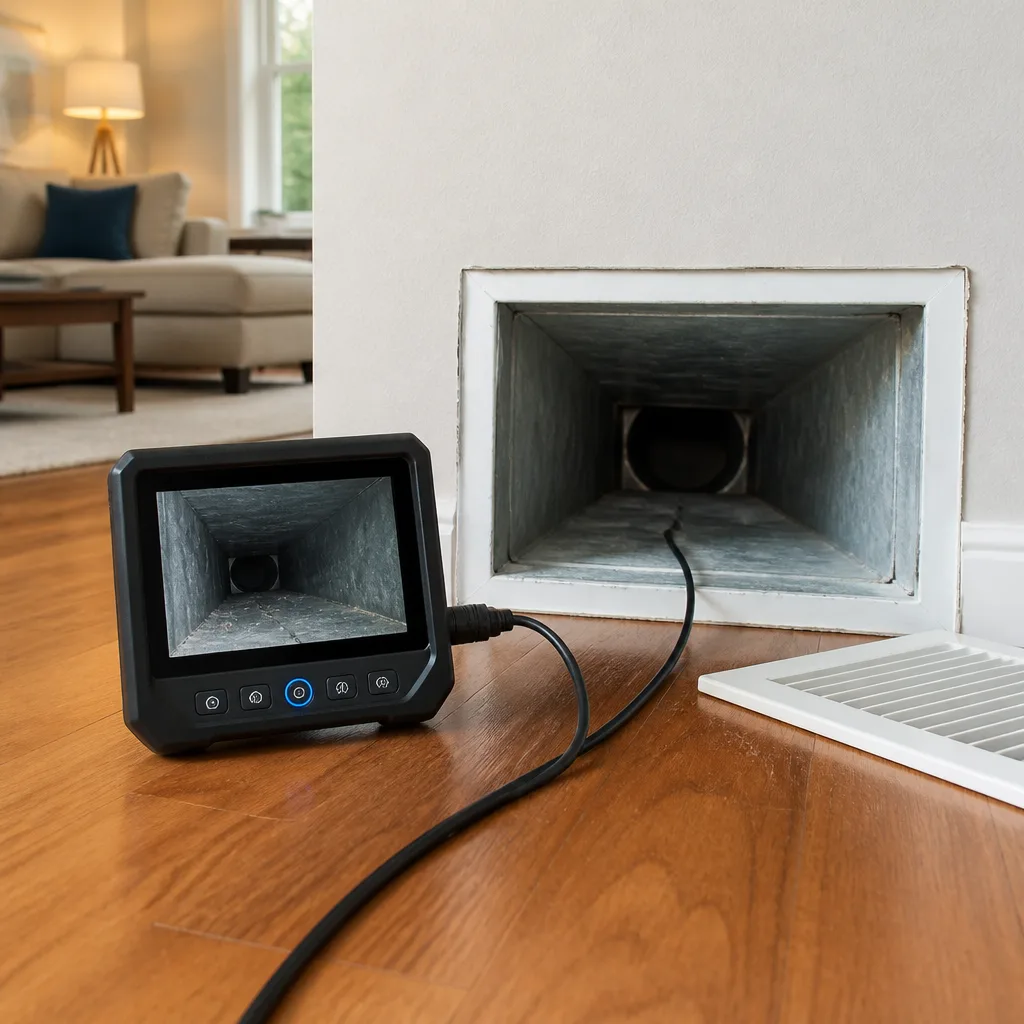 Camera inspection
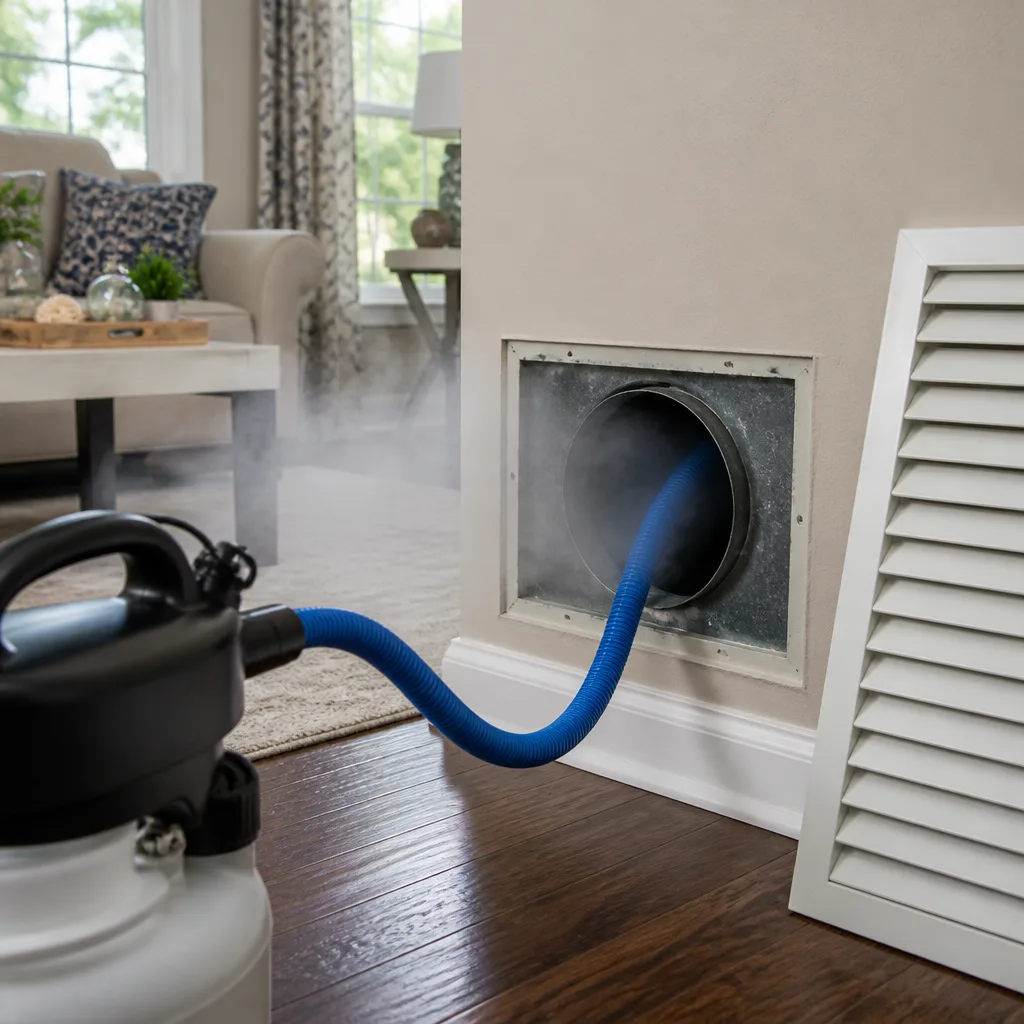 Sanitizing & deodorizing
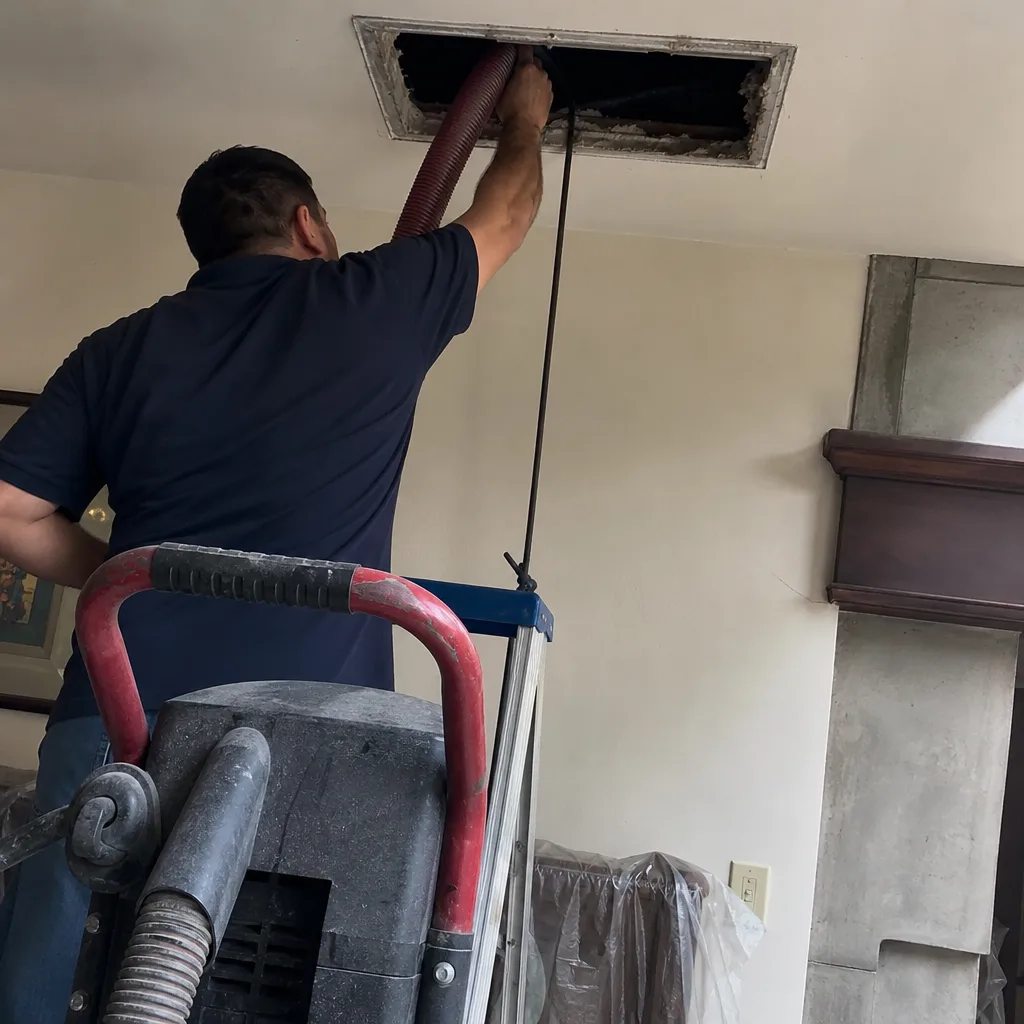
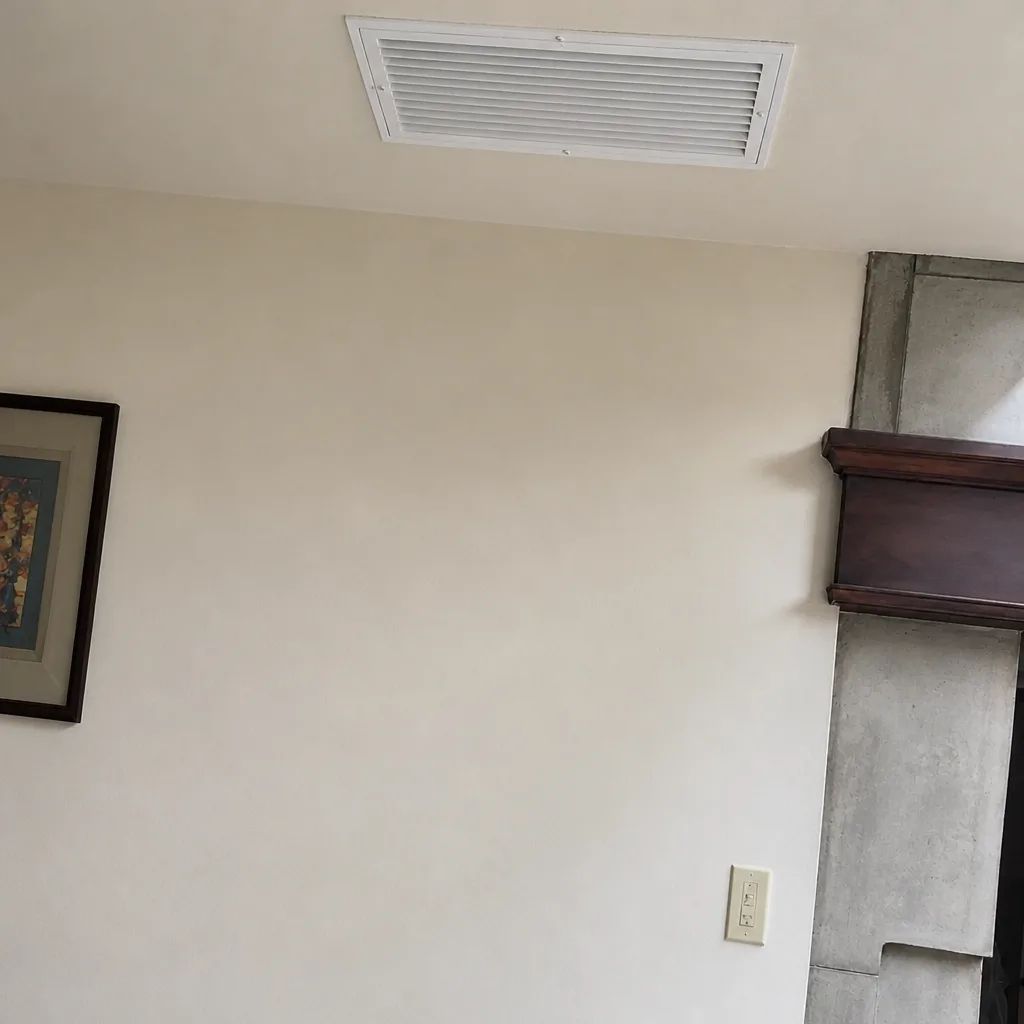
Whole-system duct and dryer vent check with before-and-after photos - you see exactly what came out of your vents
That "$99 whole-house special" is a bait ad - the real number appears once they are in your hallway, or the "clean" is a shop-vac at the register. We photograph the inside of your ducts before and after instead.
Air Duct Cleaning Permits, Codes & Inspections in Laguna Niguel, CA: What You Need to Know
No permit is required to clean your ducts. That single fact trips up a lot of homeowners, because the same visit that starts as routine cleaning can end with a technician recommending a repair, a replacement or a sanitizing application – and some of that work does need sign-off. When it does and nobody pulls the permit, the paperwork problem lands on you, not the contractor, and it can follow the house all the way to a home inspection report or an insurance review. This guide draws the line between cleaning and work that needs City of Laguna Niguel or Orange County Fire Authority approval, so you know exactly what to ask for before and after anyone touches the ductwork in your Laguna Niguel home.
Quick Answer
Cleaning, sanitizing and sealing existing ducts generally do not require a permit in Laguna Niguel. Replacing duct runs, altering a system’s layout or changing equipment capacity typically does, and that work is permitted through the City of Laguna Niguel building department or the Orange County Fire Authority depending on what’s involved. If a contractor repairs or replaces ductwork, ask for the permit number and the written scope of work before you pay.
Styles & brands we work with
- Whole-home duct cleaning
- Dryer vent cleaning
- Camera inspection
- Sanitizing & deodorizing
Table of Contents
- Cleaning vs. Repair: Where the Permit Line Falls
- What California Mechanical Code Section 605 Actually Covers
- City of Laguna Niguel vs. OCFA: Which Department Signs Off
- EPA-Registered Sanitizing Chemicals and California Restrictions
- Title 24 Compliance and Unpermitted Work at Sale
- Inspections: What Gets Looked At and How
- What to Request in Writing After Any Duct Repair
- How Laguna Niguel’s Climate and Housing Stock Affect Duct Work
Cleaning vs. Repair: Where the Permit Line Falls
The distinction is mechanical, not cosmetic. Cleaning removes accumulated debris from a system that stays exactly as it is. Repair changes the physical system – it moves a joint, replaces a section, resizes a fitting, or reconnects a run to a different trunk. That physical change is what pulls a job into permit territory.
Here’s how we think about it when we’re in a Laguna Niguel home inspecting a system:
- Mechanical cleaning – no permit. You’re removing dust, debris and biological buildup from existing ductwork using tools like the Rotobrush and Nikro systems we run. Nothing about the system changes.
- Air quality and sanitizing – generally no permit, but the chemicals used must be EPA-registered and applied per label. More on that below.
- Sealing – typically no permit when you’re sealing seams, joints and small leaks with mastic or tape. It’s a maintenance-level fix.
- Repair of a damaged section – permit may be required depending on scope. A cracked joint taped up is one thing; a collapsed run that needs cutting and replacement is another.
- Replacement of duct runs or system layout changes – permit required. This is where the City of Laguna Niguel building department or OCFA gets involved.
- Equipment changes – permit required. Changing out an air handler or furnace, or upsizing a system, changes the load the ducts are sized for.
In our experience, the confusion usually happens mid-job. A technician finds a failed connector or a crushed flex run during cleaning, and it’s tempting to fix it on the spot and move on. That’s fine for a taped joint. It’s not fine for a section replacement that should be documented. The right move is a written scope and a permit pulled before the work, not after.
What California Mechanical Code Section 605 Actually Covers
California Mechanical Code Section 605 addresses duct systems and their installation standards – how ducts are constructed, supported, sealed and connected. It’s a code about how the system gets built and altered, not about how it gets cleaned. That distinction matters for Laguna Niguel homeowners because it means a cleaning company isn’t held to Section 605 for the act of cleaning, but a contractor doing repair or replacement work under that code is.
When Section 605 applies in practice:
- New duct installation or replacement of sections – the work must meet construction, support and sealing requirements.
- Alterations to an existing system – if you’re moving a supply run or adding a branch, the new work has to comply.
- Sealing requirements – Section 605 sets expectations for how joints and seams are sealed, and that carries into repair work.
When it doesn’t apply: routine cleaning, sanitizing existing surfaces and light maintenance sealing on an existing system as-is. A technician brushing out a return trunk isn’t performing a code-regulated alteration.
This is where a lot of homeowners get talked into work they didn’t need, or talked out of documentation they did need. If a contractor tells you a permit is needed for cleaning, that’s a red flag. If they tell you none is needed for a major duct replacement, that’s a bigger one. We recommend asking directly: “Is this cleaning, or is this repair or replacement?” and getting the answer written down.
City of Laguna Niguel vs. OCFA: Which Department Signs Off
Permit jurisdiction in Laguna Niguel splits between the City building department and the Orange County Fire Authority. Which one you deal with depends on what the work involves.
- City of Laguna Niguel building department – handles mechanical permits for duct system alterations, replacement of duct runs, equipment changes and related construction. This is the standard path for residential duct repair that crosses the permit line.
- Orange County Fire Authority (OCFA) – handles fire-related concerns. Ductwork that penetrates fire-rated assemblies, dryer vent routing that affects fire separation, and any work where duct systems interact with fire-blocking or fire-rated wall assemblies can pull OCFA in.
- Both – larger renovations that involve mechanical work and fire-rated construction can require sign-off from both. That’s common in multi-unit or commercial projects.
If you’re a homeowner in Laguna Niguel and a contractor tells you they’re handling the permits, ask which department is issuing them. A city permit and an OCFA sign-off are different documents and different processes. The answer tells you whether the contractor knows what they’re doing. If they can’t say which department, that’s a reason to get a second opinion before work starts.
Fire safety is not a small component of this. Ductwork that passes through a garage wall or roof assembly creates a fire path, and OCFA cares about how that’s sealed and protected. So does your insurer.
EPA-Registered Sanitizing Chemicals and California Restrictions
Sanitizing is one of the more misunderstood parts of duct cleaning. The products used in this step should be EPA-registered for the application, and they should be applied per the label – meaning correct dilution, correct dwell time, correct surfaces. California adds a layer on top.
California’s restrictions come largely through CARB (California Air Resources Board) regulations on volatile organic compounds in consumer and commercial products. That means some products sold in other states aren’t available here, and the ones that are have VOC limits the manufacturer has to meet. When a duct cleaning company tells you they’re sanitizing with an EPA-registered product, the reasonable follow-up question is: registered for what, and is it CARB-compliant?
Two practical rules for Laguna Niguel homeowners:
- Ask for the product name and EPA registration number. A legitimate contractor can produce both. The label will state the registration and the approved use.
- Ask whether sanitizing is actually needed for your situation. Cleaning removes the debris. Sanitizing is a follow-on step for situations with biological growth, odor issues or a documented concern – not an automatic add-on if there’s no problem to treat.
We use products from names like Guardsman in finishing and sanitizing steps, and we’re careful with what gets applied inside a system that’s going to blow air into a bedroom. If a contractor can’t tell you what they’re spraying or why, that’s not a product problem. It’s a process problem.
Title 24 Compliance and Unpermitted Work at Sale
Unpermitted duct repair doesn’t disappear quietly. It becomes a disclosure question during a home sale, and in Orange County it can affect how a buyer’s inspector writes up the property – and how a lender’s appraiser treats it.
Title 24 is California’s energy code, and the duct work in your home is part of how the home complies with it. Ducts are required to be sealed, insulated and connected correctly. When someone replaces ductwork or alters a system without a permit, the alteration isn’t documented, and it may or may not meet the sealing and insulation standards the code expects.
Here’s what that can mean in a Laguna Niguel home sale:
- A buyer’s home inspector flags it. Unpermitted duct work is often visible – mismatched materials, reconnected runs with different fittings, tape over joints that should be sealed with mastic.
- Title 24 compliance disclosures come into play. California sellers of homes with known energy system alterations are expected to disclose. Unpermitted work sits outside that record.
- Repair costs get renegotiated. Buyers routinely ask for the cost of legalizing or redoing unpermitted work in a purchase negotiation.
- Insurers may raise questions. Unpermitted construction can complicate a homeowner policy claim if a duct-related issue comes up later.
None of that is a reason to avoid doing duct work. It’s a reason to keep the paperwork on it. In our experience, the homeowner who can produce a permit and a written scope of work has a much easier close than the one who can’t, and it’s a cheap thing to make sure of up front.
Inspections: What Gets Looked At and How
When duct work does require a permit, the inspection follows a predictable shape. The inspector is checking that the system meets code and that what was installed matches what was drawn. Here’s how that generally runs:
- Pre-inspection contact. Once the permit is issued, the contractor schedules the inspection with the issuing department – City of Laguna Niguel building department or OCFA depending on the scope.
- Rough-in inspection. The inspector looks at duct layout, installation, connections and support before finishes go back. This is the stage where physically accessible duct work gets reviewed. Sealing methods, insulation, and whether the runs match the submitted plan are all in scope.
- Final inspection. Once the work is complete, the final sign-off confirms the system is closed up correctly and there’s nothing left open or disconnected.
- Documentation. The permit number and inspection sign-off become part of the property’s records. This is the piece homeowners forget about and it’s the piece that matters most at sale.
An inspection is not a quality test of the cleaning. It’s a code review of the mechanical work. That’s why the two things are genuinely separate – and why the homeowner should ask for both the permit record and a written scope that describes what was actually done during a cleaning visit.
One practical note: inspections take scheduling, and duct work that’s later closed inside a wall or ceiling can’t be re-examined easily. Get the inspection scheduled and done before anything goes back together.
What to Request in Writing After Any Duct Repair
The single best protection for a Laguna Niguel homeowner is documentation. If any duct work was repaired or replaced, you want a paper trail. Here’s what we tell homeowners to ask for:
- A written scope of work. What was repaired or replaced, exactly – which runs, which sections, which materials. Written before work starts, not recapped afterward.
- The permit number if a permit was required. Get it from the contractor before they leave and file it somewhere you’ll find it at sale.
- Before-and-after photos. If the ductwork is hidden once the work’s complete, photos are the only record you’ll have. We take them on every job for exactly this reason.
- Materials list. Which sealing products, which duct materials, which sanitizing chemicals were used – brand and product name.
- Inspection sign-off copy. If a permit was pulled, get the final inspection documentation from the issuing department or the contractor.
- A written summary or report. A short description of what was found, what was done and what the homeowner should watch for is worth more than a receipt.
Ask for these things in advance. A contractor who does this routinely will already have the documents or can produce them without friction. A contractor who hesitates at the ask is telling you something about how they run their business.
How Laguna Niguel’s Climate and Housing Stock Affect Duct Work
Laguna Niguel’s mild climate does something to duct systems that a lot of homeowners don’t expect: it makes problems slow. Because the HVAC doesn’t run with the same intensity it does in inland Orange County, small leaks and failing joints don’t always announce themselves. They build up over a longer window, and the energy cost shows up in small increments rather than big swings.
The housing stock has its own quirks. Many Laguna Niguel homes were built in the 1980s through the 2000s, and the duct designs reflect when each phase went in. Flex duct run through attics is common, and flex has a working life – it can sag, crush against framing, and separate at connections over time. That’s the kind of thing that comes up during cleaning and pushes a job into repair-and-permit territory.
Homes with older HVAC systems also tend to have duct sizing that doesn’t match current equipment if a system was replaced without matching the duct work. That’s a Title 24 concern, and it’s one that shows up when a homeowner changes out an air handler and the contractor discovers the ducts are undersized for the new unit. If you’re at that point, it’s worth talking about the full air pathway – Laguna Niguel Air Duct Cleaning Pros handles air duct cleaning, HVAC cleaning, duct repair and sealing, dryer vent work and sanitizing under one service call, so the pieces actually get coordinated rather than half-handled by two contractors who never spoke to each other.
Between cleaning visits, a few things are worth checking: filter condition, whether return grilles show dust buildup, and whether some rooms heat or cool noticeably slower than others. Uneven airflow is often the first sign that a duct is leaking or has separated somewhere between the air handler and the room. That’s a problem worth investigating before it turns into a full replacement.
Common Mistakes to Avoid
- Assuming cleaning needs a permit. It doesn’t. If a contractor tries to charge you a permit fee for a straight cleaning job, ask why in writing. Routine cleaning of existing ducts is maintenance, not regulated construction.
- Assuming repair never needs one. This is the more common mistake. A duct replacement without a permit shows up as unpermitted work later, and it’s the homeowner who has to explain it.
- Accepting verbal-only scope. “We replaced the cracked section in the attic” is not documentation. Get it in writing, with photos, before the technician leaves.
- Not asking which department handles permits. City of Laguna Niguel building department or OCFA – the two aren’t interchangeable. A contractor who can’t tell you which one should be handling your job hasn’t run this process enough to be trusted with it.
- Skipping the sanitizing product question. Ask for the EPA registration and whether the product is CARB-compliant. If the answer is vague, that’s a signal the sanitizing step is being done on autopilot rather than by need.
- Discounting duct work because “it’s just air.” Ductwork passes through fire-rated assemblies, integrates with the home’s energy compliance and affects insurance. Treat it like the structural component it is.
- Letting a cheap coupon price set the expectation. Whole-system duct work involves real equipment, real sealing materials and real labor. A low headline number usually means one of those got shortchanged, and it usually shows up when the homeowner is trying to sell.
See the difference
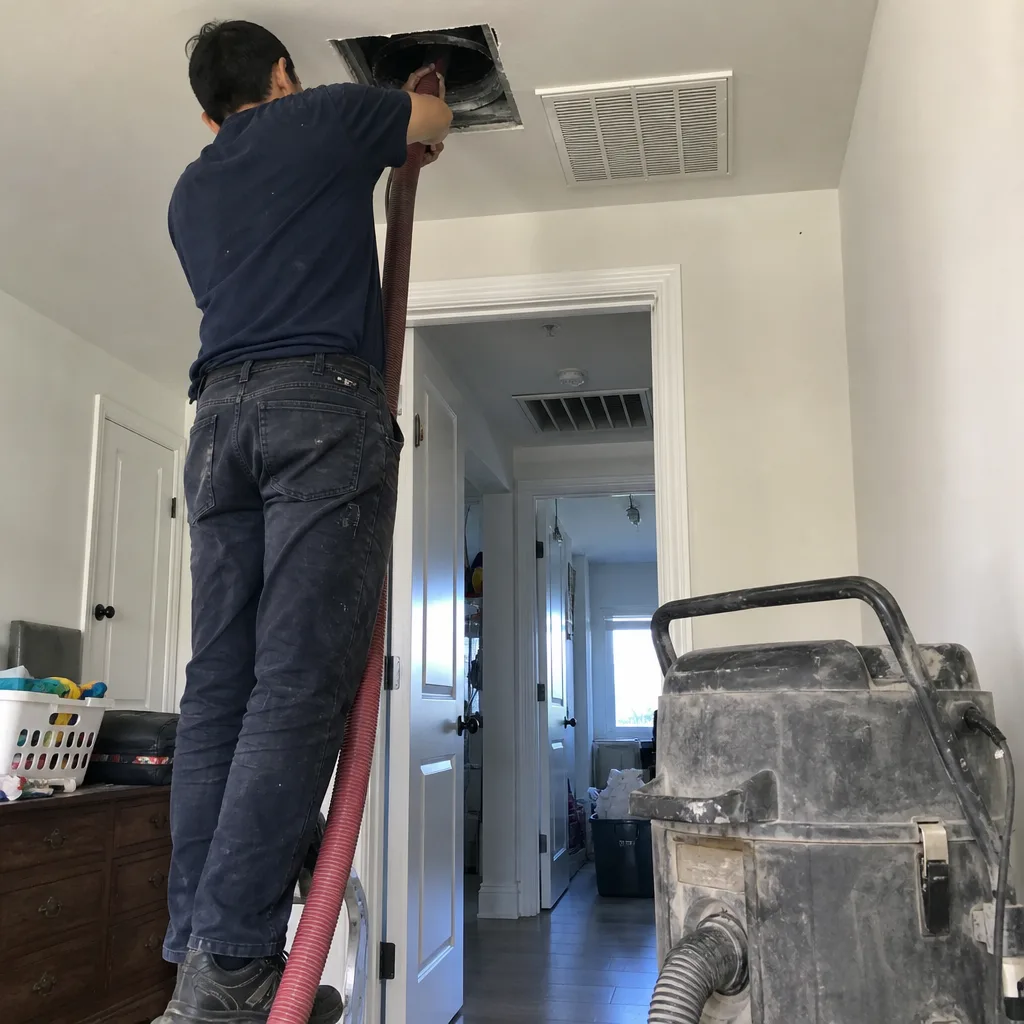 Before
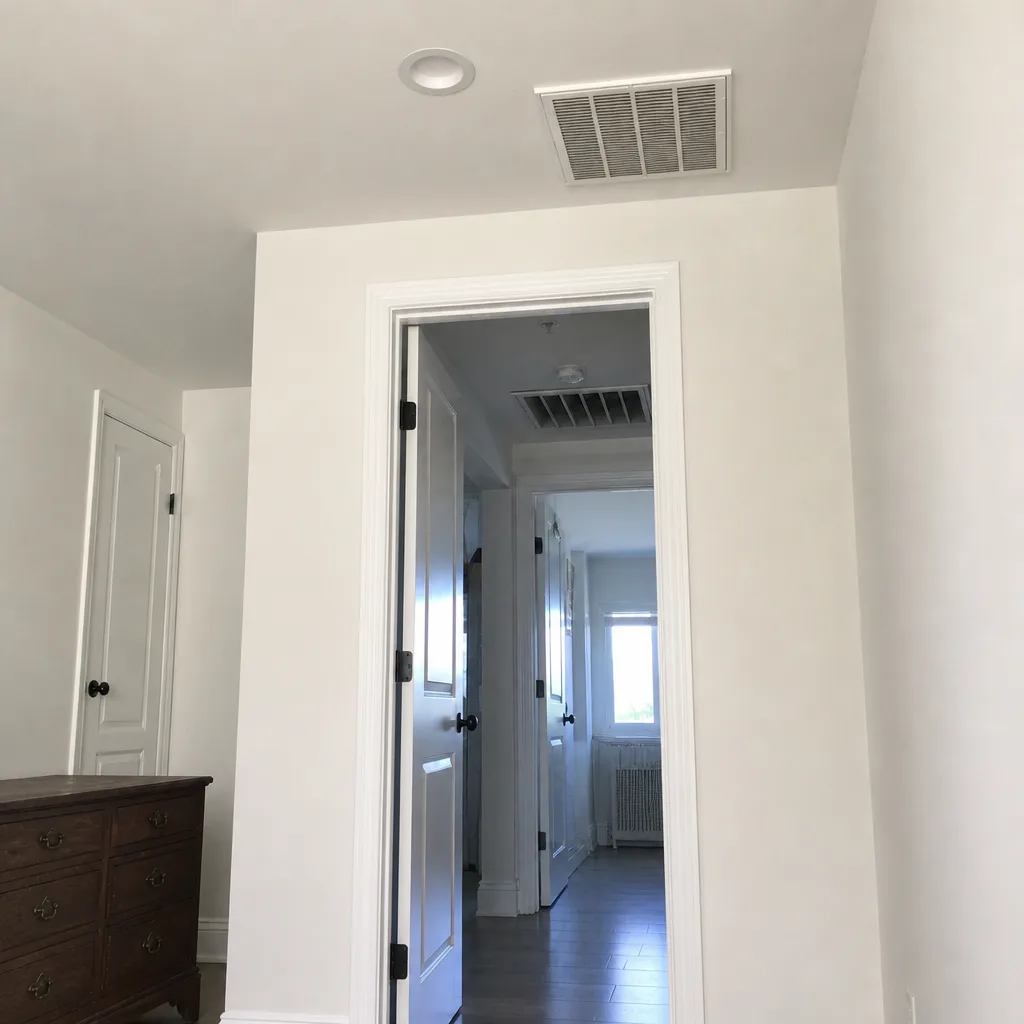 After
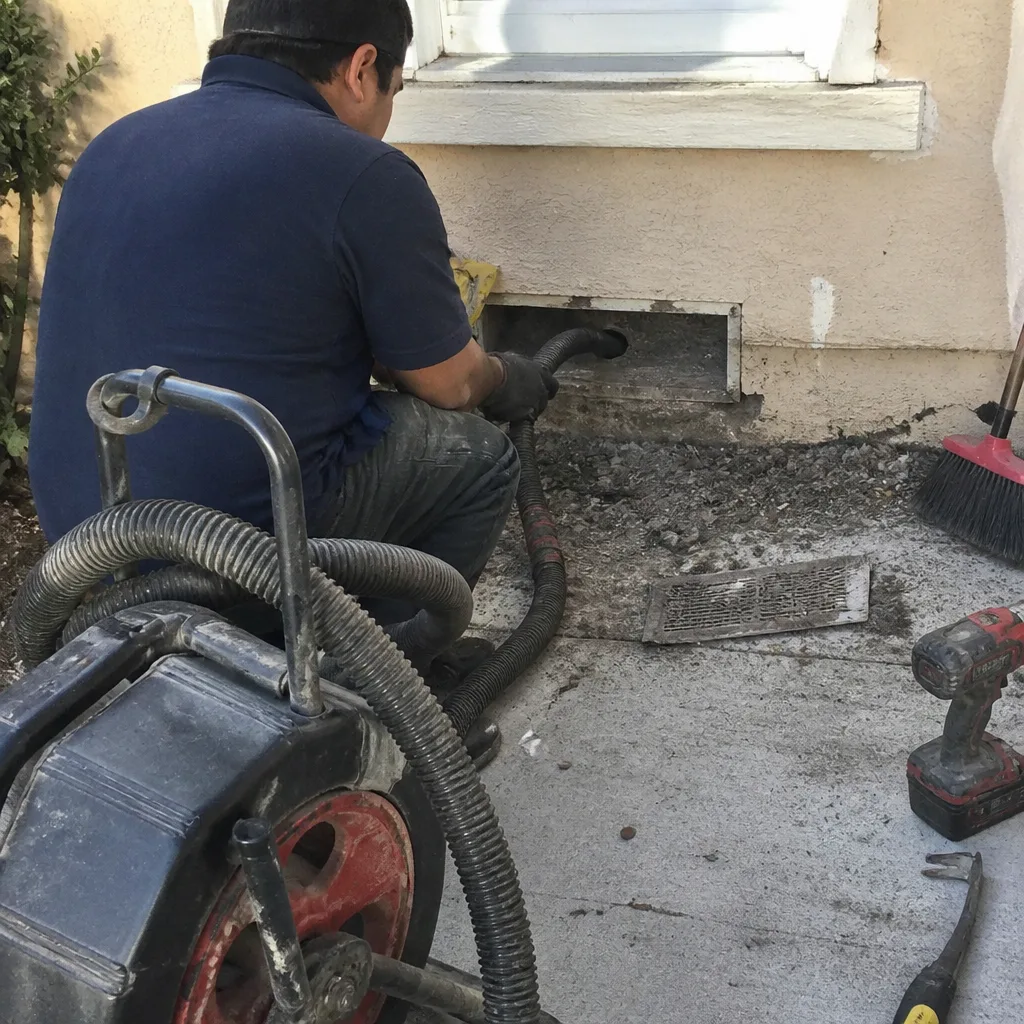 Before
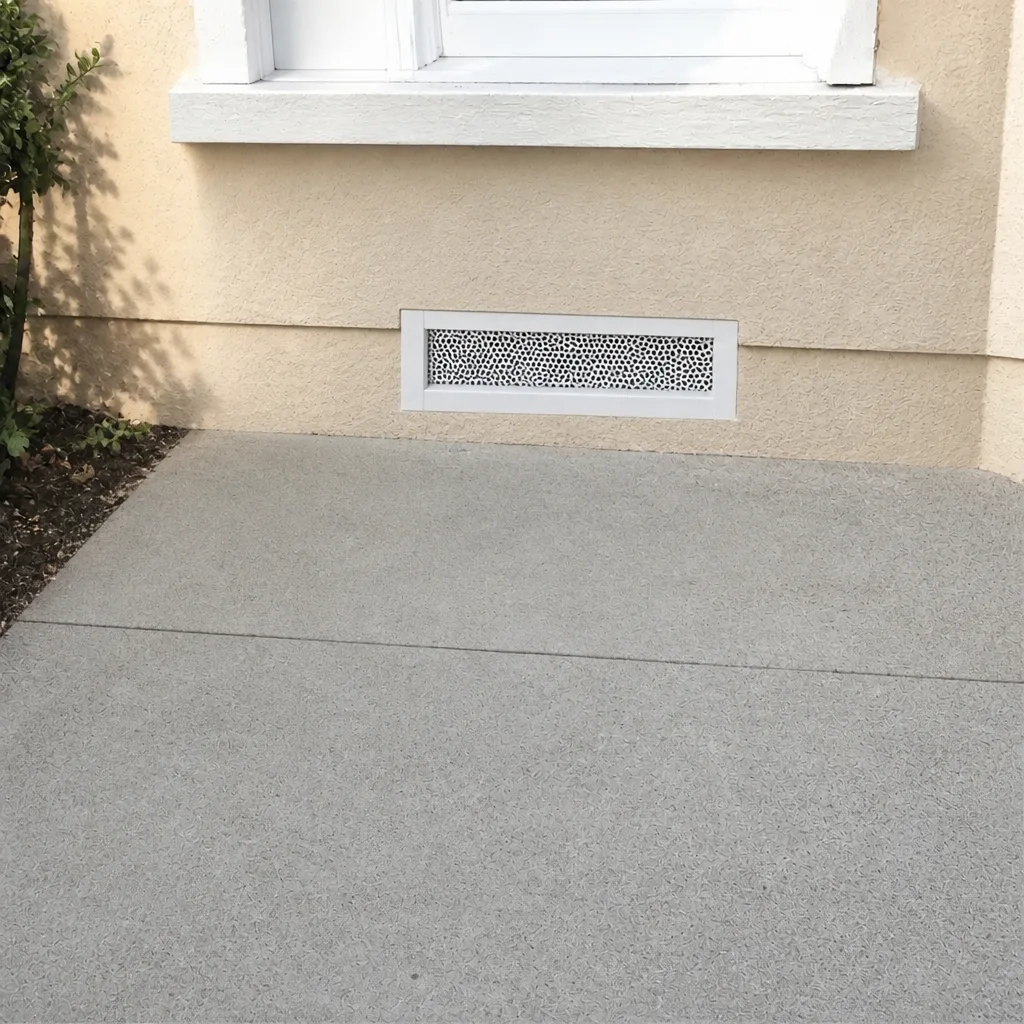 After
 Before
 After
When to Call a Professional
Some jobs are DIY territory – changing a filter, cleaning a grille, wiping down a return vent. Beyond that, duct systems are genuinely a professional’s job, and the safety reasons are straightforward. Duct work runs through attics and sometimes crawl spaces, interacts with combustion equipment, and can push contaminated air into living space if it’s disrupted incorrectly. Getting a section replaced or reconnected wrong creates a pressure problem that returns through the house. And a failed connection in a fire-rated assembly is a safety issue, not an efficiency one.
Specific situations that call for a pro: airflow that’s visibly uneven between rooms, a musty smell that returns after filters are changed, visible dust streaks around return grilles, a duct that’s come loose in the attic, or a system that was clearly altered without paperwork. In those cases, get an on-site look before moving forward. Laguna Niguel Air Duct Cleaning Pros offers free estimates in Laguna Niguel – call (877) 770-0716. We use equipment from Rotobrush, Nikro and Abatement Technologies, and we can work with the City of Laguna Niguel building department or OCFA on any permitted repair that comes up.
Frequently Asked Questions
No. Routine air duct cleaning does not require a permit in Laguna Niguel, because cleaning removes debris from an existing system without altering it. Permits come into play when ductwork is repaired, replaced or reconfigured. If a contractor tells you a permit is required for cleaning alone, ask for the scope in writing. Call (877) 770-0716 for a free estimate – estimates are free.
It depends on the work. The City of Laguna Niguel building department handles mechanical permits for duct alterations, replacements and equipment changes. The Orange County Fire Authority gets involved where ductwork interacts with fire-rated assemblies or fire separation. Larger projects can require both departments to sign off. If you’re unsure which path applies, call (877) 770-0716 and we can talk through it – estimates are free.
Yes, potentially. Unpermitted duct repair shows up during a home inspection, and in California it becomes a Title 24 compliance question during disclosure. Buyers routinely ask for the cost of legalizing or redoing the work in a purchase negotiation. The fix is simple – ask any contractor who repairs or replaces ductwork for the permit number and a written scope of work. Call (877) 770-0716 for a free estimate before any repair begins.
Sanitizing products should be EPA-registered for the application and compliant with California Air Resources Board (CARB) VOC limits. Some products available in other states don’t meet those standards, so the manufacturer has to formulate to the state’s limits. Ask for the product name, the EPA registration number and confirmation that it’s CARB-compliant. Call (877) 770-0716 for a free estimate and we’ll explain what we’d use in your home.
Photos and a written scope. Before-and-after photos of the ductwork are the only record you’ll have if the work is inside a wall or attic once it’s complete. A written scope that names the sections repaired or replaced is the second piece. Together they’re worth more than any verbal assurance. Call (877) 770-0716 for a free estimate – we take photos on every job.
Not to the act of cleaning – Section 605 covers duct construction, support, sealing and connection standards, which is code for how the system gets built or altered. It applies when ductwork is installed, replaced or reconfigured. Cleaning an existing system as-is falls outside it. If you’re not sure which category your situation falls into, call (877) 770-0716 for a free estimate and a straight answer.
The Bottom Line
Cleaning is not a permitted activity in Laguna Niguel. Repair and replacement often are, and the difference matters when the house changes hands. Anyone doing duct work on your home should be able to tell you which department handles the permit – City of Laguna Niguel building department or OCFA – and produce a permit number if the job crosses that line. Sanitizing products should be EPA-registered and CARB-compliant. Every repair should come with a written scope and photos. None of that is bureaucratic overhead; it’s the paperwork that protects the biggest asset most homeowners own. If you’re not sure which side of the line your situation falls on, get an on-site assessment before work starts.
Call (877) 770-0716. We answer 24/7. Fast dispatch from 7am to 7pm, Sunday through Friday. Estimates are free, and the written estimate sets the final price – one flat price per system, agreed before work begins.
Written by the team at Laguna Niguel Air Duct Cleaning Pros.