
Last updated November 25, 2026
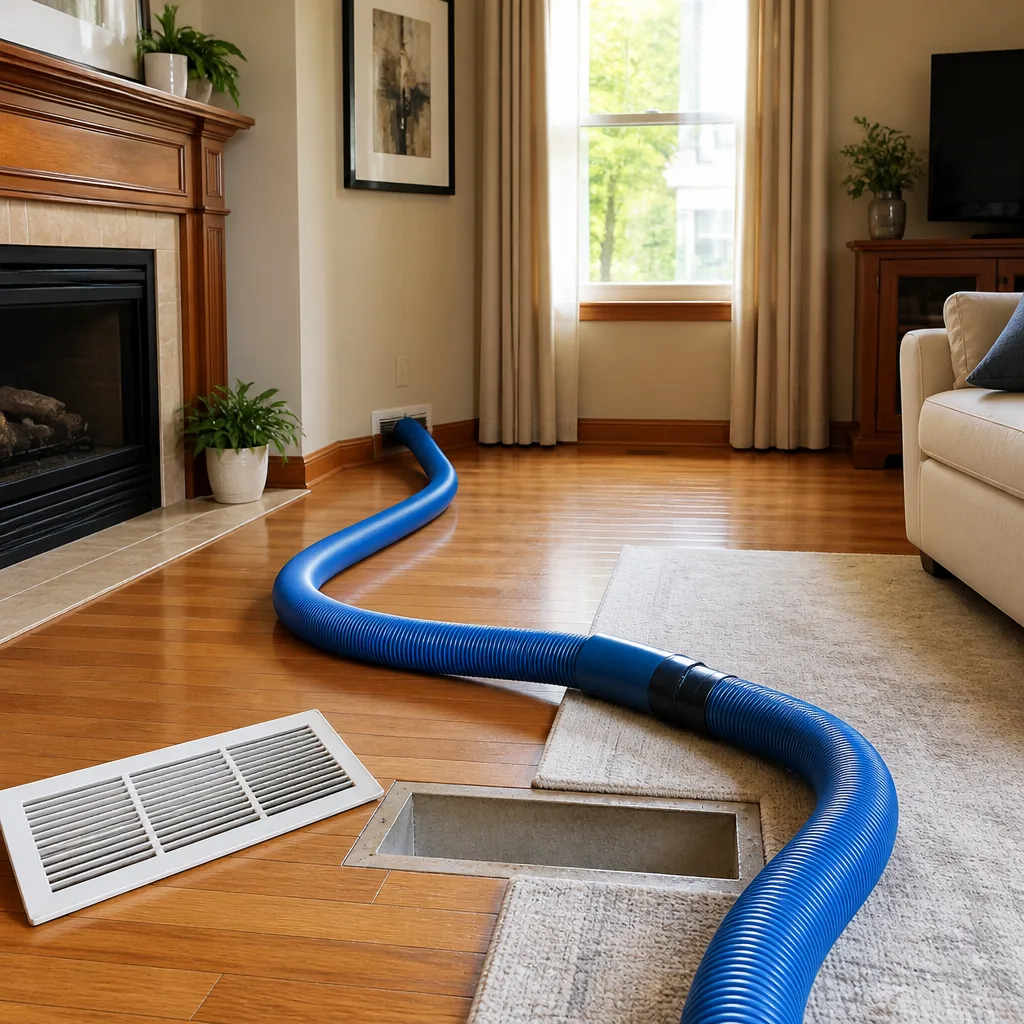 Whole-home duct cleaning
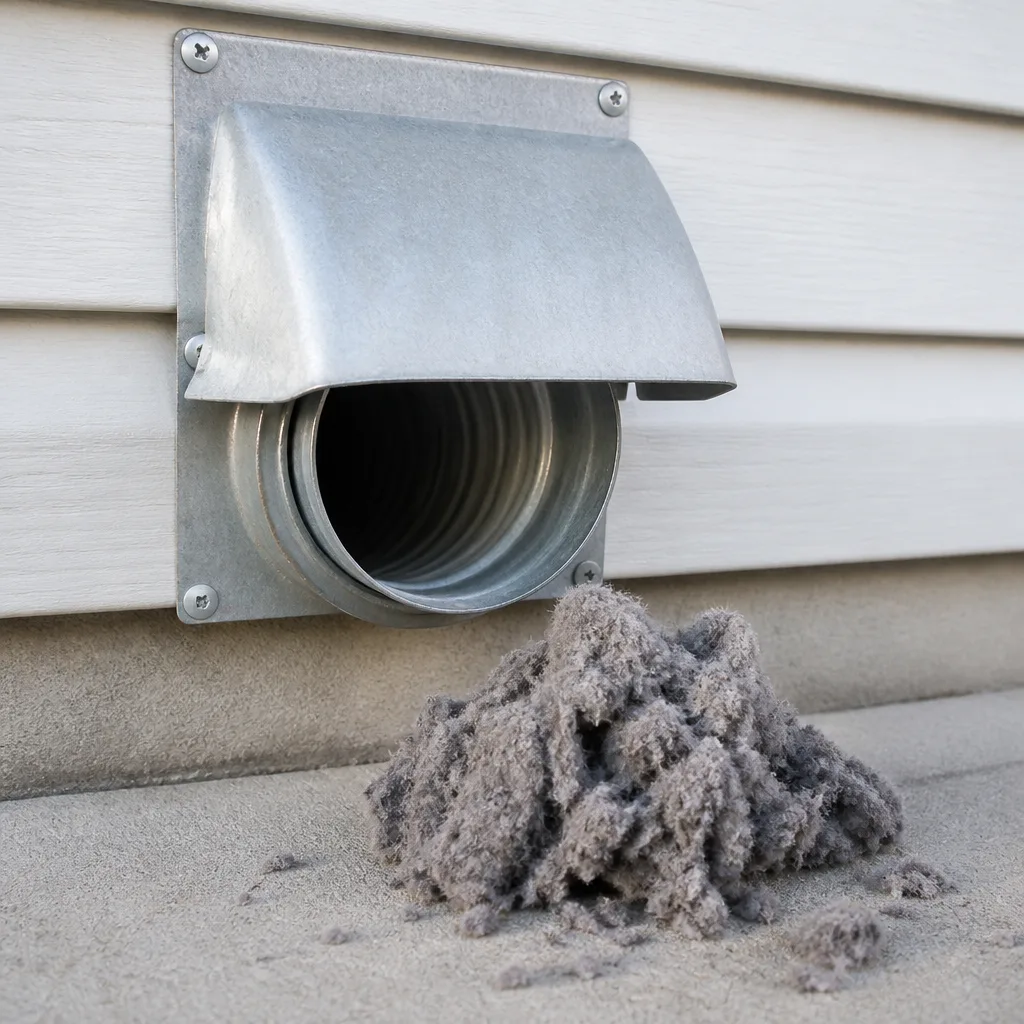 Dryer vent cleaning
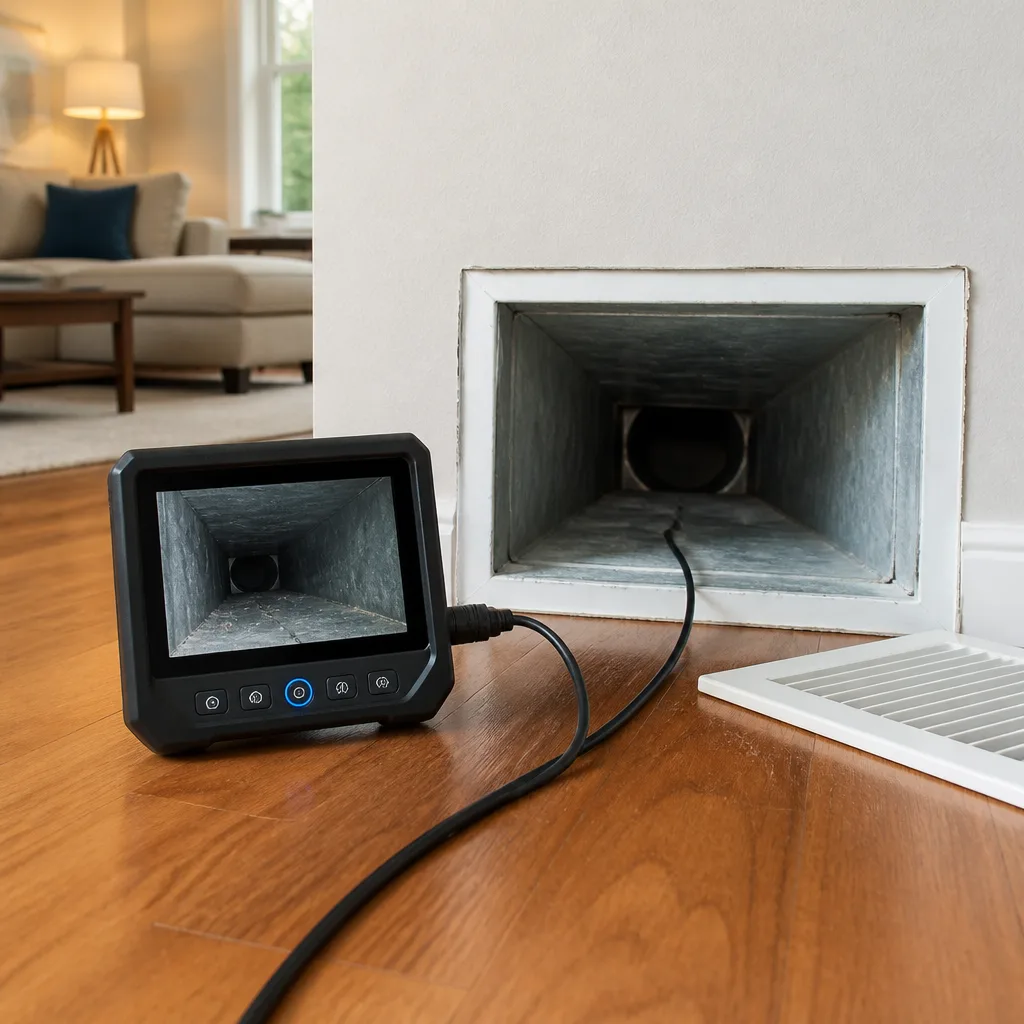 Camera inspection
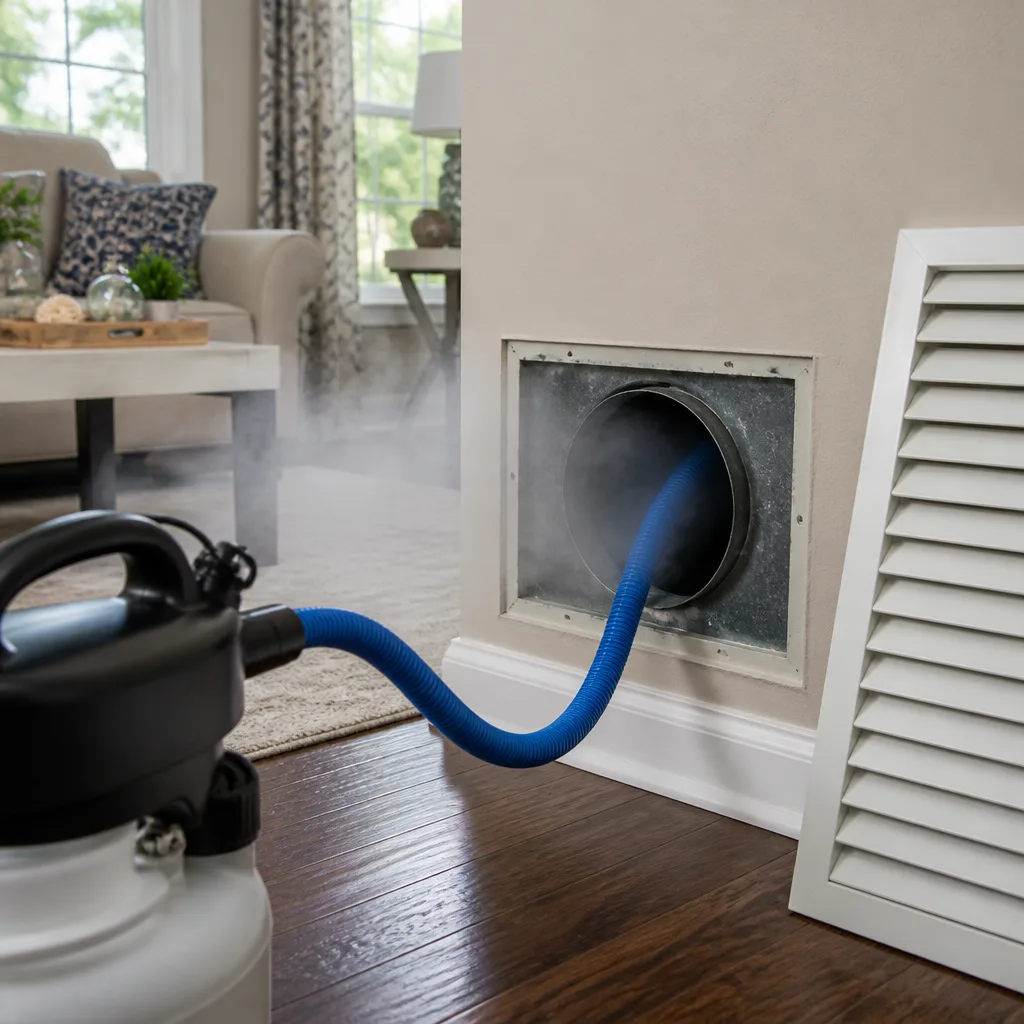 Sanitizing & deodorizing
Whole-system duct and dryer vent check with before-and-after photos - you see exactly what came out of your vents
That "$99 whole-house special" is a bait ad - the real number appears once they are in your hallway, or the "clean" is a shop-vac at the register. We photograph the inside of your ducts before and after instead.
Air Duct Cleaning Maintenance Checklist for Laguna Niguel Homeowners
Changing your filter every 90 days sounds responsible until you realize Santa Ana wind season can load a MERV-11 filter to capacity in under three weeks – and everything that bypasses it goes straight into your ductwork. The calendar most homeowners follow was written for a generic climate, not for a place where a June marine layer pushes damp air through the same returns that a September Santa Ana dries out overnight. Contamination risk in a Laguna Niguel home doesn’t follow the seasons evenly; it clusters around a handful of local weather events. This guide is a month-by-month framework for inspecting, logging, and scheduling duct maintenance, with thresholds for when a quick visual check should turn into a professional service call.
Quick Answer
A practical air duct maintenance checklist for Laguna Niguel homes runs on a quarterly rhythm: inspect and photograph filters and registers every three months, deep-clean the duct system every two to three years, and schedule an extra filter change after any Santa Ana wind event, wildfire smoke advisory, or extended marine layer stretch. Self-checks cover register grilles, accessible flex duct connections, and the air handler cabinet; anything involving damage, moisture, or visible microbial growth calls for a professional inspection. Filter changes alone don’t clean a duct system – they slow the rate at which it loads.
Styles & brands we work with
- Whole-home duct cleaning
- Dryer vent cleaning
- Camera inspection
- Sanitizing & deodorizing
Table of Contents
- Why a Calendar Matters More Than a Reminder
- Laguna Niguel’s Weather Cycle and Its Three Contamination Triggers
- The Month-by-Month Checklist
- Visual Inspection Points Homeowners Can Check
- Filter Selection Matched to the Local Allergen Calendar
- When a DIY Check Should Trigger a Professional Inspection
- Logging Maintenance History So Technicians Can Use It
- What a Professional Cleaning Visit Actually Involves
Why a Calendar Matters More Than a Reminder
The 90-day filter rule comes from national averages that assume a steady, moderate climate. Laguna Niguel doesn’t run on averages. The city sits in a coastal canyon basin where a spring marine layer can hold damp air in the canyons for weeks, then a fall Santa Ana wind pattern can push dry, dust-laden air through the same system in a week. Those two events load filters very differently, and they load ductwork differently too.
A reminder reminds. A diagnostic calendar tells you what to look for before the thing you’re looking at has already gone wrong. That’s the difference we want this guide to make. Each month in the checklist below points to a specific local trigger, a specific inspection target, and a specific decision about whether to keep watching or to call.
For homeowners in the canyons above Aliso and Sulphur Creek, and in the ridgeline pockets around Hidden Hills and Kite Hill, the wind exposure factor is a step higher than it is for homes tucked into the lower streets near Laguna Niguel Regional Park. That doesn’t change the checklist – it changes the frequency at which you should walk it. A home that sees more wind-driven dust should treat the fall inspection as the priority month, not the spring one.
We’ve seen enough systems to know that the majority of premature duct contamination in Laguna Niguel isn’t caused by neglect. It’s caused by well-intentioned filter changes on the wrong schedule, filters that are MERV-rated too high for the equipment to move air through, and gaps at flex duct joints that let unconditioned air pull into the supply runs after every filter gets seated. The checklist addresses all three.
Laguna Niguel’s Weather Cycle and Its Three Contamination Triggers
Three recurring weather events drive most duct contamination in this city. Knowing when each one is active lets you time inspections instead of guessing.
Marine Layer Season (Late Spring Through Early Summer)
The “May gray” and “June gloom” pattern pushes cool, moist air inland overnight and often holds it well into the morning. Moisture in the air doesn’t get into a sealed duct system on its own – but it does get into the air handler cabinet, evaporator coil, and any gap in the return side where a loose joint pulls unconditioned air in. A cool, damp coil is the surface where a musty smell starts. If you notice a smell during marine layer weeks and it fades by afternoon when the airflow runs, that’s the signal. Filter changes alone won’t correct it.
Santa Ana Wind Season (Typically September Through November)
Santa Ana winds push hot, dry, dust-heavy air inland from the northeast. In our experience, a MERV-11 filter in a home on the wind-exposed side of Laguna Niguel can load to full capacity in under three weeks during an active Santa Ana pattern. The concern isn’t just the filter loading – it’s the fine particulate that sits on the return grille louvers and gets pulled past a partially seated filter frame into the return plenum. That’s why fall is the month that matters most for a visual filter check.
Wildfire Smoke Advisories (Variable, Usually Late Summer Through Fall)
When regional smoke advisories are active, the practical response is to close windows, run the system on recirculation rather than fresh-air intake, and move to a higher-MERV filter or a standalone air purifier if your equipment can handle the pressure drop. Smoke particulate is fine enough that it will pass through standard filters more easily than dust. After an advisory clears, do a filter check and note the condition – it’s the single best indicator of how much reached your system.
The Month-by-Month Checklist
Treat this as a working calendar. Write the dates you complete each item into your log (see the logging section below), and it becomes a living record for the next technician. Adapt the schedule to your home’s exposure; canyon and ridge homes should run the fall items on the early end.
- January. Change or inspect filters. After the holidays and the heating season’s first full run, check the filter for loading and confirm no visible bypass around the edges of the frame.
- February. Walk the registers. Vacuum the grille louvers, check that each supply and return register opens and closes freely, and note any room with noticeably weaker airflow.
- March. Spring pollen peak begins. Inspect the air handler cabinet for dust settling and confirm the cabinet door seals fully. If you’ve been running a lower MERV filter for airflow reasons, decide whether to step up a rating for the pollen season.
- April. Check accessible flex duct runs. Look at joints near the air handler and any visible run in the garage or attic access. A joint that’s pulled apart or taped and separating should be flagged for professional sealing.
- May. Marine layer starts. Note any musty smell in the morning and whether it fades. Check for moisture staining or condensation on the air handler cabinet.
- June. Filter change. The May-June load is usually moderate, but the moisture pattern makes it a good month to inspect the coil area visually for dust matting.
- July. Deep-clean check. If your last professional cleaning was two or more years ago, book it now, before the fall wind season loads the system further.
- August. Pre-fall preparation. Confirm filters are fresh, note smoke advisory activity, and check that any window or door near the return isn’t being left open during high-wind days.
- September. Santa Ana wind season begins. Change the filter at the start and re-check it every three weeks through the wind season. This is the single most important month for filter discipline.
- October. Peak wind month. Re-check filters, inspect the return grille louvers for dust buildup, and note if your system is running longer cycles to keep up.
- November. Post-wind inspection. This is the best month for a professional visual inspection – the system’s condition after the wind season tells the whole story of the year.
- December. Close out the year. Confirm the log is current, note the year’s anomalies (musty smell that started in May, filter that loaded unusually fast in October), and set next year’s cleaning date.
This is a scheduling framework, not a substitute for a professional inspection. The items above are visual and low-risk; anything that requires opening the air handler cabinet further than a visual check, disconnecting duct sections, or working around electrical components should go to a technician. You can read more about the full scope of professional air duct cleaning if you want to compare the calendar to a full visit.
Visual Inspection Points Homeowners Can Check
A useful self-check is simple, safe, and takes about fifteen minutes. The goal is not to diagnose a problem – it’s to gather evidence that answers one question: does this need a professional look? Here’s what to check and what counts as normal versus what warrants a call.
Register Grilles
- Normal: A thin, even film of dust on the louvers that wipes away clean. Slight variation in dust pattern between high-traffic and low-traffic rooms.
- Concerning: A dust pattern that concentrates on one side of a grille, indicating airflow is being pulled strongly in one direction – often a duct joint issue upstream. Dark, sticky buildup on the back side of the louvers.
Accessible Flex Duct Connections
You can see these at the air handler and any attic or garage access panel. Don’t disconnect anything – just look.
- Normal: Collars seated fully on the boot or plenum, tape or mastic intact, no gaps. Duct runs sagging slightly between supports.
- Concerning: A visible gap at a joint, tape peeling away, or a run crushed or kinked (which chokes airflow and is often why one room runs hot or cold). Any tear or hole in the flex duct jacket.
Air Handler Cabinet
You can open the filter access door safely. Don’t remove any panels that require tools or that expose wiring or the blower compartment.
- Normal: A little dust on the floor of the cabinet. Clean, intact filter seated fully in the frame.
- Concerning: Moisture or water staining on the cabinet floor or insulation. Dust matting on the evaporator coil visible through the filter opening. A filter that doesn’t fit flush, leaving a gap around the edges.
The word “concerning” is doing real work here. A concerning finding is a reason to call, not a reason to start unscrewing things. Anything involving the blower motor, wiring, or a disconnected supply run is a hands-off job.
Filter Selection Matched to the Local Allergen Calendar
Filter choice should be matched to what’s actually in the air in Laguna Niguel, and to what your equipment can handle, not to a single national recommendation. Two factors matter: local allergen peaks and the airflow limit of your system.
Local Allergen Peaks
- Coastal grasses: Late spring into early summer. Grass pollen is fine and light; a MERV-8 to MERV-11 filter handles most of it when the frame is sealed.
- Eucalyptus: Pollen loads vary, but the sap and fine debris are a steady contributor to exterior and window-well dust through the warmer months. Not a reason to move to a higher MERV rating on its own; a reason to keep grille louvers clean.
- Chaparral and sage scrub pollen: Late winter into spring, heavier on canyon-edge and ridge properties. If your home backs onto open hillside, expect a stronger spring loading.
- Smoke particulate from regional fires: The one category where stepping up filter rating for the duration of an advisory is worth discussing. It’s also the category where the equipment’s airflow limit matters most – a filter too dense for your blower will reduce airflow and can make the system work harder.
MERV Selection Guide
Most residential systems in Laguna Niguel will run comfortably on a MERV-8 to MERV-11 filter. MERV-11 gives good fine-particle capture and is a sensible ceiling for most homes; higher ratings are worth considering only if your equipment is rated for the pressure drop and your ductwork is well sealed. MERV-13 is a genuine upgrade for some systems and a genuine problem for others – the difference is the equipment spec sheet, not the label on the filter box.
The bypass gap around the filter frame matters as much as the rating. A MERV-11 filter with an unsealed edge lets a steady stream of unfiltered bypass air past it. If you’re stepping up filter rating after a wildfire smoke advisory, also check the frame for a snug fit – otherwise the higher rating doesn’t do the job you paid for.
For homeowners who want to go further than filtration, post-cleaning air treatment is where HVAC cleaning and integrated purification solutions come in. We work with Honeywell and Aprilaire filtration and purification products because they’re products homeowners recognize and HVAC contractors specify, and we can integrate them into a post-cleaning recommendation rather than a separate call.
When a DIY Check Should Trigger a Professional Inspection
Vague advice (“call if something seems wrong”) is useless. Here are specific thresholds. If any of these is true, book a professional inspection; if none is, keep running the calendar.
- Musty smell that persists after a filter change. If a musty or stale smell remains for more than a week after a fresh filter, the source is likely in the air handler or a duct section that needs professional attention.
- A room that runs consistently warmer or cooler than the rest of the house. One room off by a few degrees in a single season is normal. A room off by a wide margin all year is usually a crushed or disconnected duct run – a sealing and repair issue.
- Visible dust buildup on the back of register louvers. If you clean the louvers and the buildup returns within weeks, the supply side is carrying enough dust that the source needs to be inspected and cleaned rather than wiped.
- Any visible moisture, condensation, or water staining in the air handler cabinet. This is the one item that always warrants a call. Moisture in a duct system is where microbial growth starts.
- Filter frame bypass. If the filter doesn’t seat fully and you can see a gap around the edges, unfiltered air is bypassing the filter into the system. That’s a repair issue – often solved with a filter frame retrofit or sealing during the cleaning visit.
- Two or more years since the last professional cleaning. The calendar’s deep-clean interval is a range, but two years is the point at which the visual evidence stops being reliable.
- Dryer taking two or more cycles to dry a normal load. This is outside the duct cleaning checklist, but it’s a specific threshold worth flagging – a dryer vent at reduced flow is a fire-risk issue, and it’s a separate service from the HVAC duct system.
The dryer vent item isn’t an aside. The NFPA recommends annual dryer vent cleaning, and it’s the one line in the checklist where the failure mode isn’t comfort or efficiency but fire risk. We treat dryer vent cleaning as a standalone service, not an add-on, because the schedule and the risk are both their own thing.
Logging Maintenance History So Technicians Can Use It
A maintenance log is only useful if a technician can read it in two minutes and get the diagnostic picture. Most homeowner logs don’t pass that test – they’re a folder of receipts and a vague memory of “we cleaned it a couple years ago.” Here’s a format that actually works.
The Format
One page per system, in a physical binder near the air handler or a shared file in a phone note. Columns:
- Date. The actual day, not the month.
- Action. Filter change / visual check / professional cleaning / repair / component replaced.
- Filter spec. MERV rating, brand, size (the number printed on the frame). This is the single most useful entry for future filter recommendations.
- Observation. One sentence of what you saw. “Musty smell in morning, faded by afternoon.” “Room 3 weaker airflow, wipes clean.” “Wind-week filter change, MERV-11 loaded to capacity in ~3 weeks.”
- Weather context. Was a smoke advisory active? Was it a Santa Ana wind week? Marine layer heavy? This is the entry that lets a technician correlate contamination patterns to local events.
- Who. “Self” or the service name and phone number from the receipt.
What a Technician Actually Uses
When we open a system, the log tells us three things we can’t learn any other way. First, the filter history – what rating the system runs, how quickly it loads in wind weeks, and whether the homeowner has been changing it on the right schedule. Second, the recurring symptom – a musty smell that recurs in May every year points to a moisture issue, not a dust issue. Third, the repairs already done – if a flex joint was sealed two years ago and airflow has dropped again, we know where to look first.
A good log is worth more than a good guess. We’ve seen a maintained log cut the diagnosis time on a recurring problem roughly in half, and we’ve seen a vague memory send a homeowner down the wrong path for a full season. The effort is five minutes per entry.
What a Professional Cleaning Visit Actually Involves
A professional visit should look like a defined process, not an improvised one. Here’s what to expect, and what separates a thorough visit from a partial one.
Containment and Negative Pressure
Before any cleaning starts, a proper visit sets up containment at supply and return openings and runs negative-air pressure to hold dislodged dust inside the system rather than releasing it into the living space. We use Abatement Technologies equipment for containment because it’s the same standard applied in remediation work, not just light residential use. If a provider doesn’t set up containment, ask why.
Mechanical Cleaning
Cleaning should be mechanical – brushes and agitation that physically loosen the buildup – followed by high-powered extraction. We use Rotobrush and Nikro systems, purpose-built duct cleaning equipment that HVAC contractors and NADCA-certified contractors rely on, not improvised shop-vac workarounds. A vacuum alone pulls loose dust; it doesn’t remove the film that’s bonded to the duct wall. The mechanical step is what makes the difference between a cleaned system and a wiped one.
Component Coverage
A complete visit covers supply runs, return runs, registers and grilles, and the HVAC components that sit in the air path – the blower, coil area, and air handler cabinet. If a duct section is damaged or a joint is separated, cleaning is only half the job. We offer duct repair and sealing alongside cleaning, so a leak or damaged section found during the visit can be fixed on the same visit rather than sending you to a second contractor.
Sanitizing and Finishing
Where sanitizing is appropriate, it follows cleaning, not instead of it. We use Guardsman-grade protective products in the finishing and sanitizing steps, and after the visit we provide before-and-after photos of your own system so you can see what was removed. For a full-service look at what a visit covers, see Laguna Niguel Air Duct Cleaning Pros and our five service lines: air duct cleaning, dryer vent cleaning, HVAC cleaning, duct repair and sealing, and air quality and sanitizing. One provider covers the full air pathway, which reduces the coordination risk that comes with splitting the work.
Common Mistakes to Avoid
- Changing filters on the 90-day national schedule without checking the actual filter. A Santa Ana wind week can load a filter to capacity in under three weeks in Laguna Niguel. Check the filter when the wind pattern is active, not on the calendar.
- Stepping up to a higher MERV rating without checking the equipment can handle the pressure drop. A MERV-13 in a system rated for MERV-8 restricts airflow and can make the system work harder than the filter helps. The spec sheet wins over the label.
- Ignoring a filter frame bypass. A MERV-11 filter with a visible gap around the edges is delivering a fraction of its rated catch. Sealing the frame is often the cheapest air quality improvement in the house.
- Treating a musty smell as a filter problem when a filter change doesn’t fix it. A smell that persists for more than a week after a fresh filter points to moisture or microbial growth in the air handler or duct system, which needs a professional inspection.
- Skipping the dryer vent because the HVAC ducts were just cleaned. The dryer vent is a separate system with a separate hazard, and the NFPA recommends annual cleaning. Two cycles to dry a normal load is the threshold to call.
- Wiping register louvers and assuming the ductwork is clean. The grille is the visible tip. Wiping it is a cosmetic fix; the actual dust load lives on the duct wall behind it and doesn’t come out with a rag.
- Keeping no maintenance log, or a log that’s just a folder of receipts. A technician can’t diagnose a recurring pattern from a receipt. Date, action, filter spec, observation, weather context – five minutes per entry, and it saves hours of guessing later.
See the difference
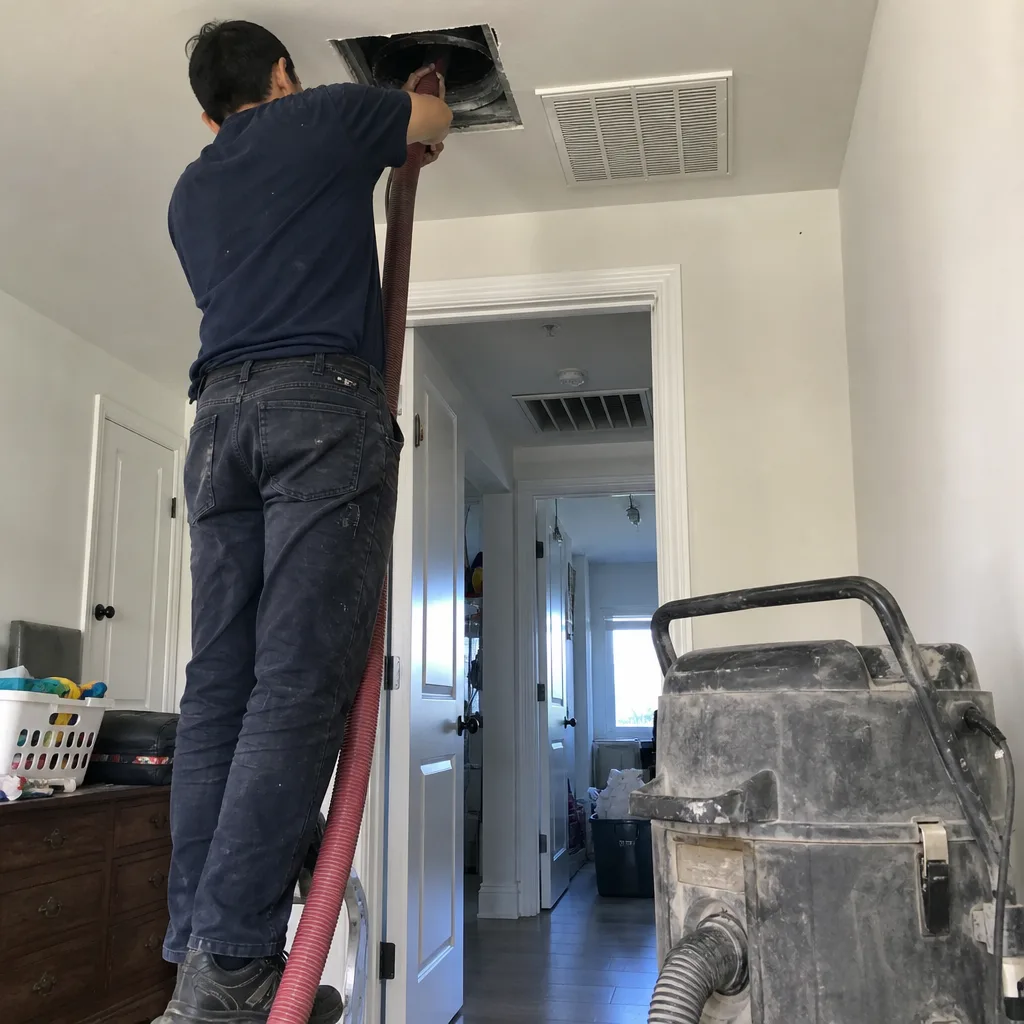 Before
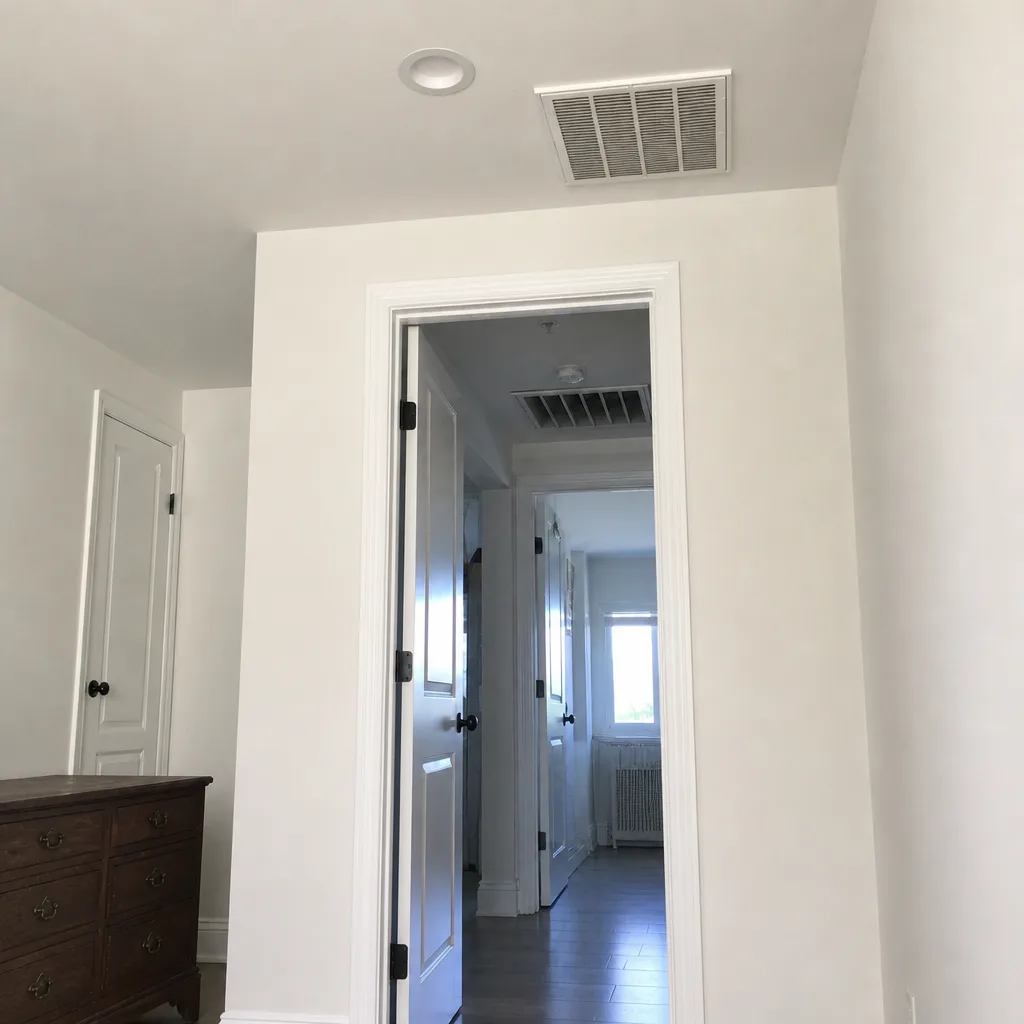 After
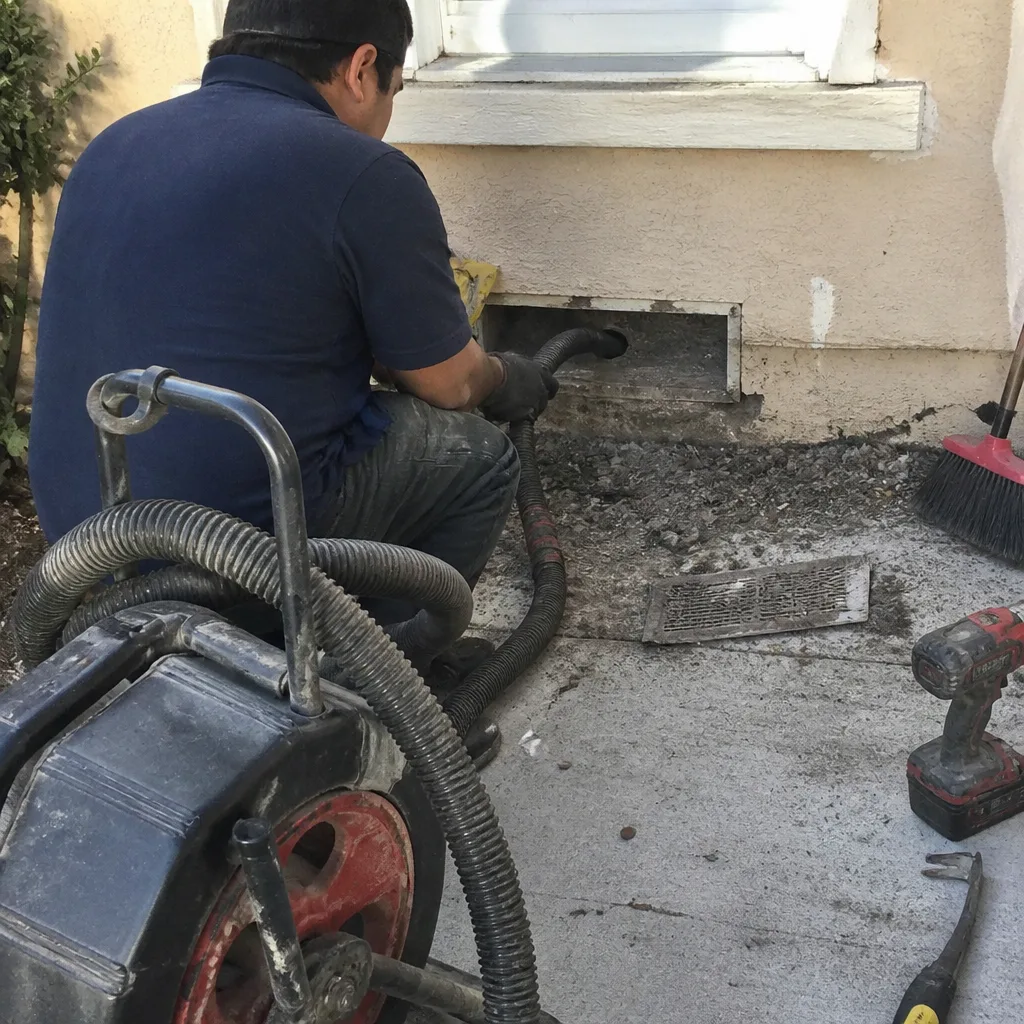 Before
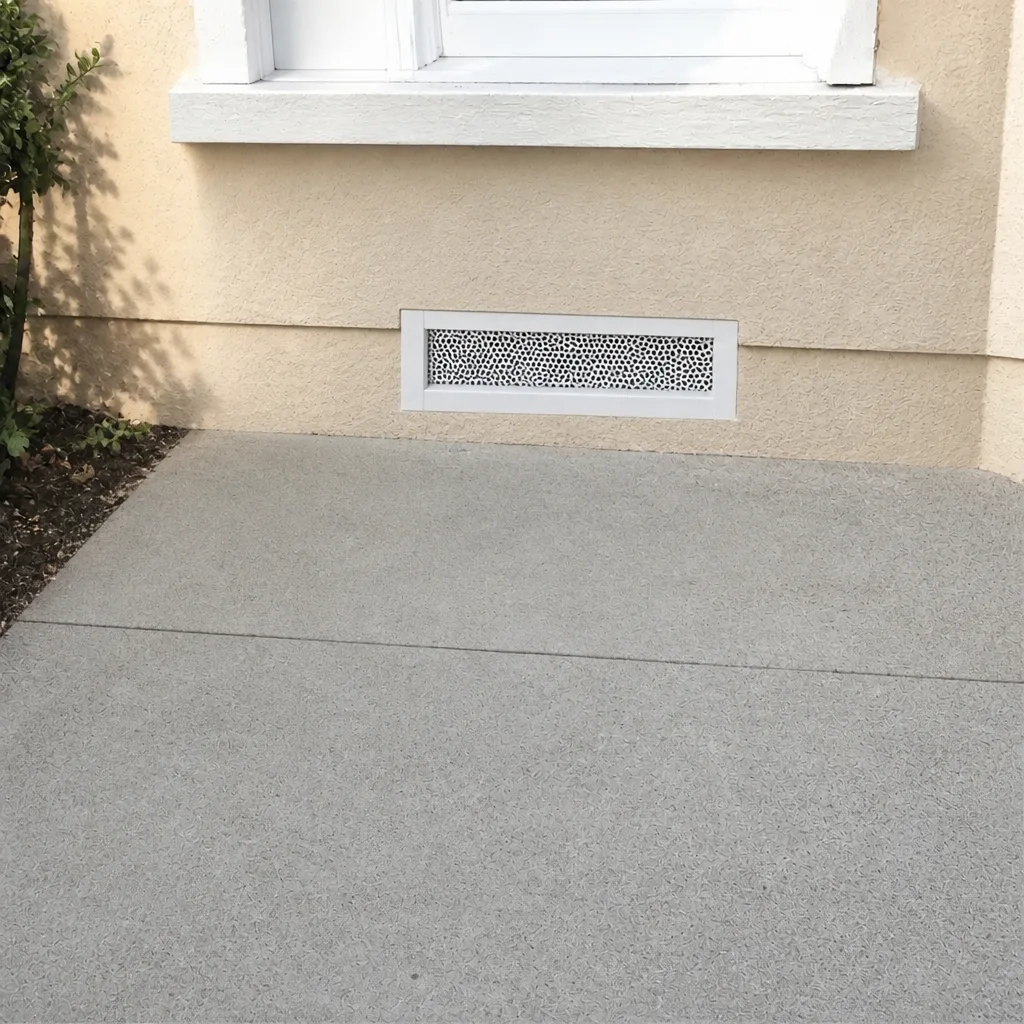 After
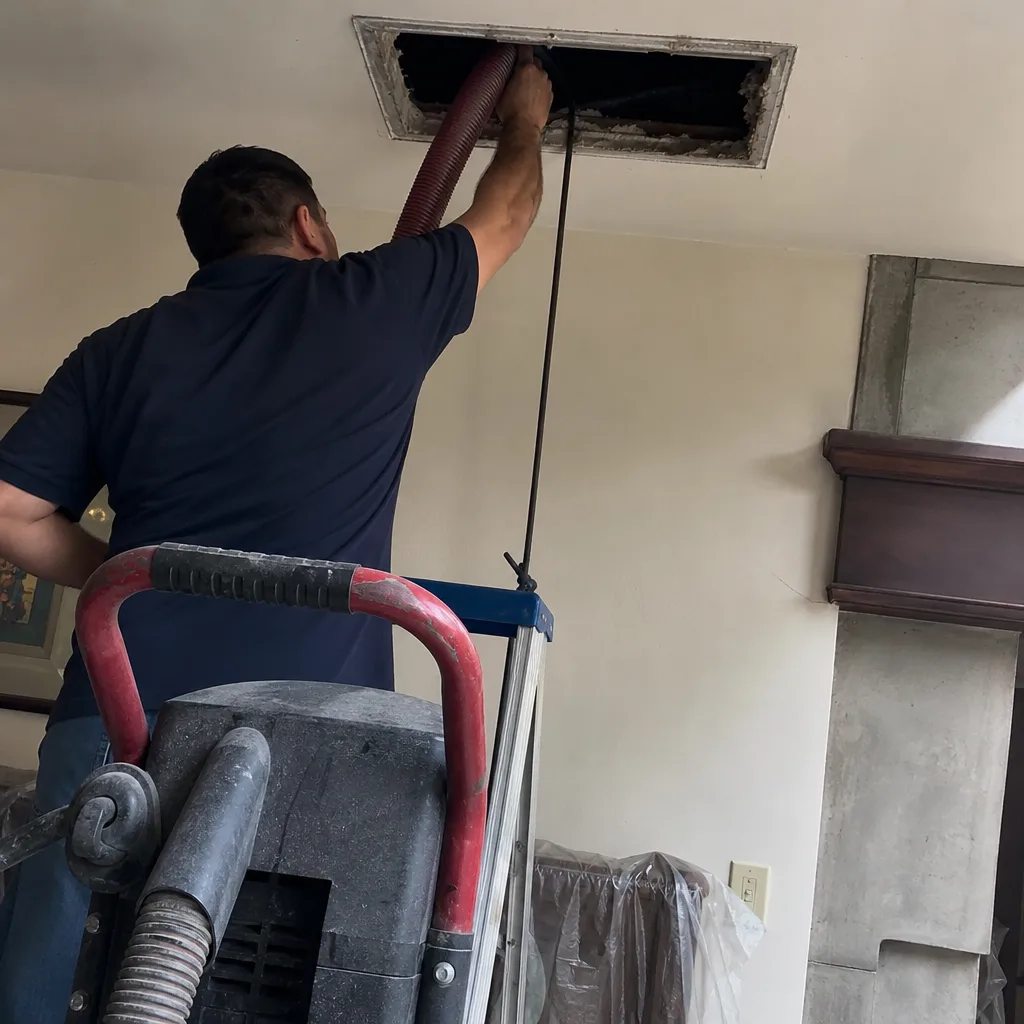 Before
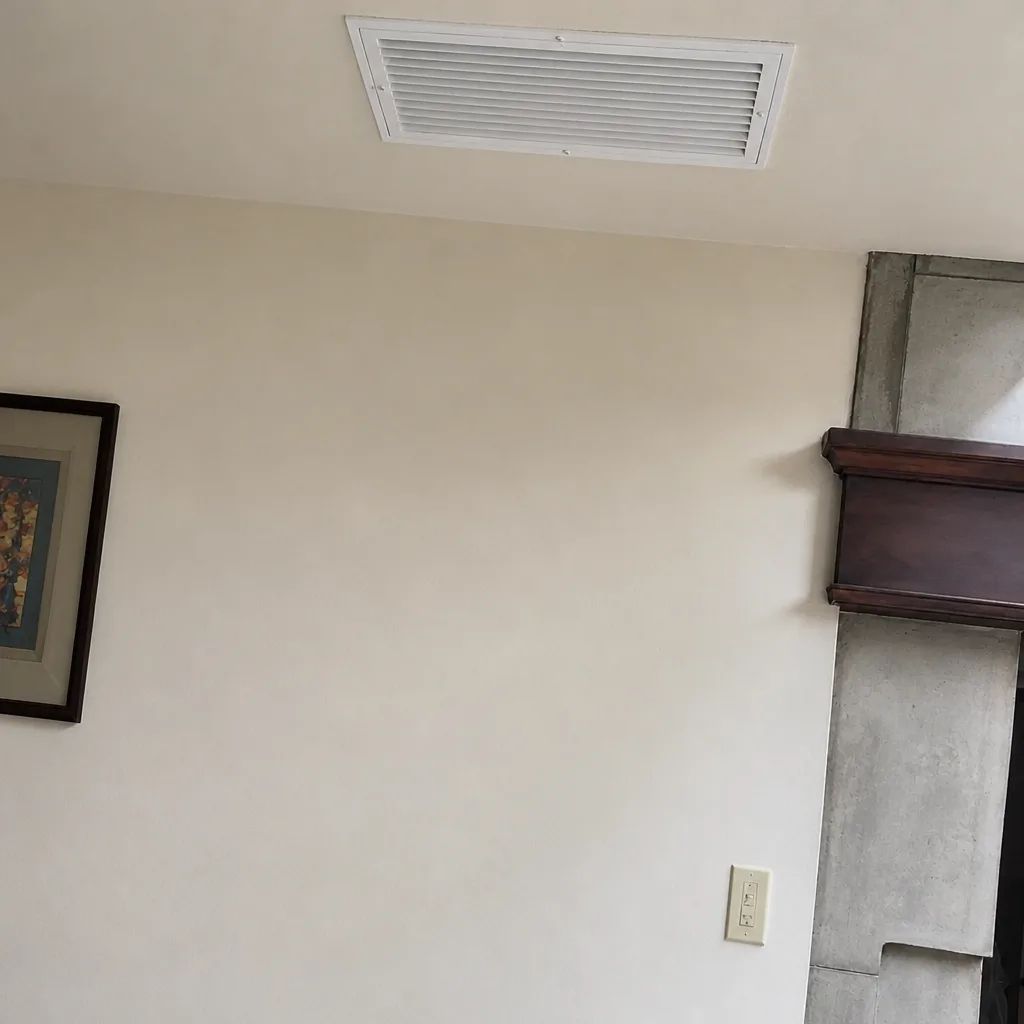 After
When to Call a Professional
Some items on the checklist are yours. Others belong to a trained technician. Call when you find visible moisture or water staining in the air handler cabinet; when a musty smell persists for more than a week after a fresh filter; when a room runs consistently warm or cool all year; when you see a gap at the filter frame or a separated flex duct joint; when it’s been two or more years since the last professional cleaning; or when a dryer takes two cycles to dry a normal load. Anything involving the blower motor, electrical components, or a disconnected supply run is a hands-off job. Laguna Niguel Air Duct Cleaning Pros offers free estimates in Laguna Niguel – call (877) 770-0716. We answer 24/7. Fast dispatch from 7am to 7pm, Sunday through Friday. One flat price per system, agreed before work starts, and before-and-after photos of your own ducts.
Frequently Asked Questions
Every two to three years for most homes, with an extra filter check after any Santa Ana wind event, wildfire smoke advisory, or extended marine layer stretch. Homes on wind-exposed ridges and canyon edges in Laguna Niguel may need the visual inspection more frequently, even though the deep-clean interval stays in the same range. The two-to-three-year figure is a range for a normally maintained system; a home that has skipped professional cleaning for longer should start with an inspection. Call (877) 770-0716 for an exact quote – estimates are free.
Cheap quotes usually skip containment and the mechanical agitation step, and often clean only the accessible supply runs rather than the full system. A thorough visit sets up negative-air containment, uses purpose-built mechanical equipment like Rotobrush and Nikro systems, and covers both supply and return runs plus the HVAC components in the air path. When you compare quotes, ask what equipment they use and whether containment is included. Call (877) 770-0716 for a free estimate on the full scope.
Before-and-after photos of your own system are the clearest evidence. A provider that offers them is confident in what the visit removed. Beyond photos, the maintenance log should show the date, the scope of work, and what the technician found. If a provider can’t tell you what they removed and where, that’s a reason to ask more questions. Call (877) 770-0716 and we’ll walk you through what a visit covers for your home.
Consider it during an active smoke advisory, but confirm your equipment’s airflow limit first. Most residential systems in Laguna Niguel run comfortably on MERV-8 to MERV-11, and stepping above that requires the equipment to be rated for the pressure drop. Close windows, run the system on recirculation during the advisory, and check the filter after it clears. If you’re unsure whether your system can run a higher MERV, call (877) 770-0716 – estimates are free.
Duct cleaning covers the supply and return runs and the registers; HVAC cleaning covers the components in the air path – the blower, coil area, and air handler cabinet. A thorough visit usually covers both, because cleaning the ducts without cleaning the components that push the air leaves a source in place. We offer both as separate service lines and can cover the full air pathway in one visit. Call (877) 770-0716 for an exact quote.
The NFPA recommends annual dryer vent cleaning for most homes. In Laguna Niguel, the practical trigger is a dryer taking two or more cycles to dry a normal load – that means the vent is at reduced flow. A lint-clogged vent is the one item on the checklist where the failure mode is fire risk, not comfort. Dryer vent cleaning is a standalone service, not an add-on. Call (877) 770-0716 for a free estimate.
The Bottom Line
Your filter schedule should follow the calendar in Laguna Niguel, not a national average. Santa Ana wind weeks, marine layer stretches, and wildfire smoke advisories each load the system differently, and each deserves a specific filter and inspection response. The homeowner checklist is visual and low-risk: register grilles, accessible flex connections, the air handler cabinet through the filter opening only. Anything that involves moisture, a separated joint, a filter frame bypass, or a smell that outlasts the filter belongs to a professional. Log every check, every filter spec, and every weather event. Two to three years for a deep clean, three weeks for a filter check during wind season, and one phone call when the checklist turns up a concerning finding.
Written by the team at Laguna Niguel Air Duct Cleaning Pros.
Call (877) 770-0716 for a free estimate. We answer 24/7. Fast dispatch from 7am to 7pm, Sunday through Friday. One flat price per system, agreed before work starts.