
Last updated November 25, 2026
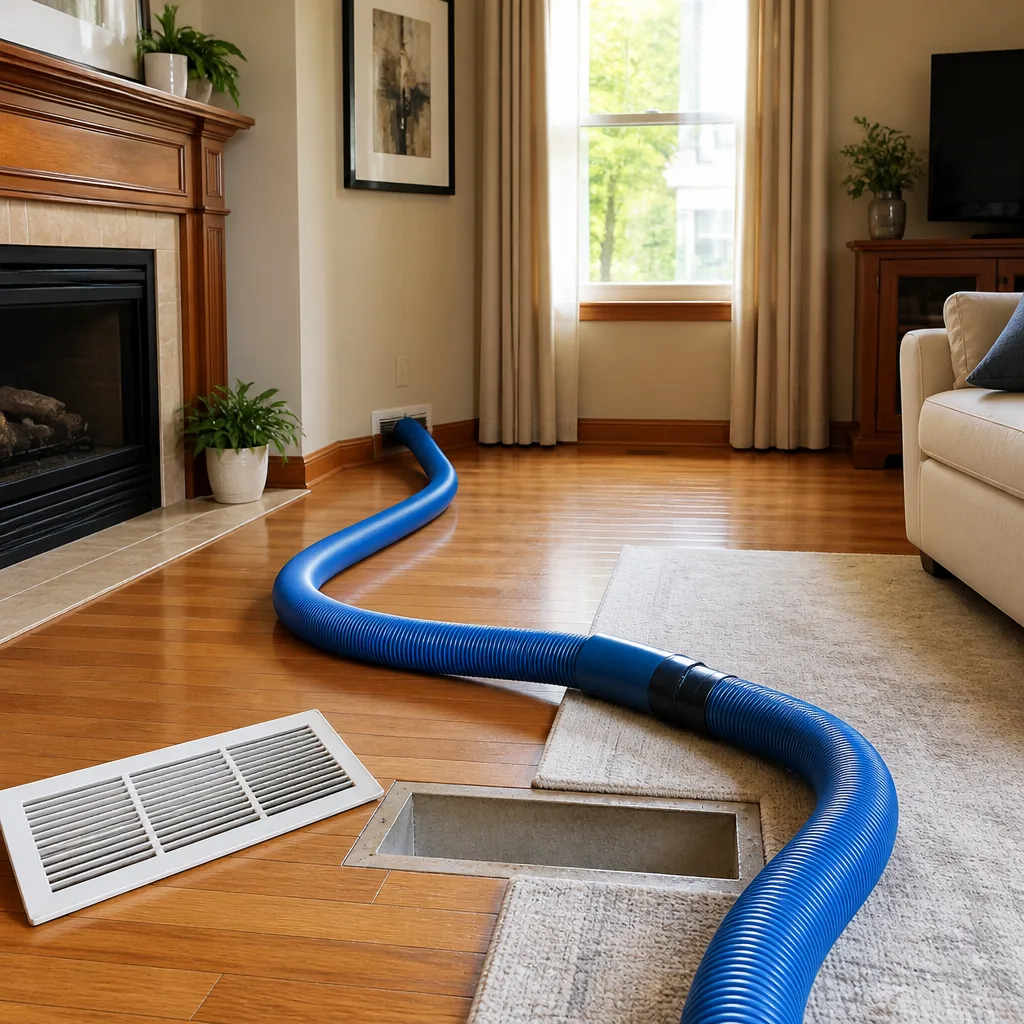 Whole-home duct cleaning
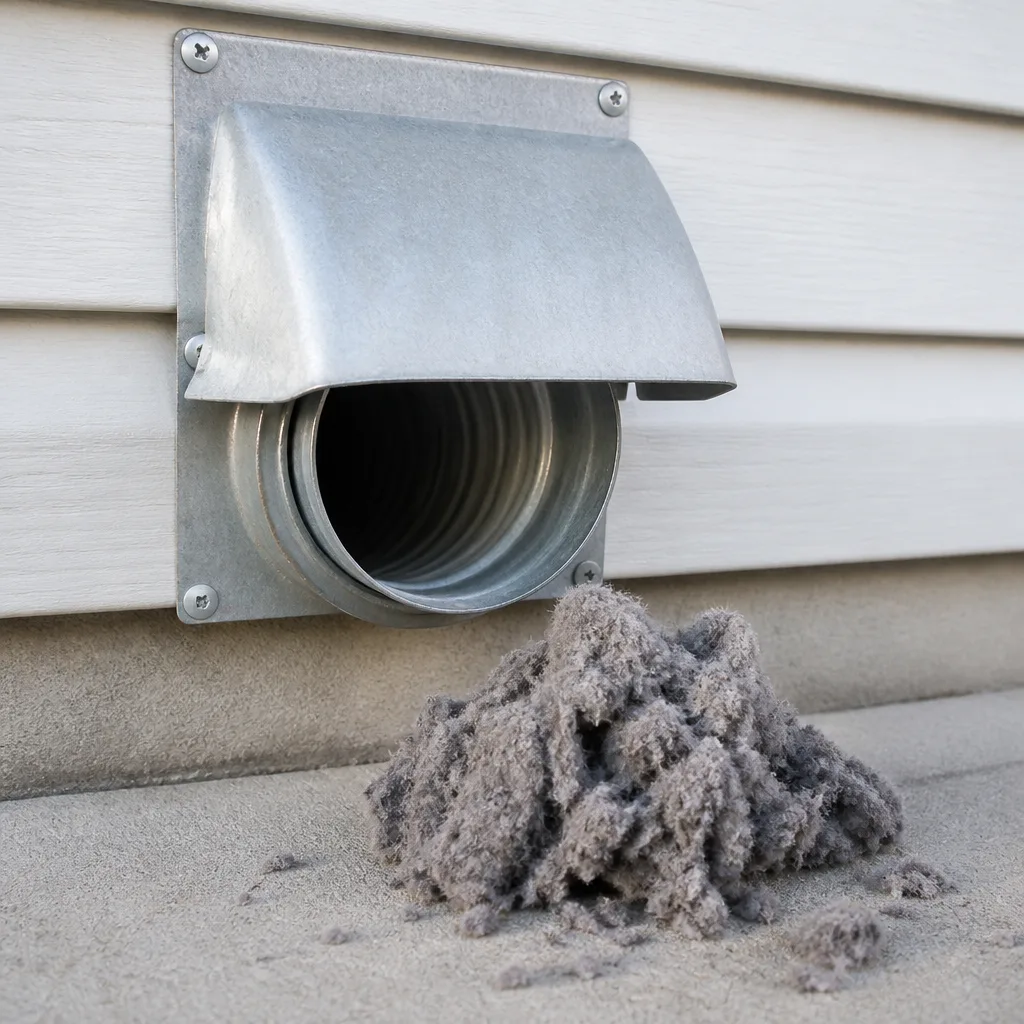 Dryer vent cleaning
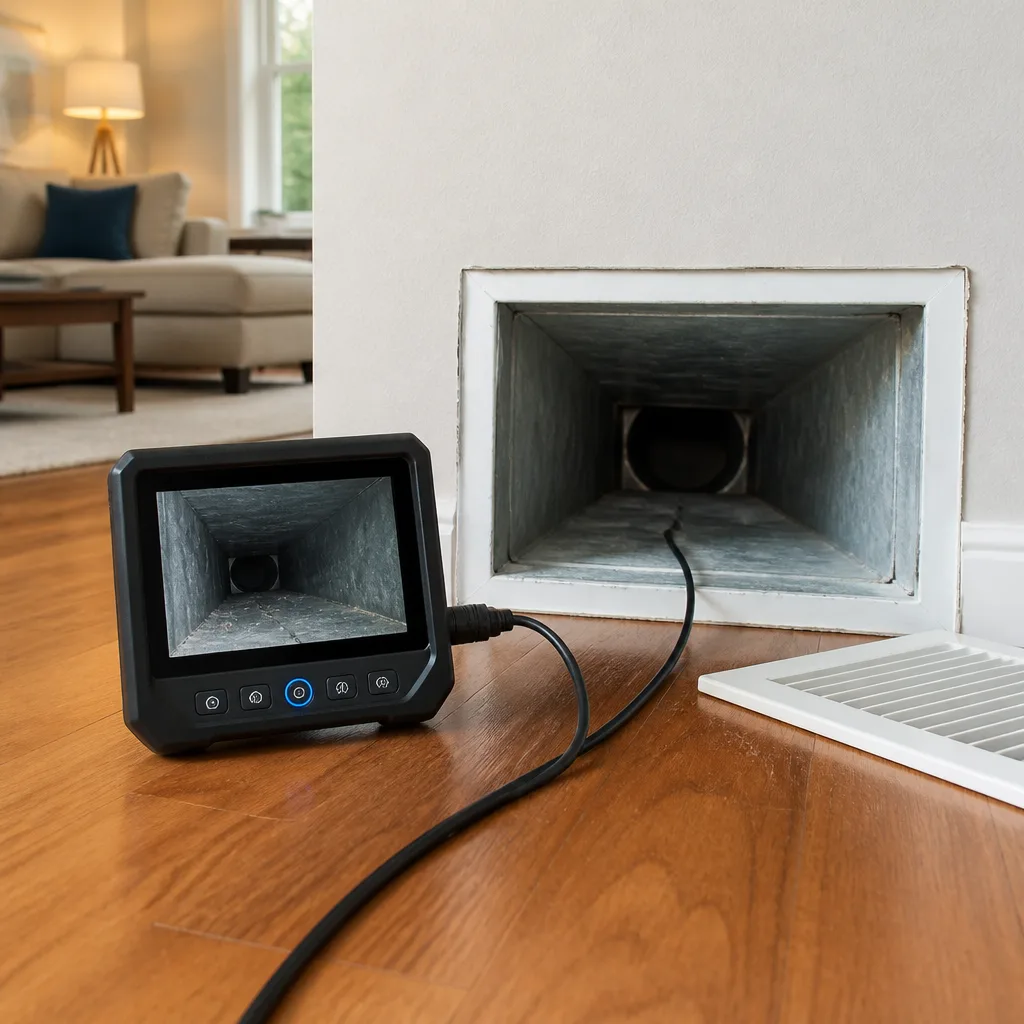 Camera inspection
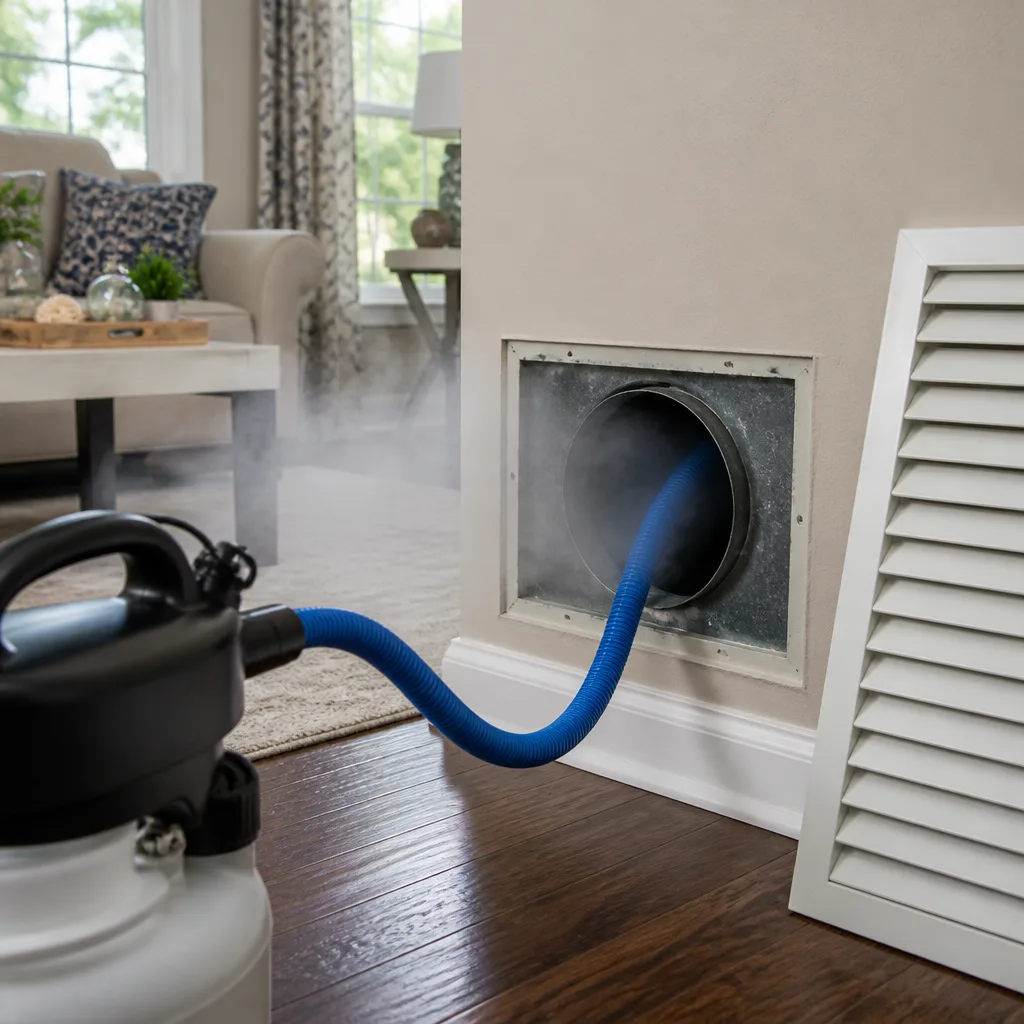 Sanitizing & deodorizing
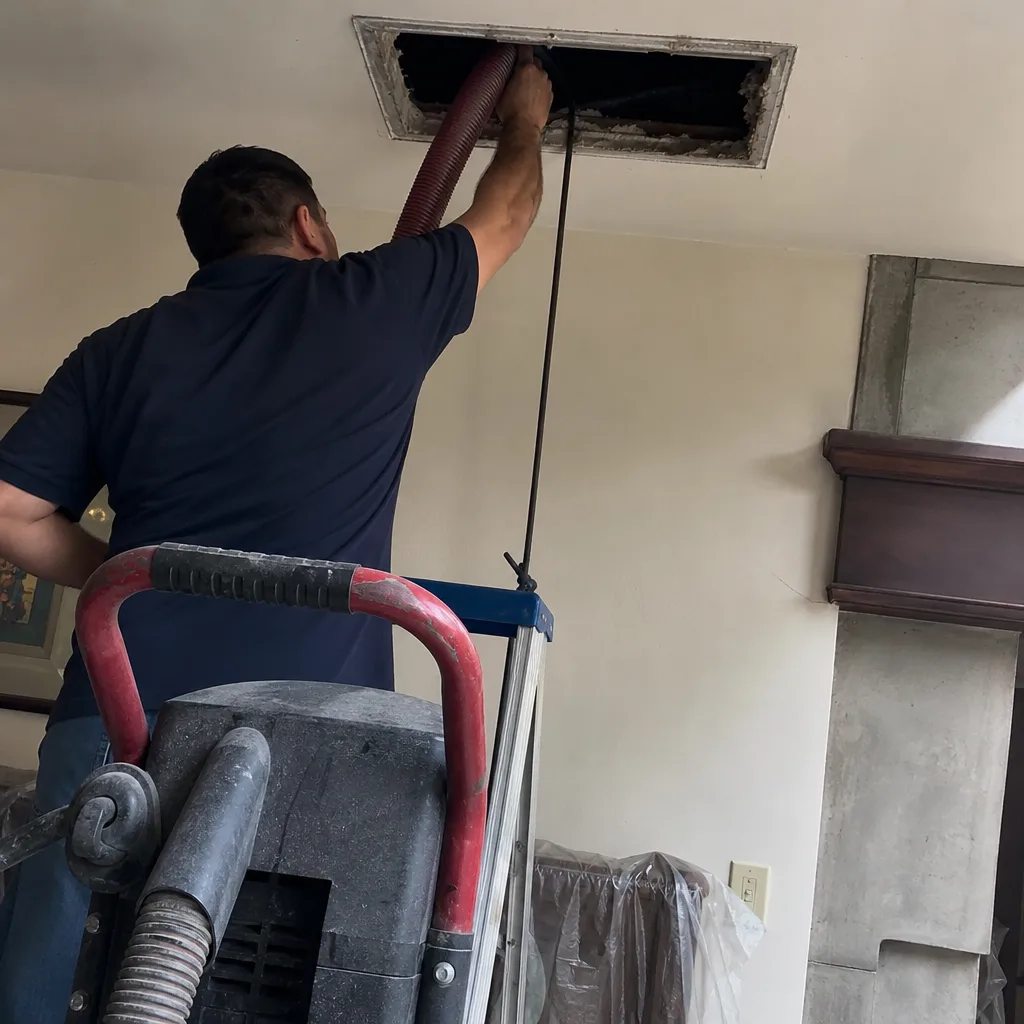
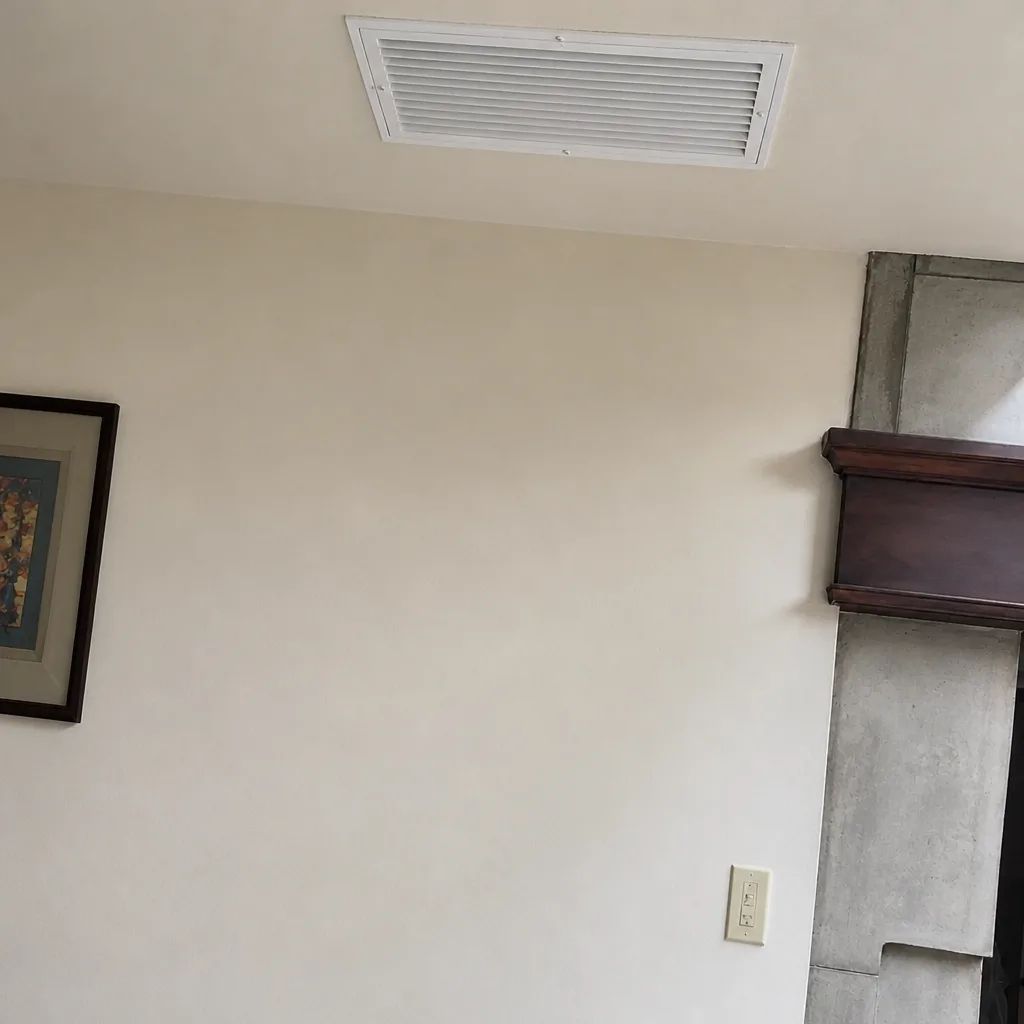
Whole-system duct and dryer vent check with before-and-after photos - you see exactly what came out of your vents
That "$99 whole-house special" is a bait ad - the real number appears once they are in your hallway, or the "clean" is a shop-vac at the register. We photograph the inside of your ducts before and after instead.
Air Duct Cleaning Emergency Preparedness Guide for Laguna Niguel Homes
Most homeowners treat their HVAC system as background noise until it stops working. The uncomfortable truth is that in an emergency, your ducts are the one part of the house that can quietly spread the damage everywhere at once. Smoke pulled through a return grille during a wildfire event doesn’t stay in one room; a pressured air handler pushes fine particulate through every supply run before anyone notices. This guide walks you through the first 24 to 72 hours of the emergencies that actually happen in Laguna Niguel – wildfire smoke events, storm flooding, post-construction dust, and post-remediation rebuilds – with a specific sequence of steps so you’re not guessing. You’ll learn when to shut the system down, when to run it, how to spot hidden moisture damage, and how to document everything an insurance adjuster will ask about.
Quick Answer
In an air quality or moisture emergency, your HVAC system is either your best tool or your biggest problem, and the difference is a few decisions made in the first day. Shut the system down and seal return openings when wildfire smoke is heavy, run recirculate mode if you have it and your filter is upgraded, and treat any water event as a duct contamination event within 24 hours. A professional inspection after smoke, water, or construction damage should follow within a few days of the event; for the detailed protocols by emergency type, read on.
Styles & brands we work with
- Whole-home duct cleaning
- Dryer vent cleaning
- Camera inspection
- Sanitizing & deodorizing
Table of Contents
- Wildfire Smoke: A Sequenced Protocol for Your HVAC System
- Post-Flood HVAC Recovery: What 24 Hours of Humidity Does
- Documenting HVAC Condition for an Insurance Claim
- Post-Construction and Post-Remediation Duct Debris
- How to Describe Your Situation So the Right Equipment Arrives
- Filter Decisions During a Smoke Event
- Signs Your Ductwork Needs Inspection After an Event
- Common Mistakes to Avoid
Wildfire Smoke: A Sequenced Protocol for Your HVAC System
Wildfire smoke is not uniform dust. It’s a mix of sub-micron combustion particles, ash, and volatile organic compounds that behave very differently in ductwork than ordinary household debris. Particles small enough to stay suspended in air can pass through a low-MERV filter and coat the entire interior of the duct system, including the flexible joints and the air handler’s blower and coil. The sequence below is what we recommend to Laguna Niguel homeowners during and immediately after a smoke event, and it’s the same sequence to keep on paper before the next one.
- Close the house and stop pull-through. Shut exterior doors and windows and turn off any whole-house or window fans. A house under negative pressure pulls outdoor air in through every gap, including around duct boots.
- Set the thermostat to fan-ON, not AUTO, only if your filter is upgraded. Running the fan intermittently on recirculate can help circulate air through a good filter. If your filter is a basic fiberglass one, running the fan just redistributes what’s already inside.
- Upgrade the filter, within the system’s limits. A MERV 13 filter captures a large share of smoke-range particles, but not every residential system can handle the pressure drop. Check the filter slot depth and the manufacturer’s rating before you go high-MERV.
- Shut the system down entirely if the smoke is heavy and you can’t filter it. This is the safest step. An off system isn’t pulling smoke in.
- After the event clears, inspect before you clean. Ash fallout on the return grille and a visible film inside the supply boots are the two clearest signs that ductwork absorbed smoke and needs professional mechanical cleaning, not a wipe-down.
Laguna Niguel’s inland-facing neighborhoods sit in the path of smoke plumes that channel down from the Santa Ana Mountains and the inland canyons. When winds align, the smoke arrives thick and long, even if the fire itself is far away. That’s the case where a homeowner who ran the system the entire time with a basic filter ends up with a duct system that needs real extraction, not just a filter change.
Post-Flood HVAC Recovery: What 24 Hours of Humidity Does
Atmospheric river storms drop a lot of water in a short window, and the damage to your HVAC system usually starts with the parts you can’t see. Within 24 hours of elevated indoor humidity, several things happen: the fiberglass insulation lining flexible duct runs can absorb moisture and lose its structure, the air handler’s condensate drain pan fills and can overflow into the cabinet, and the return plenum – often the wood or drywall cavity feeding the unit – picks up dampness that supports mold growth. None of this is visible from the living room.
Here’s the recovery order we recommend after any water intrusion that touched or neared the HVAC system:
- Turn the system off at the thermostat and at the breaker. A wet blower motor run against live power is an electrical hazard; this is not a step to skip.
- Photograph everything before you touch it. Water lines on the air handler cabinet, water staining inside the return chase, and damp insulation in flex runs are the damage an adjuster needs to see.
- Dry the space aggressively for 48 to 72 hours. Open doors, run fans, use a dehumidifier. Getting the indoor humidity down fast limits how much the insulation and pan absorb.
- Do not restart the system until a technician inspects it. That covers the blower motor, the control board, the drain pan, and any flexible duct that may have held water.
- Treat the ductwork as contaminated if water reached it. Water that contacts the inside of a duct system introduces mold spores and bacteria, and the fix is cleaning and sanitizing, not just drying.
In Laguna Niguel, the risk isn’t freezing or snow load – it never is. The risk is a plenum or return chase that spends two days at high humidity and hosts a mold bloom before anyone notices the musty smell in the hallway.
Documenting HVAC Condition for an Insurance Claim
Insurance adjusters can’t see smoke or mold damage from the outside. If you want a claim approved for duct cleaning, replacement, or system restoration after a smoke or water event, your photographs and readings have to tell the story a cleaning crew’s invoice will later support. Here’s what actually holds up:
- Date-stamped photos of visible conditions. A close-up of the return grille showing soot or dark film, a wide shot of the air handler cabinet showing the water line, and a photo of the flex duct insulation with visible dampness all matter. Take them before anyone cleans anything.
- Moisture meter readings. A photo of the meter pinning the reading on the air handler plenum, cabinetry, or wet drywall is worth more than a description. Readings taken at the time of loss and again after drying show an adjuster exactly what happened.
- A written timeline. When the water entered, when the system shut off, when drying started, and when the inspection happened. Short and factual.
- The contractor’s documentation. Post-cleaning before-and-after photos of your own ductwork are standard for reputable providers, and they back up the invoice. Ask for them up front.
In our experience, the claims that move fastest are the ones where the homeowner made the adjuster’s job easy: photos taken before cleaning, readings recorded, and a written record of the system being shut off. If you’re mid-claim after a smoke or water event in Laguna Niguel, get the documentation done before anyone starts pulling dust out of the ducts.
Post-Construction and Post-Remediation Duct Debris
A renovation or a remediation job leaves a different debris profile inside your ducts than normal household dust, and it needs a different extraction protocol. Three common contaminant types show up together in construction dust:
- Drywall silica. Fine gypsum and silica particles that suspend easily, travel far into the system, and lodge in every joint. A high-volume vacuum aimed at a register doesn’t remove what’s already in the branch.
- Insulation fibers. Glass fiber and mineral wool from removed or replaced cavity insulation. They lodge in flexible duct that’s been exposed during the work and won’t release to standard flow.
- Mold spores. Present in nearly all construction dust to some degree, but elevated when the project involved moisture, remediation, or a wet demolition phase. Spore removal needs mechanical cleaning plus sanitizing, not one or the other.
Post-construction duct work is also the situation where containment matters most. Cleaning ducts in an occupied home without negative-air containment spreads fine dust into the room you just painted. We use Abatement Technologies equipment for containment and negative-air pressure during cleans, the same discipline remediation crews apply on jobs where airborne contamination is the reason they’re there. Our technicians have up to 12 years of experience, and in our work we bring Rotobrush and Nikro systems – contractor-grade mechanical cleaning tools, not shop-vac improvisation – so the branch runs and the plenum actually get cleaned, not just the visible openings.
How to Describe Your Situation So the Right Equipment Arrives
The single biggest variable in how a post-emergency duct job goes is whether the contractor shows up prepared for your situation. Air duct cleaning isn’t one process; it’s several, and the wrong setup means a second visit with the right gear. Describe your situation using this checklist when you call:
- What the event was. Wildfire smoke, water intrusion, construction dust, mold remediation, or something else. Each needs a different approach.
- What touched the system. Smoke through the returns only, or water into the air handler, or dust from removing a wall near a return? Say exactly what happened.
- Whether the system ran through the event. A blower that pulled smoke for two days has spread contamination much further than one that was off.
- How many supply and return runs you have. A quick walk-through and count is enough. Number of systems, too.
- Visible conditions. Soot film on the grille, water stains on the cabinet, visible mold near a register, debris in the supply boots. Photos are helpful.
- Property type. Single-family, townhome with a shared wall, condo. This determines whether containment needs to protect a shared structure.
- Insurance timeline. If you’re mid-claim, say so. The documentation needs to line up with the adjuster’s schedule.
At that point, the right call is to include every part of the air pathway – supply, return, appliance vents, and air treatment. In Laguna Niguel, single call coverage of air duct cleaning, dryer vent cleaning, HVAC cleaning, duct repair and sealing, and air quality and sanitizing means one provider owns the whole result rather than three contractors with separate scopes.
Filter Decisions During a Smoke Event
Filter decisions during a smoke event are where well-intentioned homeowners sometimes make things worse. The rule that matters: capture efficiency has to match system capacity. A MERV 13 filter traps a substantial share of smoke-range particulate, but a system not built for the added pressure drop will lose airflow, strain the blower, and cool less effectively. Before you go high-MERV during an event, check these three things:
- The filter slot depth. A one-inch slot rarely handles true MERV 13 well; a four-inch media cabinet usually does. Use what your return was built for.
- The manufacturer’s stated max MERV. Most air handlers list a maximum. Stay at or under it.
- Filter fit. A filter with gaps around the frame lets smoke bypass the media entirely. The seal to the cabinet matters as much as the rating.
If you want filtration that handles smoke events routinely rather than seasonally, this is where whole-home filtration earns its place. We work with Honeywell and Aprilaire filtration and purification products because they’re specified and serviced by HVAC contractors, and we integrate them into the same visit as cleaning when the system supports them. Clean ducts are a starting point – filtration is what treats what comes through them afterward.
Signs Your Ductwork Needs Inspection After an Event
Some post-event duct problems are visible. Most aren’t. If any of the following show up in the days or weeks after a smoke, water, or construction event, it’s worth a professional inspection:
- A musty or smoky smell that lingers in one room while the rest of the house is fine. That points to a localized problem – a branch run, a return chase, or duct insulation that held moisture.
- Visible soot or grey film on the supply grilles, the return grille, or the boot interior.
- Uneven airflow between rooms. A partially clogged or flexed branch run shows up as one cold room and one warm room.
- Allergy symptoms that flare after the system runs and quiet when it’s off. That’s a strong sign that what’s on the ductwork is being circulated.
- Water staining on the air handler cabinet or the ceiling near the return plenum – treat it as evidence the ductwork got wet.
- Dryer taking longer than usual to dry a load. That’s the dryer vent side, and it’s a fire-safety issue rather than a convenience one.
Notice how many of these are subtle. That’s why we recommend a professional inspection over a homeowner self-check after a serious event. The visible symptoms point to the problem but rarely to its full extent.
What One Call Covers After the Emergency
Homeowners in Laguna Niguel who’ve been through a smoke or water event often assume they need three contractors: one for duct cleaning, one for HVAC service, and one for air treatment. In practice, Laguna Niguel Air Duct Cleaning Pros handles the whole air pathway in one visit, and that reduces the coordination risk of matching separate scopes on different days. Here’s what the full picture looks like:
- Mechanical cleaning of supply and return runs with Rotobrush and Nikro equipment.
- HVAC component cleaning including the blower, coil, and drain pan – the parts that sit at the center of everything else.
- Duct repair and sealing, so a leak or damaged section found during cleaning gets fixed on the same visit rather than scheduled as a second job.
- Sanitizing and finishing with Guardsman-grade protective products in the final step, so a cleaned system stays clean.
- Dryer vent cleaning as a standalone service, since the dryer vent is part of the same air path and the NFPA recommends annual inspection.
That’s the sequence for post-event recovery, and it’s the same sequence for routine maintenance on a system that hasn’t been through an event in a while.
See the difference
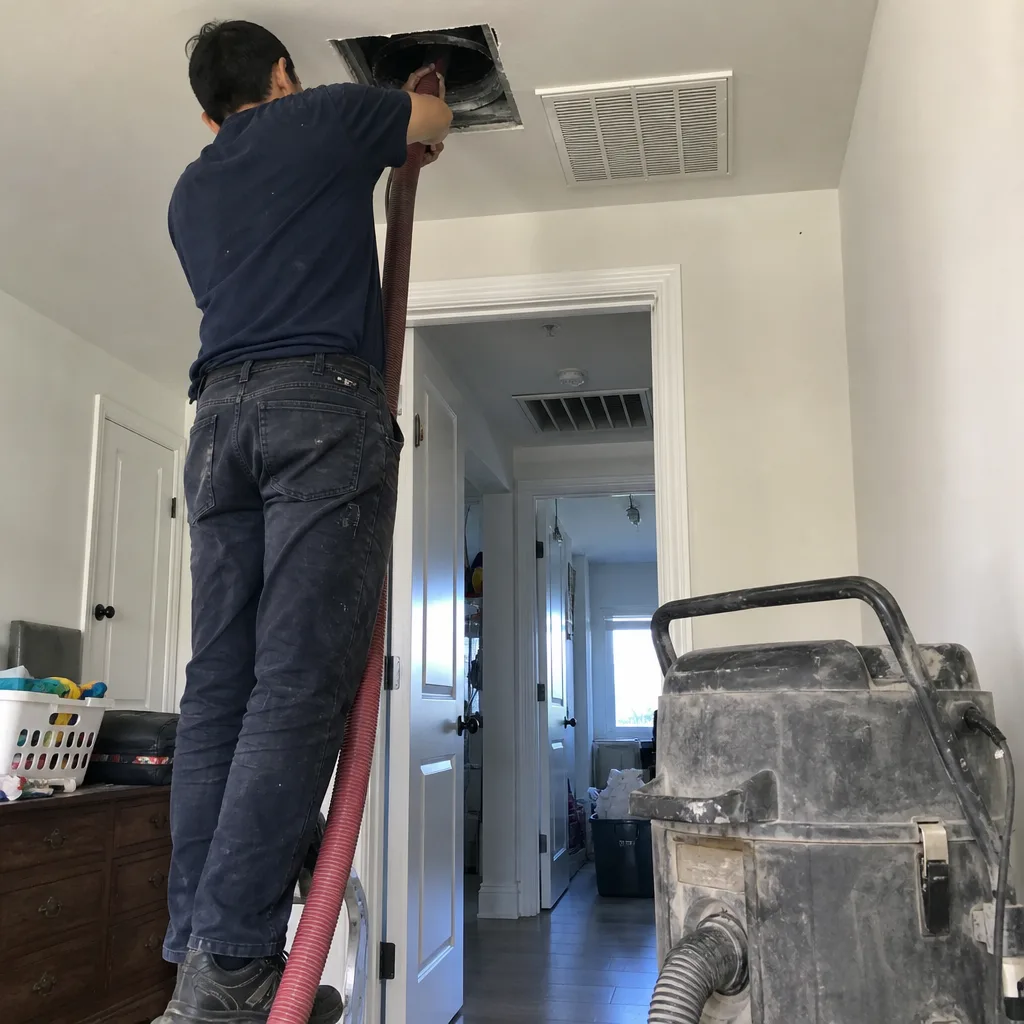 Before
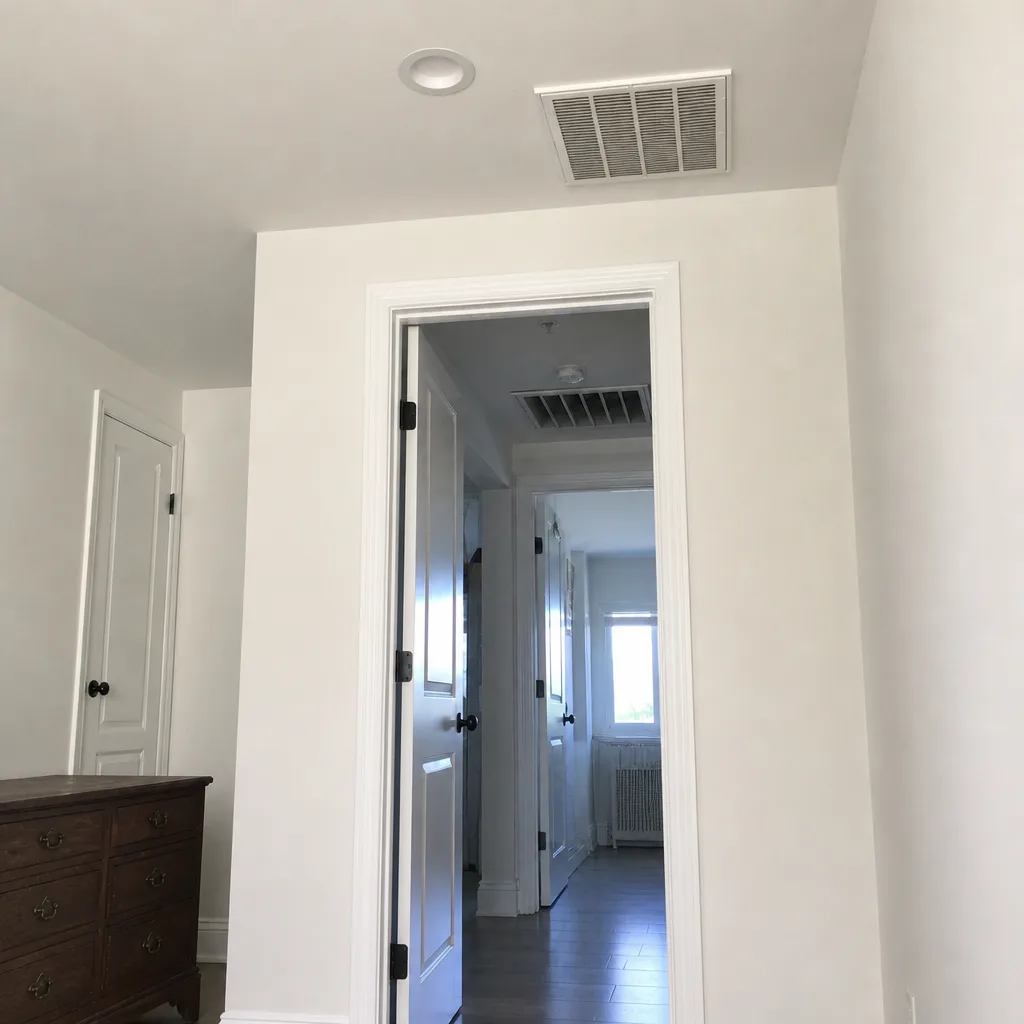 After
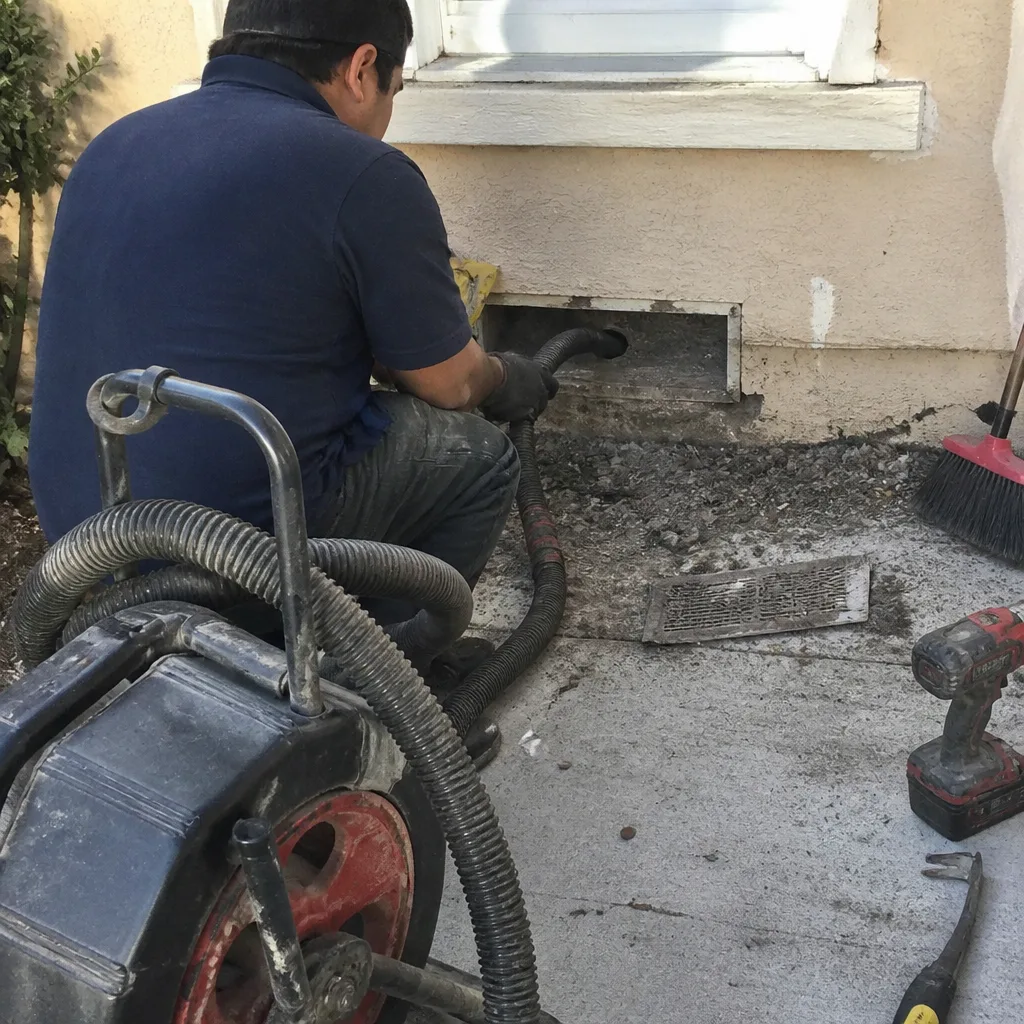 Before
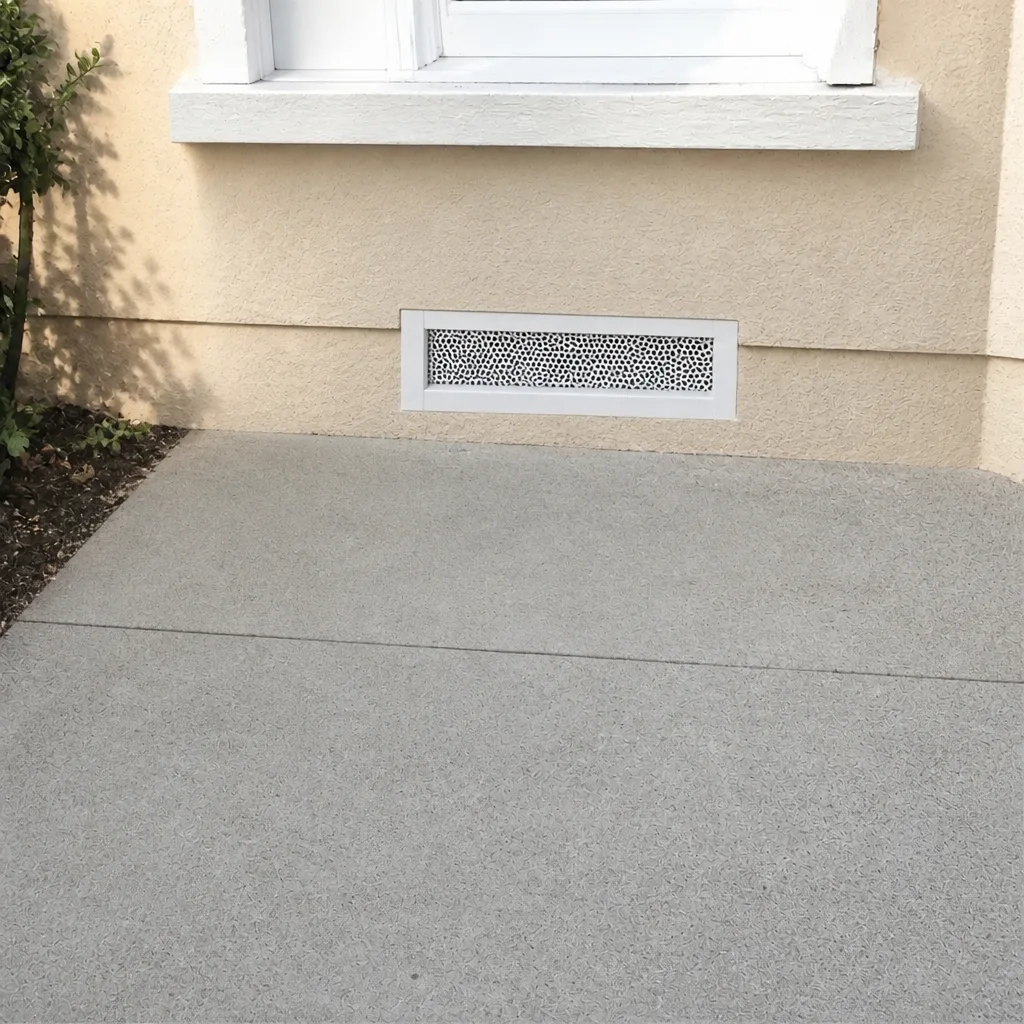 After
 Before
 After
Common Mistakes to Avoid
- Running the HVAC system during heavy smoke with a basic filter. It pulls sub-micron particulate through every return and pushes it into every room. Shut it down or upgrade the filter before running the fan.
- Restarting the system after a water event without a technician’s inspection. A wet blower motor or control board run against power is an electrical hazard, not just a performance issue.
- Treating construction dust like regular household dust. Drywall silica and insulation fibers lodge in the joints and don’t release to normal airflow. A vacuum at the register doesn’t reach them.
- Skipping the documentation step. Homeowners in Laguna Niguel who photograph water lines and record moisture readings before drying start tend to have far easier insurance conversations than those who clean first and ask questions later.
- Assuming a visible clean means a real clean. Grilles that look clean and ducts that are clean are not the same thing. Ask for before-and-after photos of the actual ductwork, not the register.
- Going maximum MERV without checking the system. A filter too restrictive for the air handler drops airflow and strains the blower. Match the rating to what the return and the manufacturer support.
- Leaving a slow dryer vent for another year. A dryer vent that’s taking longer and longer to dry a load is a fire-risk signal, and the NFPA recommends annual inspection for a reason.
When to Call a Professional
Call us when the visual signs point to a problem beyond filter changes – soot on the supply grilles after a smoke event, water staining on the air handler cabinet, musty smells localized to one room, or a system that ran through a construction project near a return. Call if you’re mid-claim and need before-and-after documentation of the ductwork. Call if you noticed physical damage to a duct run during a renovation or storm repair. And call if the symptoms are ambiguous – the system is fine on paper but something isn’t right in one room – because the inspection resolves the question more reliably than guesswork. Laguna Niguel Air Duct Cleaning Pros offers free estimates in Laguna Niguel – call (877) 770-0716. We answer 24/7. Fast dispatch from 7am to 7pm.
Frequently Asked Questions
Within a few days to a couple of weeks of the event clearing, unless the system ran the entire time or the visible soot is heavy, in which case sooner. The ductwork absorbs fine ash and sub-micron particulate that doesn’t settle out on its own, and mechanical cleaning is what removes it. Call (877) 770-0716 for an exact quote – estimates are free.
Only on recirculate with a filter your system can handle (MERV 13 if the slot and manufacturer’s rating support it). Shut it down entirely if the smoke is heavy or your filter is basic fiberglass – running a weak filter just redistributes what got in. If you’re not sure about the filter capacity, call and ask before you make the switch.
Shut the system off at the breaker, photograph everything, and dry the space aggressively for 48 to 72 hours before restarting. Do not run the blower or the compressor until a technician inspects the motor, drain pan, and insulation. Water that reached the ductwork is a contamination issue that needs cleaning and sanitizing, not just drying.
Because they’re often a different service with the same name – a single vacuum at the register, no containment, and no real mechanical cleaning of the branch runs. A proper post-event clean uses contractor-grade equipment, negative-air containment, and finishes with sanitizing and before-and-after photos. When you call, ask exactly what equipment the crew brings; that answer tells you which kind of job you’re pricing.
Take date-stamped photos of visible soot film, water lines, and wet insulation before anything is cleaned, and record moisture readings with a meter where possible. Write a short timeline covering when the event happened, when the system was shut down, and when the inspection occurred. Ask your contractor for before-and-after photos of the actual ductwork – those support the invoice.
For most homes, every few years is reasonable; after a significant smoke, water, or construction event, it’s immediate rather than scheduled. If the home has allergy-sensitive occupants or a renovation recently finished, a shorter interval makes sense. Call (877) 770-0716 for an exact quote on your home – estimates are free.
The Bottom Line
The emergencies that actually threaten ductwork in Laguna Niguel are smoke events, water intrusion, and construction or remediation debris, and the first 24 to 72 hours decide how much damage the system absorbs. Shut it down when smoke is heavy; upgrade filtration only to what the system supports; treat water as a contamination event immediately; and document before anyone cleans. After the event, a professional inspection with proper containment and mechanical cleaning removes what a filter can’t and what a vacuum at the register never reaches. Once we’re inside, we can seal a leak, repair a damaged zone, and integrate filtration or sanitizing on the same visit, so the whole air pathway gets handled at once.
Call (877) 770-0716. We answer 24/7. Fast dispatch from 7am to 7pm, Sunday through Friday. Estimates are free, and the price is set per job by the written estimate.
Written by the team at Laguna Niguel Air Duct Cleaning Pros.